Luxury Playing Cards: Gilded Edges, Foil, and Premium Stocks
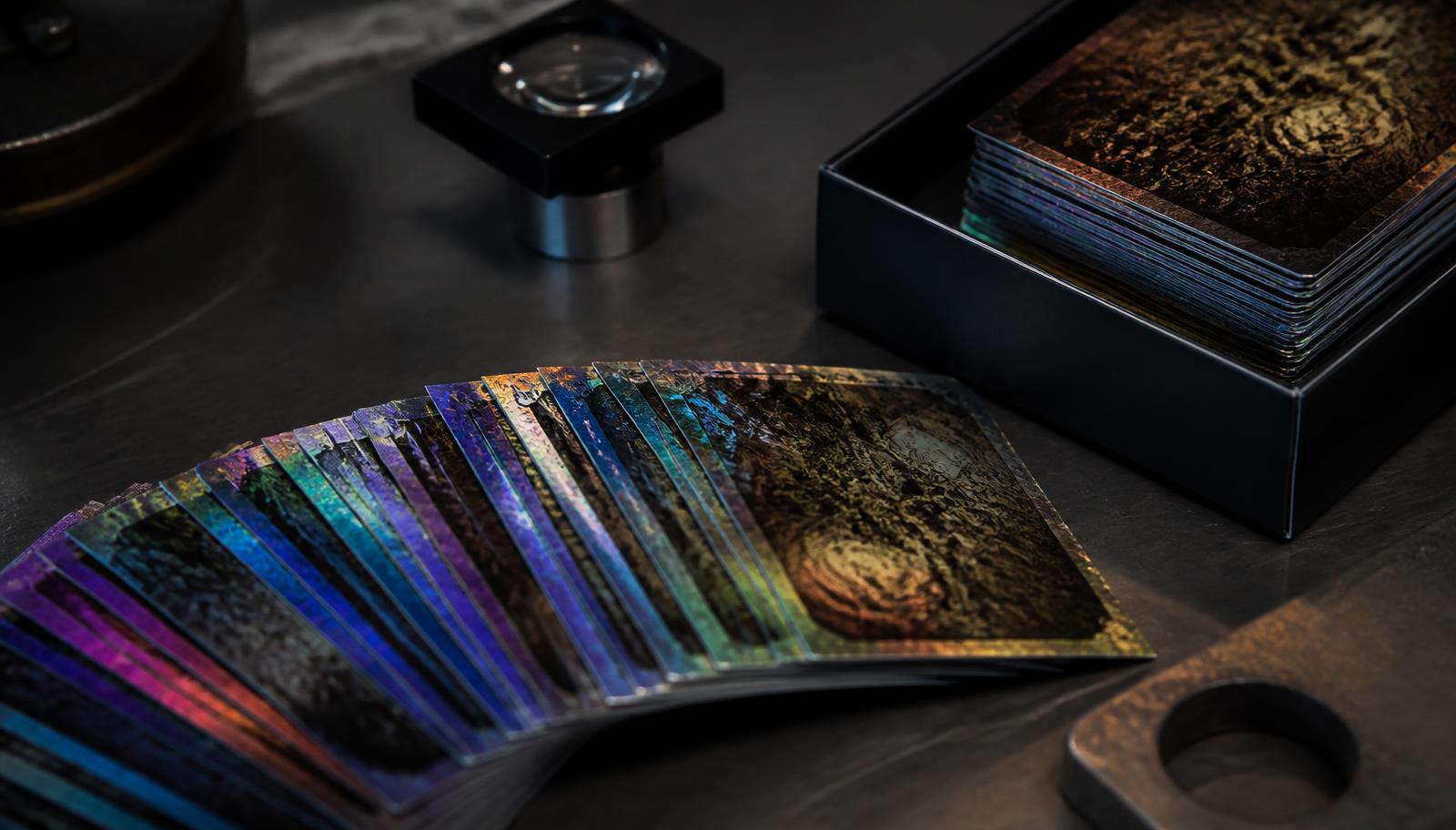
Luxury playing cards are decks built with upgraded materials and finishing rather than upgraded artwork alone. In practice that means a heavier black-core paper, an air-cushion finish, and at least one decorative process on the cards or the box: gilded edges, foil stamping, embossing, or spot UV. Everything below is a spec you can actually order, priced per run at our Orlando, FL press.
What makes a deck of playing cards luxury?
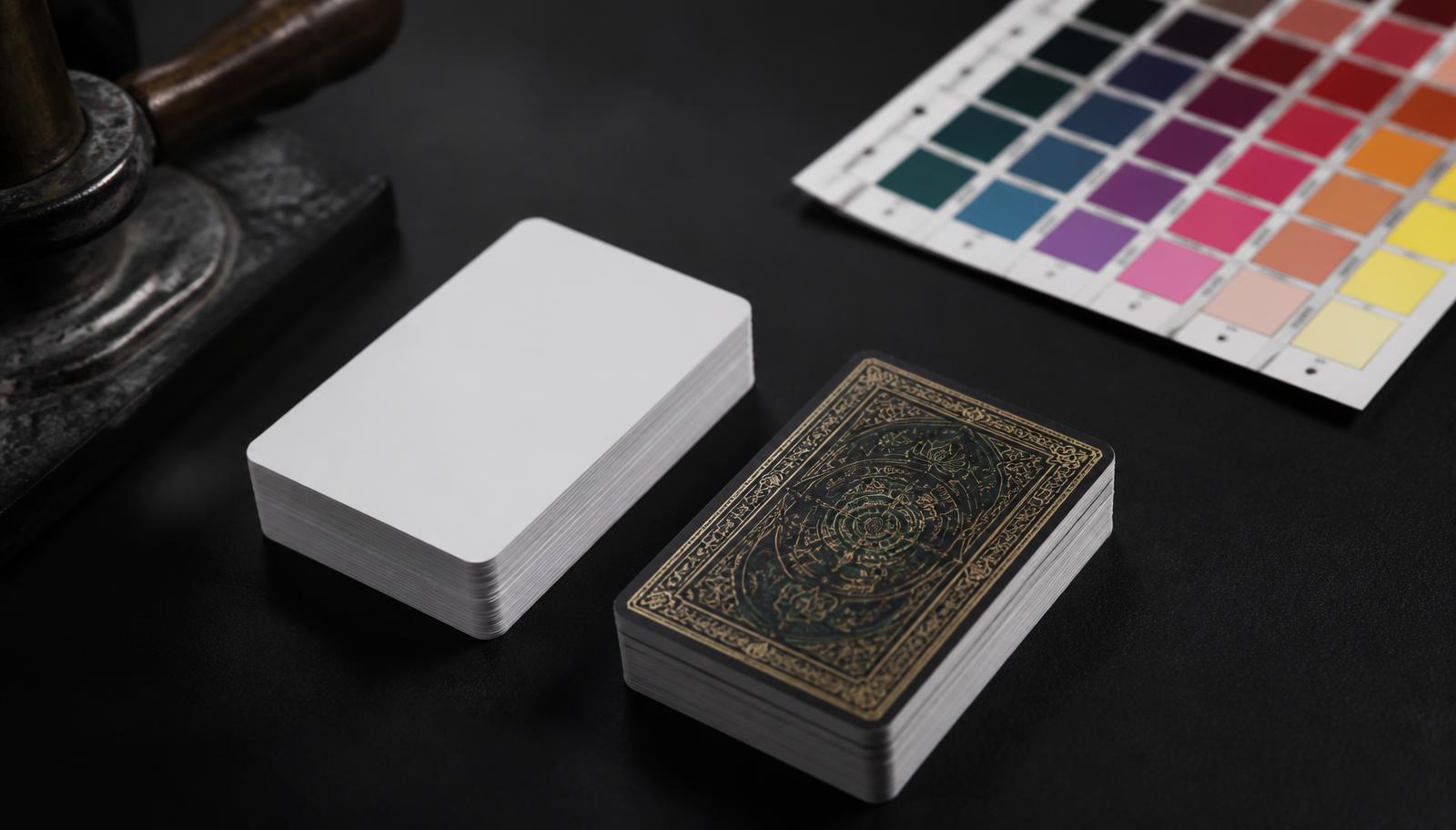
A deck reads as luxury when three things line up: stock, finish, and packaging. Premium decks use 310 GSM black-core paper so cards are opaque and snap back flat, a linen air-cushion coating so they fan cleanly, and a tuck box on 350 GSM 16 point C2S board with a decorative finish. Artwork matters for taste, but the hand feel comes from materials. Compare all options on the stocks and finishes page.
What are gilded playing cards?
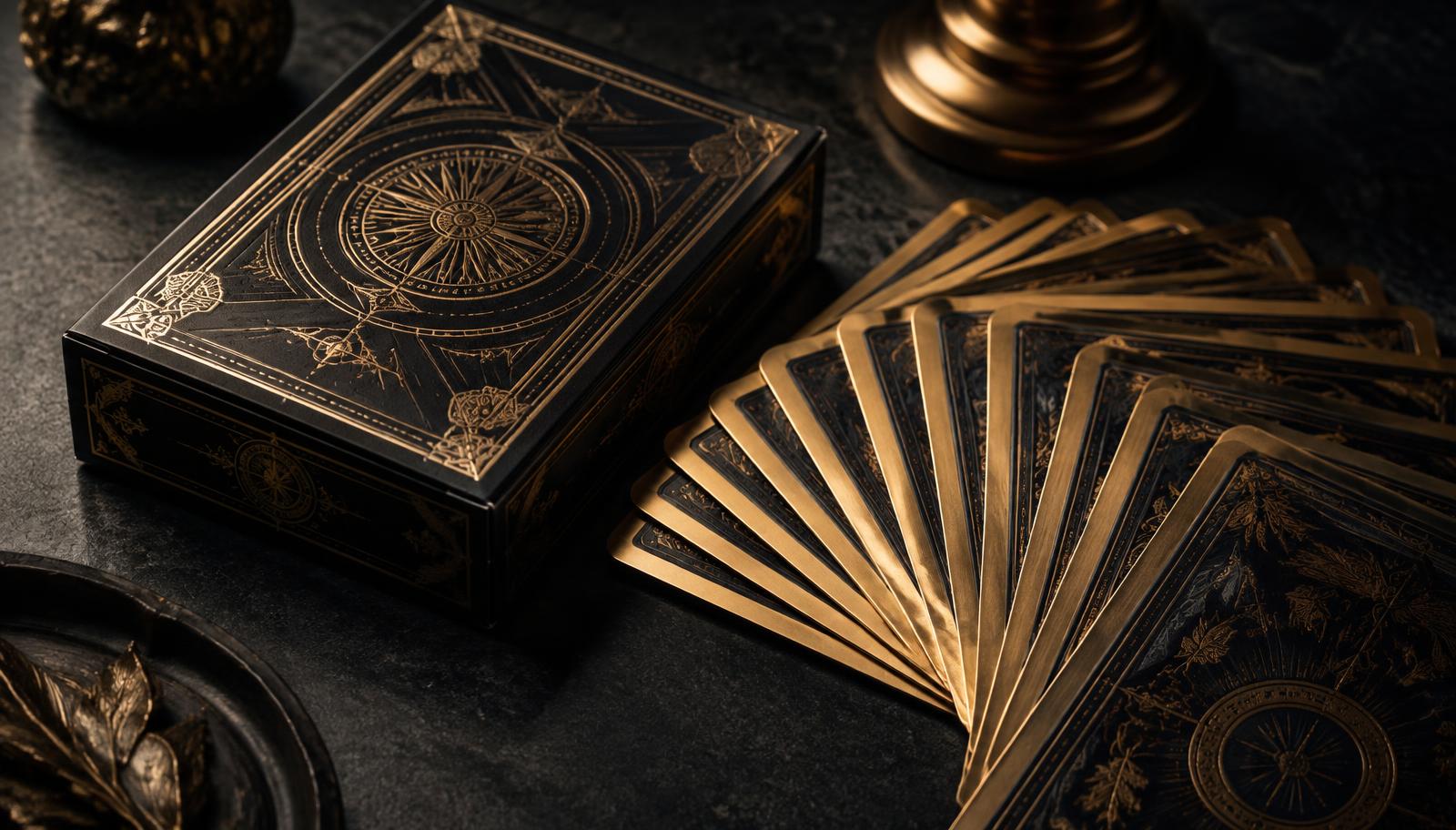
Gilded playing cards have a metallic foil applied to the cut edges of the card block, so the closed deck shows a solid band of gold, silver, or a colored metallic. The process is applied after cutting, which is why edge gilding is specified per run and not something you can add to a finished deck later. Gilded edges also slightly seal the paper edge, which helps a display deck stay crisp.
Gilded edges vs foil stamping vs metallic ink
These three get used interchangeably online, and they are not the same process.
| Process | Where it goes | What it looks like |
|---|---|---|
| Edge gilding | Cut edges of the card block | Solid metallic band on the closed deck |
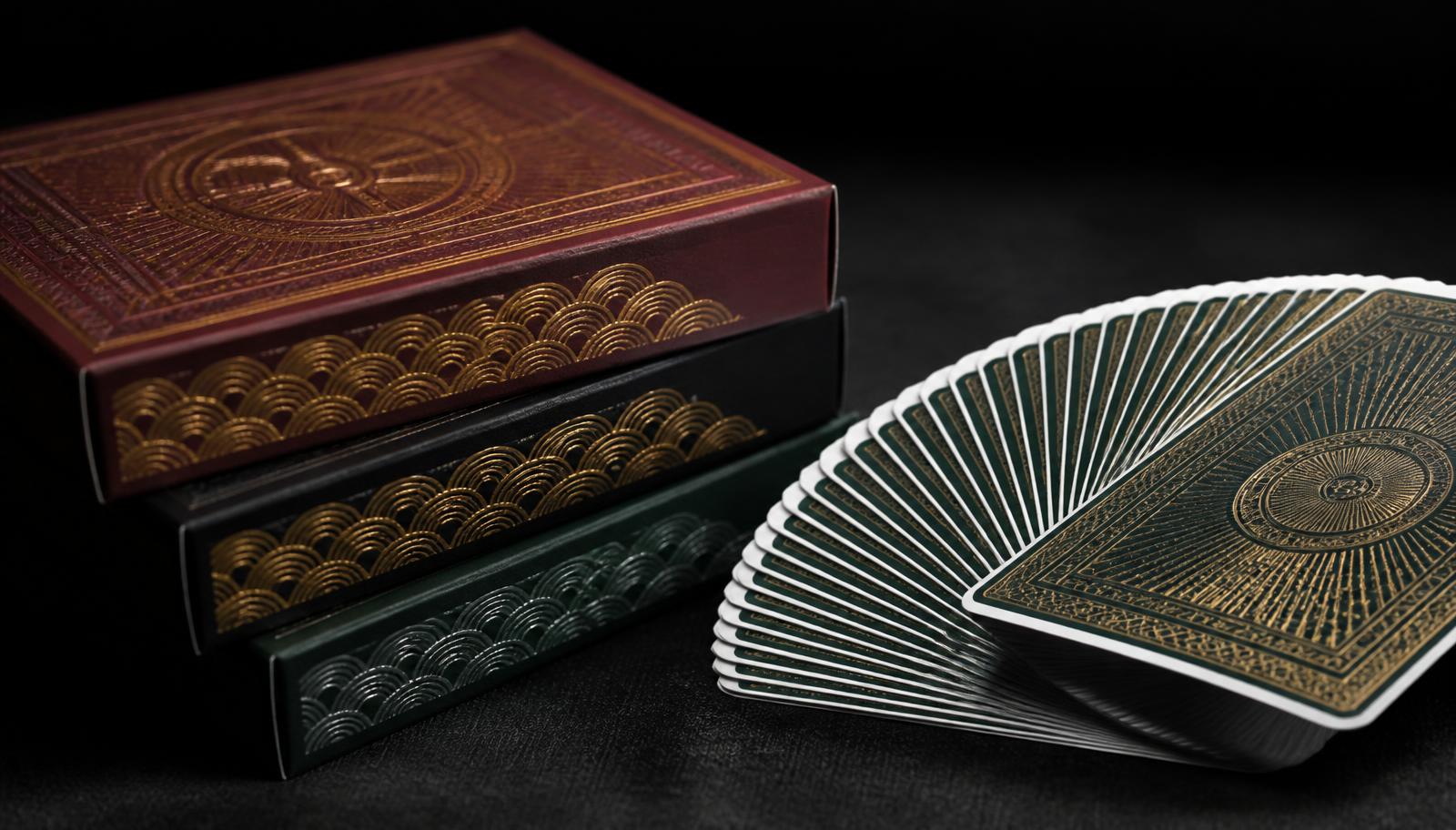
| Foil stamping | Tuck box, card backs, logos | Real metallic foil, mirror-bright, catches light |
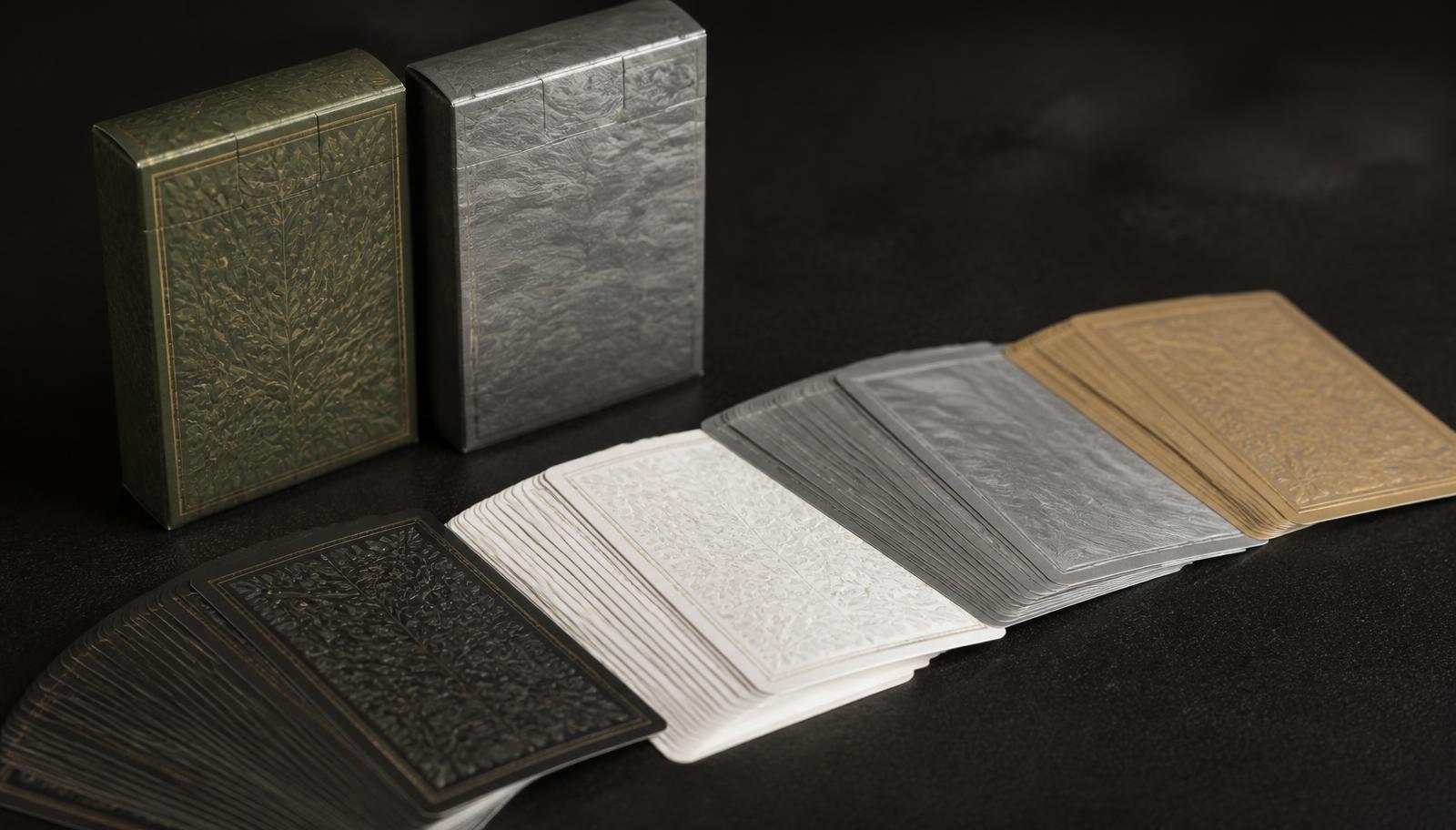
| Embossing | Tuck box, card backs | Raised texture, no added color |
| Spot UV | Tuck box, card backs | Glossy raised varnish against a matte field |
| Metallic ink | Anywhere printed | Printed sheen, flatter than foil |
Foil is stamped with heat and a die, so it has a reflectivity that printed metallic ink cannot match. If the goal is a deck that photographs well for a Kickstarter page or a retail shelf, foil on the tuck is usually the highest-impact single upgrade.
What stock do premium decks use?
310 GSM black-core paper is the reference point for premium and retail-grade decks. The black layer in the middle blocks light so cards are not see-through in play, and the lamination keeps them from curling. Options in order of feel:
- Premium linen (310 GSM black-core) - woven texture, air-cushion, the default for gameplay and cardistry decks.
- Deluxe black-core - the heaviest premium option, for collector and display runs.
- Smooth black-core - flat surface, best when texture would fight fine artwork.
- 100% plastic - waterproof and tear-resistant, a durability choice rather than a luxury one.
Read the full breakdown in paper vs 100% plastic.
Does an air-cushion finish matter on a high end deck?
Yes, more than most buyers expect. An air-cushion finish embosses a fine texture into the coating, trapping a thin layer of air between cards. The deck fans in a smooth arc instead of clumping, and riffle shuffles feel quieter. For magicians and cardists this is not decoration, it is function - see decks for magicians and cardists.
What size should a luxury deck be?
Poker size (2.5 x 3.5 in) is standard for premium and collector decks in the US. Bridge size (2.25 x 3.5 in) is narrower and fans more easily in small hands, which suits club and gift decks. Jumbo (3.5 x 5.75 in) is an event and display format. Full dimensions for every format are in the playing card sizes reference.
Artwork setup is the same across all three: 0.125 in bleed on every side, a safe zone 0.125 in inside the trim, 300 DPI, CMYK. Expect a normal cutting tolerance of about ±0.02 in, so never place a thin border closer than the safe zone.
How much do luxury playing cards cost?
Decorative finishing is priced as an addition to the base deck cost, so the run size drives the per-deck number far more than the finish list does. Two rules hold at almost any volume:
- Finishing on the tuck box costs less than finishing on every card, because it is one printed piece instead of 54.
- Gilded edges are priced per deck, since each block is processed individually.
Our minimum is 15 decks, so a short collector run is genuinely orderable. Run your own quantity through the instant quote tool or check tiers on the pricing page for exact numbers rather than a range.
Can you order a small run of premium decks?
Yes. A 15-deck short run on premium stock is the normal way to test a design before a full production order, and it is what most Kickstarter creators press for the campaign video. Once the design is approved, the identical spec scales to thousands of decks on the same equipment, so the sample matches the fulfillment run. The Kickstarter creator playbook covers the sequencing.
What packaging do high end decks use?
The tuck box carries most of the perceived value, because it is what a recipient sees first. Standard premium spec is 350 GSM 16 point C2S coated board, printed CMYK, with one or more of: gold or silver foil stamping, soft-touch lamination, spot UV, or embossing. Soft-touch plus foil is the most requested pairing for gift and corporate decks. See custom tuck boxes and the tuck box template walkthrough.
Are expensive playing cards worth it for gifts and brands?
For a gift or a brand deck, the upgrade cost is small relative to how long the object survives. A well-made deck stays in a drawer and comes out at game nights for years, which is a longer exposure window than most branded merchandise gets. That is the case for corporate gifts and giveaways, and it is why hotels and resorts keep ordering branded decks - see casinos and hotels.
How do you spec a luxury deck without over-ordering finishes?
Pick one hero finish and let everything else support it. A common, restrained spec:
- 310 GSM black-core premium linen stock, poker size.
- Tuck box on 350 GSM 16 point C2S with a single foil color.
- Gilded edges only if the deck is meant to be displayed closed.
- Matte or smooth card finish if the artwork is detailed; linen if it will be played with.
Stacking foil, spot UV, emboss, and gilding on one deck rarely looks more expensive - it usually looks busy, and it adds cost on every line.
FAQs
What are gilded playing cards?
Gilded playing cards have metallic foil applied to the cut edges of the card block, so the closed deck shows a solid gold, silver, or colored metallic band. It is applied after cutting and must be specified when the run is ordered.
What is the difference between gilded edges and foil stamping?
Gilded edges are metallic foil on the cut edges of the deck. Foil stamping is metallic foil pressed into a flat printed surface, usually the tuck box or the card backs, using heat and a die.
What card stock do luxury playing cards use?
310 GSM black-core paper, most often with a linen air-cushion finish. The black core keeps cards opaque and the air-cushion coating makes them fan and shuffle smoothly.
How many decks do I have to order for a premium run?
15 decks. That minimum applies to premium stocks too, so a collector or prototype run on the same spec as a full production order is possible.
Is metallic ink the same as foil?
No. Metallic ink is printed and sits flat with a subtle sheen. Foil is a real metallic layer stamped into the surface, so it is mirror-bright and reflects light directionally.
Keep reading
Frequently asked questions
What are gilded playing cards?
Gilded playing cards have metallic foil applied to the cut edges of the card block, so the closed deck shows a solid gold, silver, or colored metallic band. It is applied after cutting and must be specified when the run is ordered.
What is the difference between gilded edges and foil stamping?
Gilded edges are metallic foil on the cut edges of the deck. Foil stamping is metallic foil pressed into a flat printed surface, usually the tuck box or the card backs, using heat and a die.
What card stock do luxury playing cards use?
310 GSM black-core paper, most often with a linen air-cushion finish. The black core keeps cards opaque and the air-cushion coating makes them fan and shuffle smoothly.
How many decks do I have to order for a premium run?
15 decks. That minimum applies to premium stocks too, so a collector or prototype run on the same spec as a full production order is possible.
Is metallic ink the same as foil?
No. Metallic ink is printed and sits flat with a subtle sheen. Foil is a real metallic layer stamped into the surface, so it is mirror-bright and reflects light directionally.