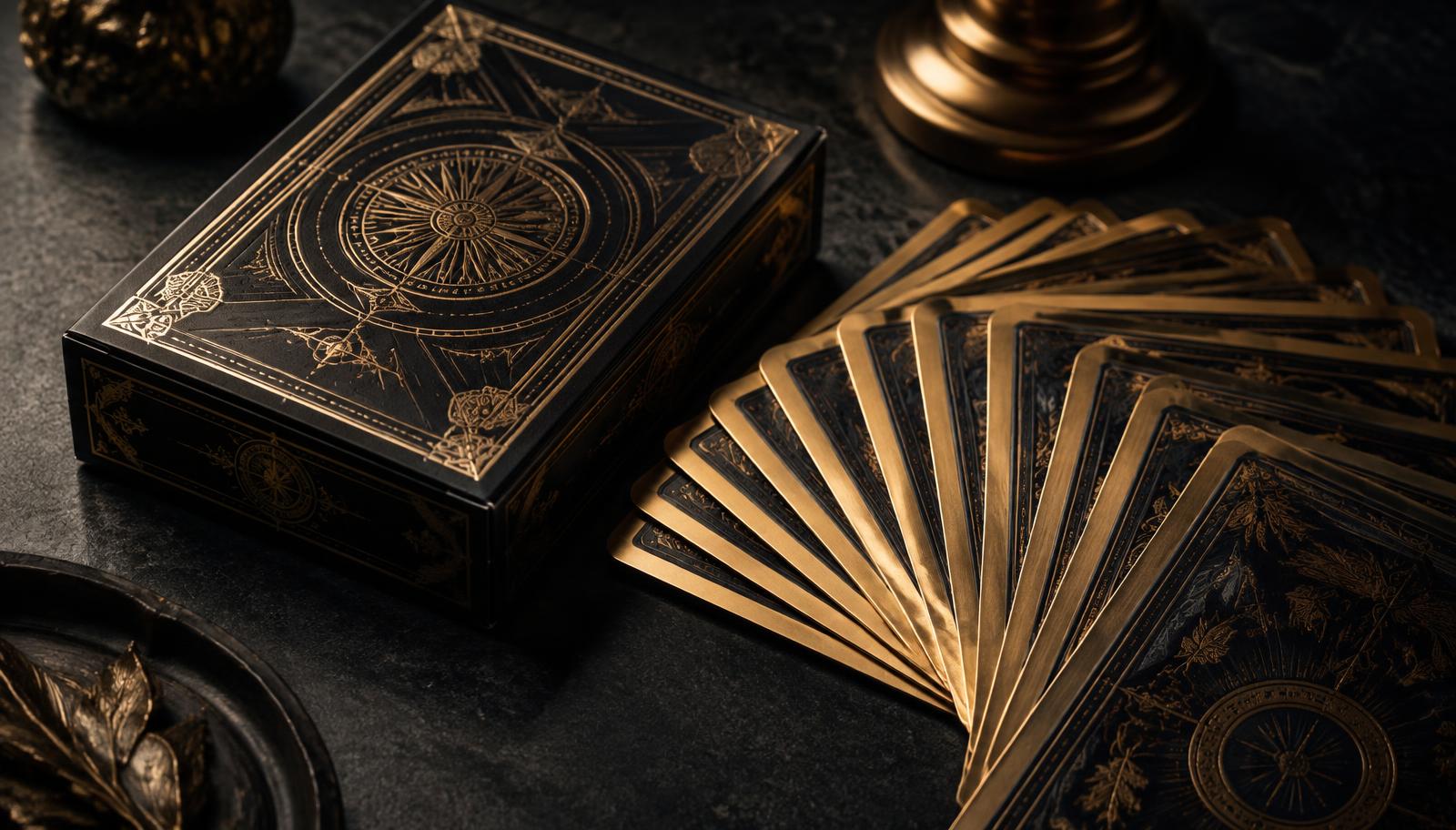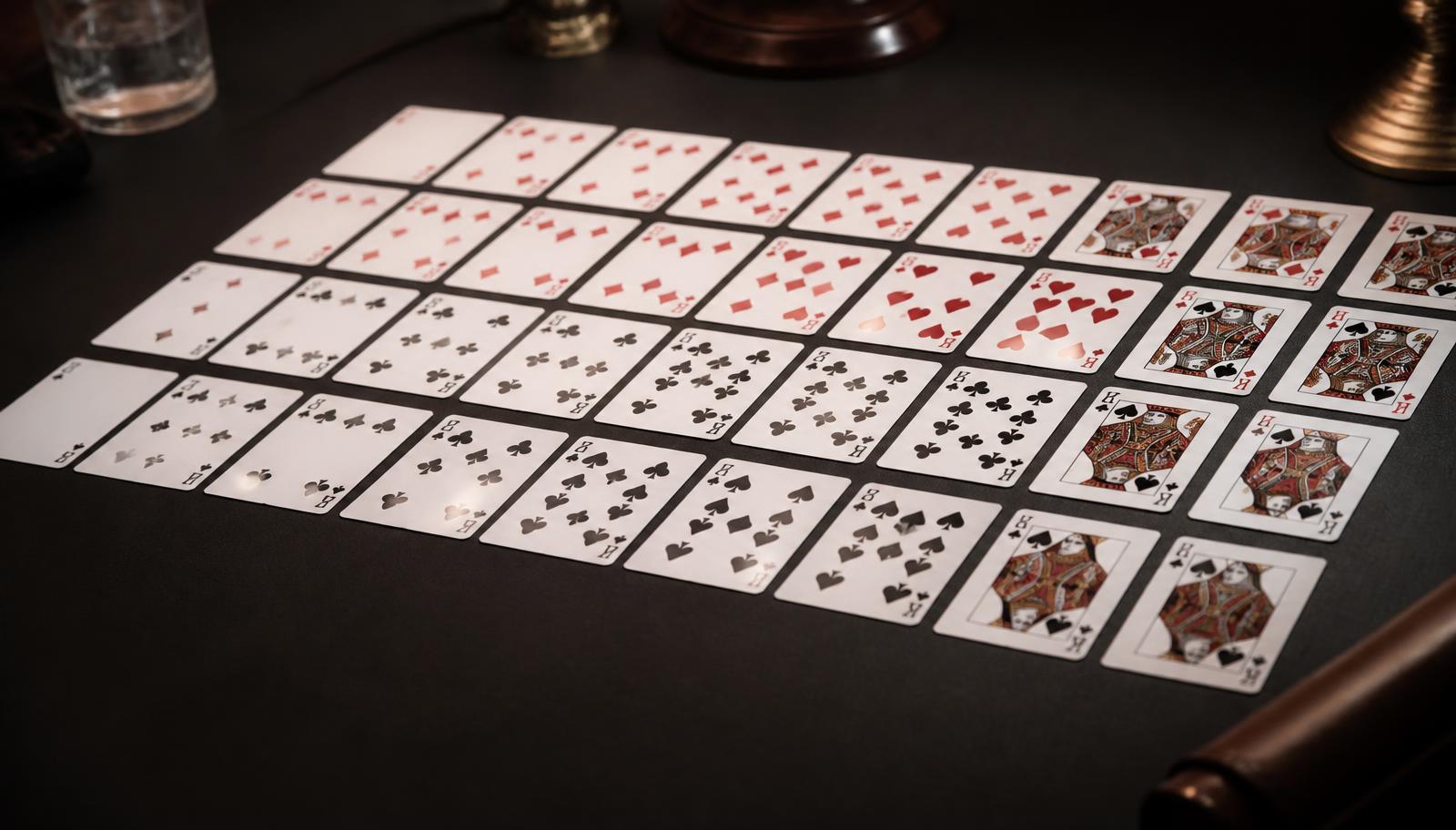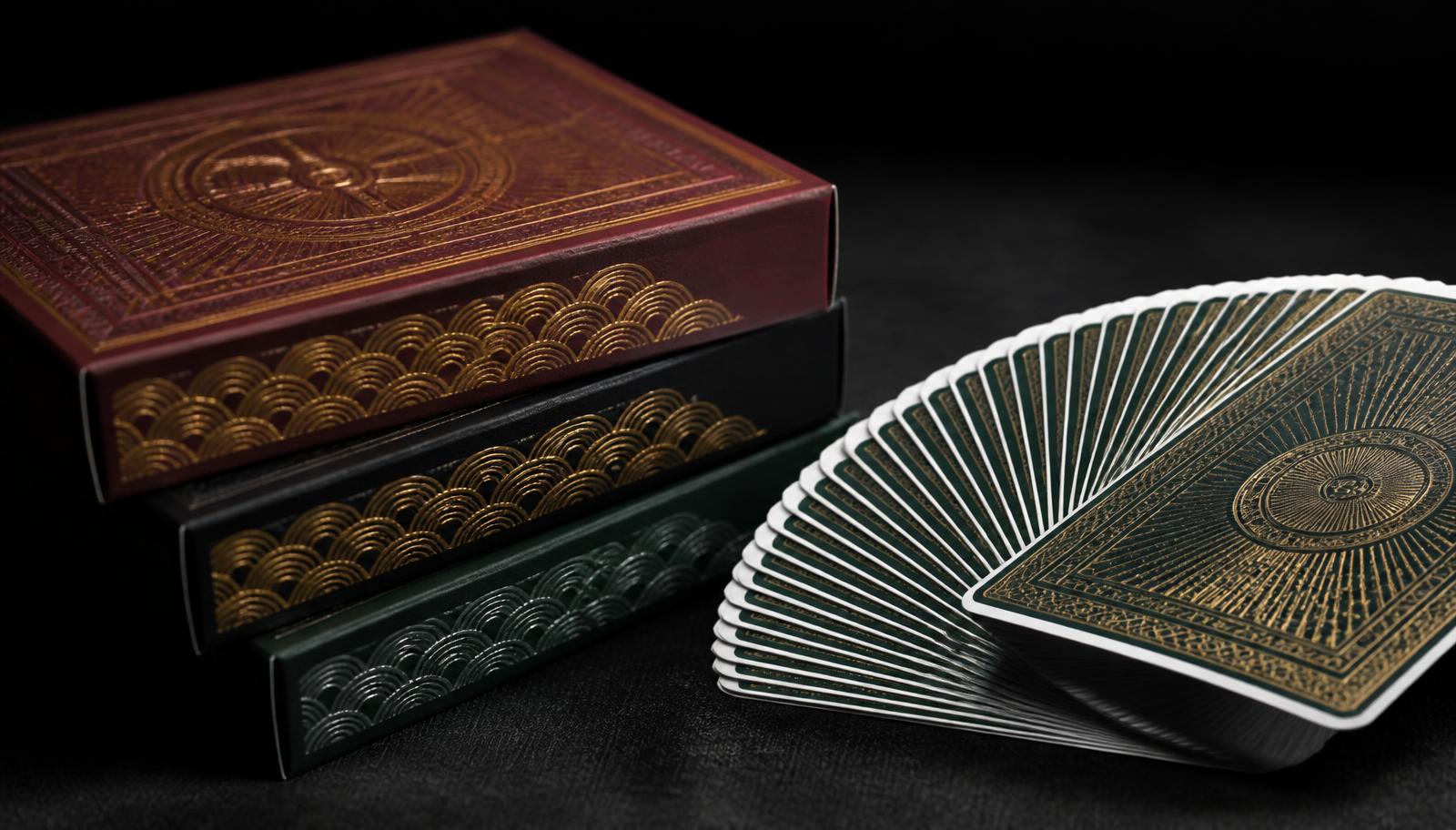

You can make your own Cards Against Humanity-style deck by writing original prompt and answer cards, designing them on a printer's template, and ordering a short run on card stock. What you cannot do is sell a deck that uses the Cards Against Humanity name, logos, or card text. Write your own jokes, give the game its own name, and it is yours to print, gift, or sell.
Quick answer: To make a custom Cards Against Humanity-style deck, write original black prompt cards and white answer cards, lay them out on a template with 0.125 in bleed, and print on a black core stock so the backs never show through. Mr. Playing Card prints these in Orlando, Florida, with a 15-deck minimum on poker-size paper stock, a free human file review, and a digital proof before anything goes to press.
Can you legally make a custom Cards Against Humanity deck?
Yes for a private, non-commercial game night, and no for anything you sell under their name. The official Cards Against Humanity site offers the game as a free PDF download, says there is no legal way to use those PDFs to make money, and states that the company owns the name, the game's design, the slogan, the logos, and all of its writing.
The free download is shared under a Creative Commons Attribution-NonCommercial-ShareAlike 4.0 license. In plain terms, NonCommercial means you may not use the material for commercial purposes, and ShareAlike means any remix has to be shared under the same license.
That leaves two clean paths:
- Personal deck: print copies of your own homemade expansion for your friends, and do not sell them.
- A game you can sell: write every prompt and answer yourself, name the game something original, and design your own card backs and box. Do not copy the look of the original or imply any connection to it.
If you plan to sell, have your own attorney review the name and packaging before you order. This article explains printing, not legal advice.
How many prompt and answer cards does a party deck need?
A party deck needs far more answer cards than prompt cards, because each round uses one prompt while every player chooses from a hand of answers. A deck that is too light on answers starts repeating by the second game.
Plan the count around how the deck will be used:
- Theme deck for one event (a bachelorette, a retirement party, an office holiday party): a few hundred cards is enough for a night of play.
- Starter game you want people to replay: several hundred cards, with most of them answers.
- Expansion packs: smaller add-on decks that share the base game's card backs.
Write more cards than you need, playtest them, and cut the weakest. Keep a few blank answer cards in every deck; players like writing their own.
What size should Cards Against Humanity-style cards be?
The two practical choices are poker size and jumbo size. Mr. Playing Card's poker cards are 2.5 x 3.5 in, and its jumbo cards are 2.75 x 4.75 in on 350 GSM stock.
- Poker, 2.5 x 3.5 in: lowest cost per card, easy to hold a full hand, and eligible for the 15-deck minimum.
- Jumbo, 2.75 x 4.75 in: more room for long prompts and larger type, easier to read across a table. See the custom jumbo cards page for specs.
- Other game sizes: the quote tool also offers 3 x 5 in and 3.875 x 6 in for games with longer text.
Larger sizes in the quote tool start at 25 decks rather than 15, so check the minimum when you pick a size.
Which card stock works best for black and white cards?
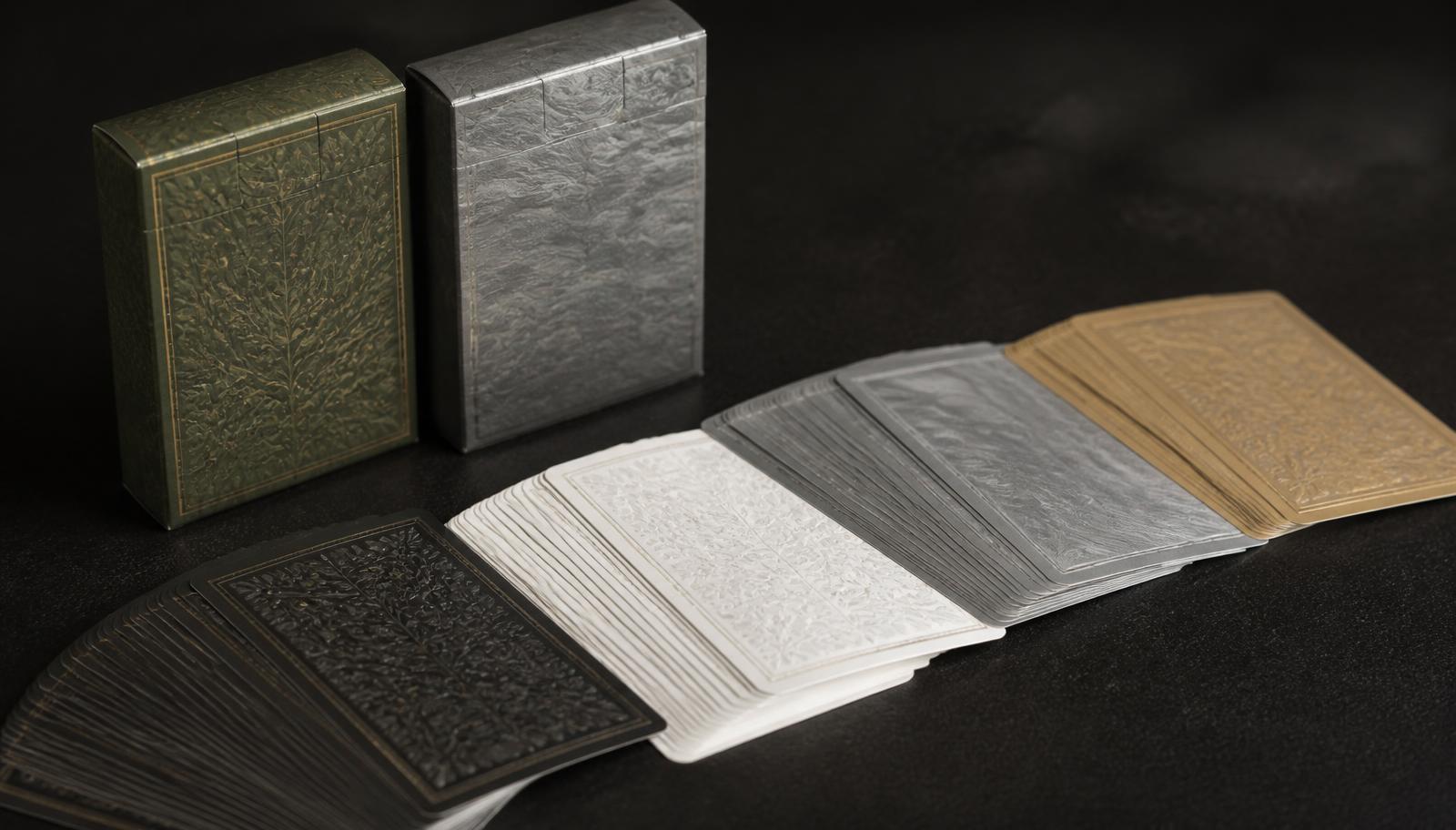
Use a black core stock. Black core is card stock with a thin black layer in the middle that blocks light, so a printed back cannot be seen through a white-faced card when someone holds it up to a lamp.
This matters more for this format than for most decks, because half the cards are plain white faces. Mr. Playing Card's most-ordered stock is 300 GSM Standard Black Core, a coated stock used for board games, retail, and promotional decks. Read more about 300 GSM Standard Black Core.
If your deck will live near a pool or a bar, 100% plastic stock is waterproof, with a 100-deck minimum.
How do you design prompt and answer cards for print?
Design every card on the printer's template, with artwork extending 0.125 in past the trim on every side and text kept 0.125 in inside the trim. Bleed is the extra artwork past the cut line, and it prevents thin white slivers if the cut shifts slightly.
A few rules for this format:
- Bleed the black fill on prompt cards. A black card with a hairline white edge looks like a mistake.
- Use pure black and pure white. High contrast reads best in a dim room.
- Set type large enough to read across a table, and test it by printing a page at home before you upload.
- Keep one type style for the whole deck so prompts and answers feel like the same game.
- Put your own logo or game name on the card backs so your cards are easy to sort out when they get mixed with other games.
Free templates and dielines are on the playing card templates page. The card game printing walkthrough covers file setup for games in more detail.
How much does a custom party game deck cost?
Price depends mainly on quantity, size, stock, and card count. For a baseline, Mr. Playing Card's published price for a 54-card poker-size deck on 300 GSM Standard Black Core is $20.79 per deck at 15 decks, $7.69 per deck at 100 decks, and $2.90 per deck at 1,000 decks, packed in shrink wrap.
Party decks usually have many more than 54 cards, and the quote tool prices those by the number of cards per deck, so enter your real card count to see the exact number. A custom tuck box is an add-on, not included, and is priced per deck (for example, $1.24 per deck at 1,000). All tiers are on the pricing page, and sizes, card mix, and packaging for custom party game decks are on one page.
How long does it take to print a custom party deck?
Plan on 7-10 business days of production from proof approval, plus shipping. File review and a digital proof take about 1 business day, and domestic ground shipping takes 2 to 5 business days.
The production clock starts when you approve the proof, not when you place the order. If you have a hard deadline, mention it when you request a quote.
Next steps
Write your cards, drop them onto a template, and run your card count through the quote tool to see the real price. If you are also considering a color-matching party game, see how to plan a custom UNO-style deck.