Custom card decks all look similar in a product photo. The differences that decide whether your finished run feels premium or cheap are the card stock, the finish, the card size, and the quantity tier you order at. This page compares those choices side by side, using US inch specs, so you can lock a specification before you request pricing.
Quick answer: Custom card decks are printed to your own artwork on a chosen stock and size. Poker size, 2.5 by 3.5 inches, on coated black-core paper around 300 to 330 gsm, with 54 cards in a standard tuck box, covers the majority of orders. Plastic PVC stock replaces paper when water and heavy handling are involved. Card size, card count, stock, finish, and quantity are the five decisions that drive both feel and price.
What is a custom card deck, exactly?
A custom card deck is a card set printed to your own artwork rather than a stock catalog design, produced to a fixed manufacturing specification. You control the artwork, size, card count, stock, finish, and box. The printer controls trim tolerance, registration, cutting, collation, and shrink wrapping.
That split matters when you review a proof. Artwork problems, such as text too close to the trim, are yours to fix. Mechanical variation within tolerance, typically about plus or minus 0.02 inch on trim position, is normal on any press and is why full-bleed designs are safer than thin decorative borders.
Which card stock should you choose for custom card decks?
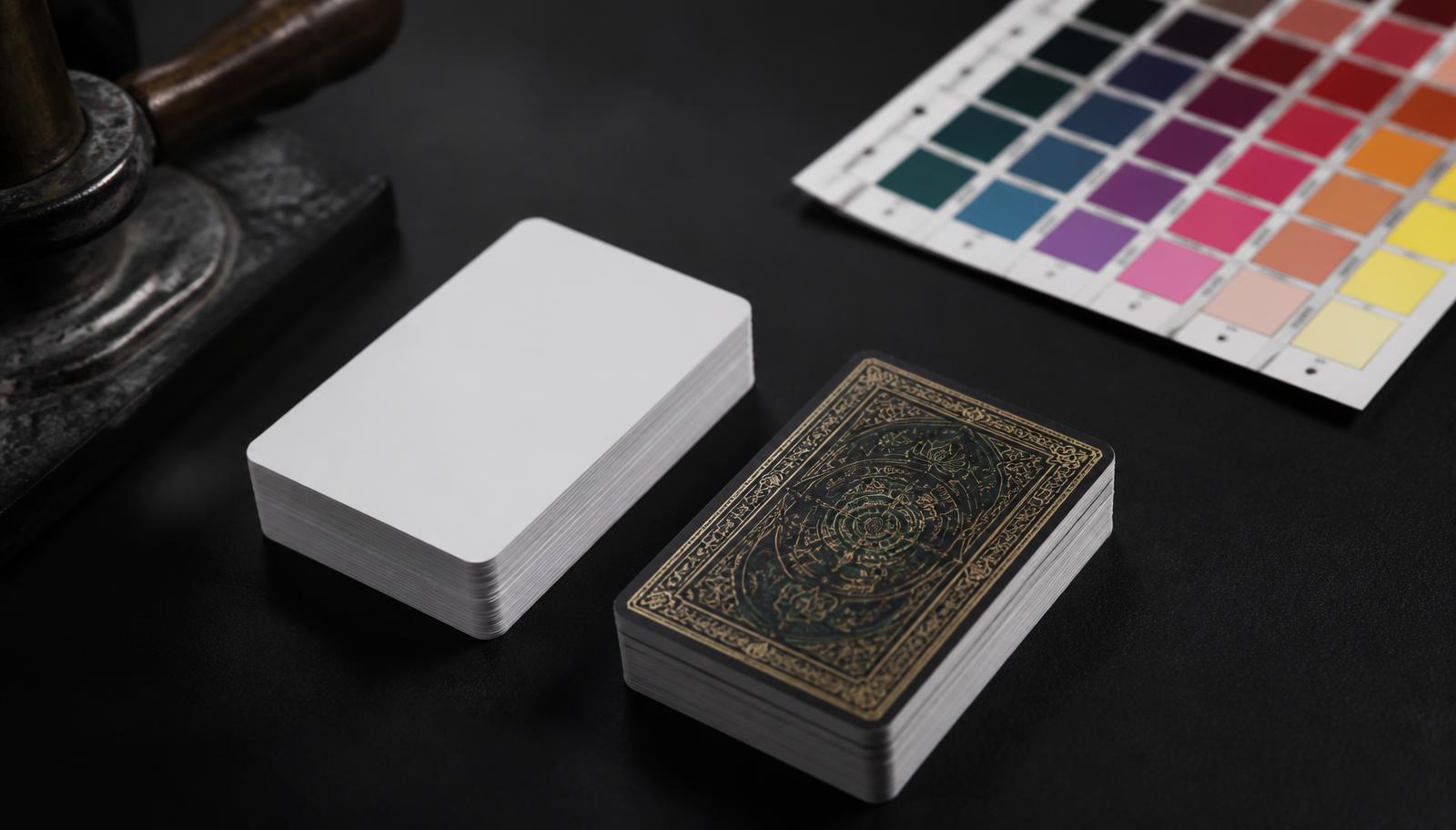
Choose coated black-core paper for shuffle feel and snap, and 100 percent PVC plastic for durability in wet or high-wear conditions. Paper stocks in the 300 to 330 gsm range with an opaque core are the industry default for playing cards because they spring, fan, and riffle the way players expect.
A few practical distinctions:
- Black core. An opaque middle layer stops light passing through, so a bright lamp behind a card cannot reveal the face.
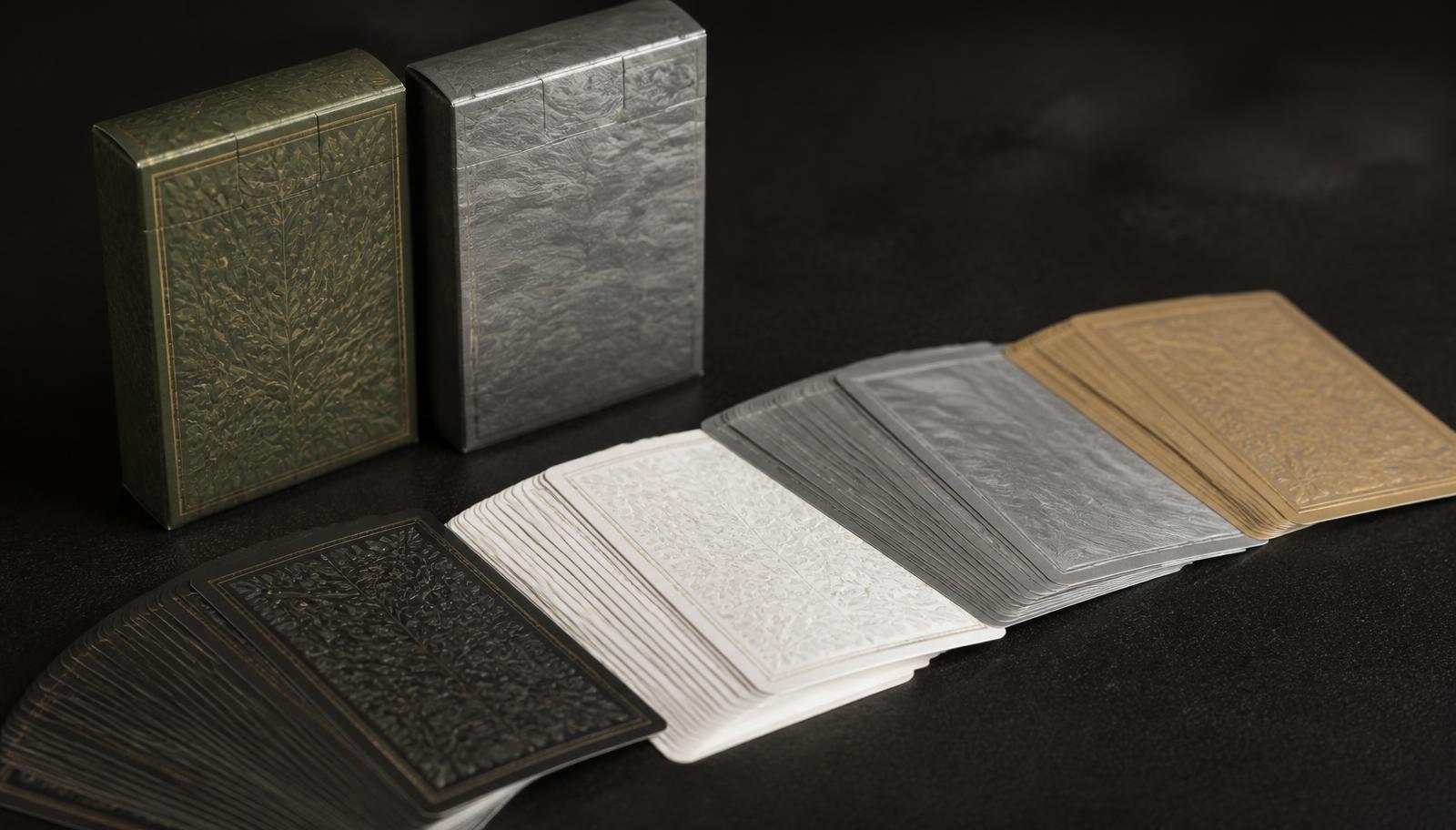
- Embossed linen finish. A microscopic texture reduces surface contact so cards slide instead of sticking, which is what makes a deck fan smoothly.
- Linen finish. A heavier woven texture used on casino-style decks; it resists fingerprints and adds grip.
- Smooth or gloss finish. Sharper photographic reproduction, better for photo and marketing decks than for nightly card play.
- PVC plastic. Waterproof and washable, far longer service life, and a distinctly stiffer feel than paper.
Our premium linen card stock page and PVC plastic stock page list the exact options we run. For a longer breakdown of the trade-offs, read paper versus PVC card stock.
Custom card deck sizes compared
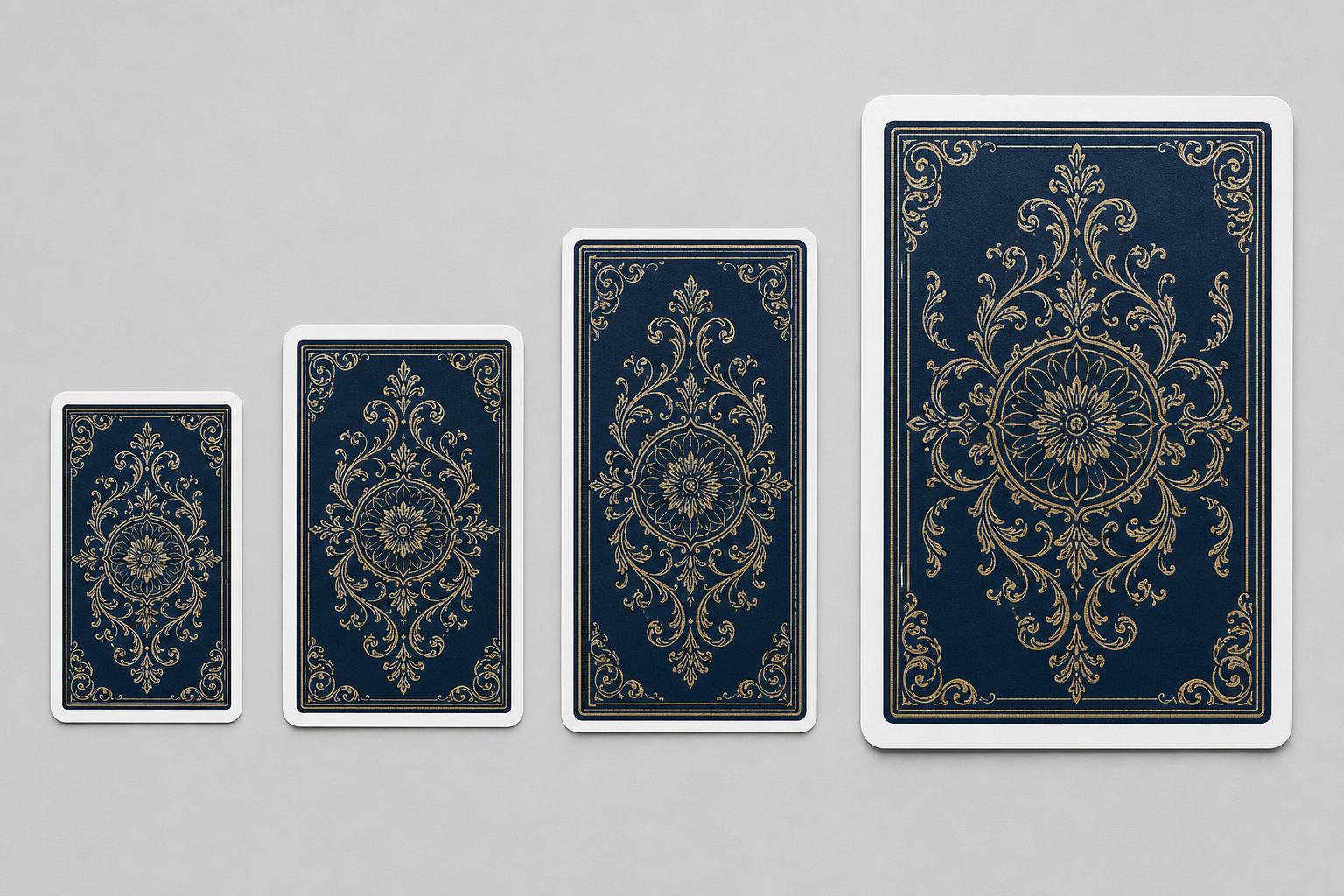
Poker size, 2.5 by 3.5 inches, is the default; bridge size is narrower for hands that hold many cards; jumbo and oversized formats exist for visibility rather than play. All three take the same 0.125 inch bleed and 0.125 inch safe margin.
| Format | Trim size (inches) | Typical use | Notes |
|---|---|---|---|
| Poker | 2.5 x 3.5 | Poker, promotional, party, game decks | Widest tuck box and sleeve availability |
| Bridge | 2.25 x 3.5 | Bridge, pinochle, canasta, large hands | Easier to hold a big fan |
| Jumbo index | 2.5 x 3.5 | Low-vision play, teaching, tournaments | Same trim, much larger pip and index printing |
| Oversized | Larger than poker | Demonstration, retail display, stage use | Custom box and die required |
| Mini | Smaller than bridge | Novelty, giveaway inserts, keychains | Small type needs testing at scale |
Jumbo index changes the printed layout rather than the trim, which is a common point of confusion. If you need both a larger card and larger indices, say so explicitly when you request a quote. Full dimension tables are in the playing card sizes reference.
How many cards should a custom deck contain?
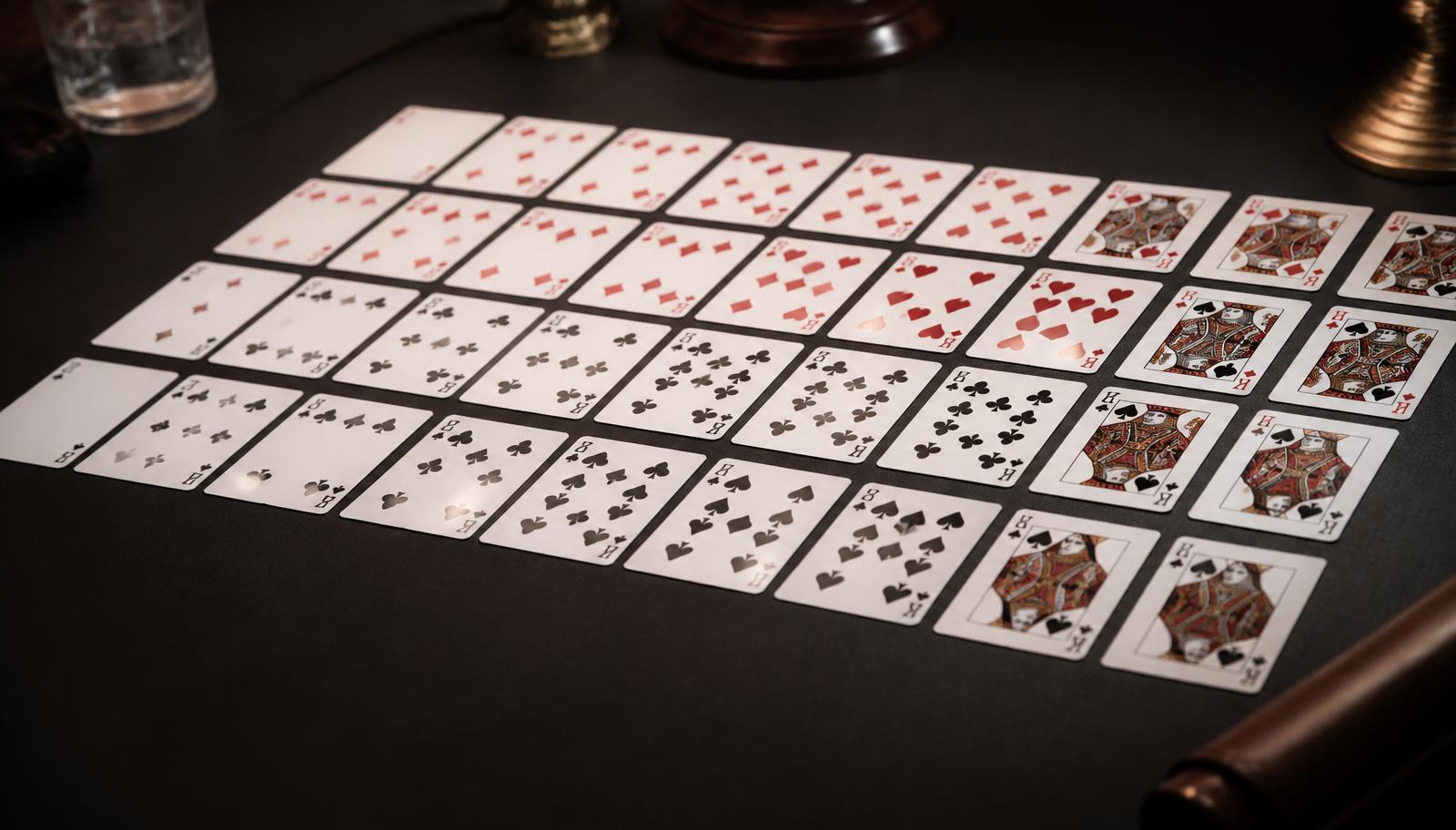
Set the card count before packaging is designed, because the tuck box is built around the finished stack thickness. A traditional deck is 52 cards plus two jokers, but custom decks are frequently anything but traditional.
- Standard playing deck: 52 cards plus 2 jokers, sometimes an extra ad card.
- Party or prompt deck: commonly 60 to 120 cards across two or more prompt types.
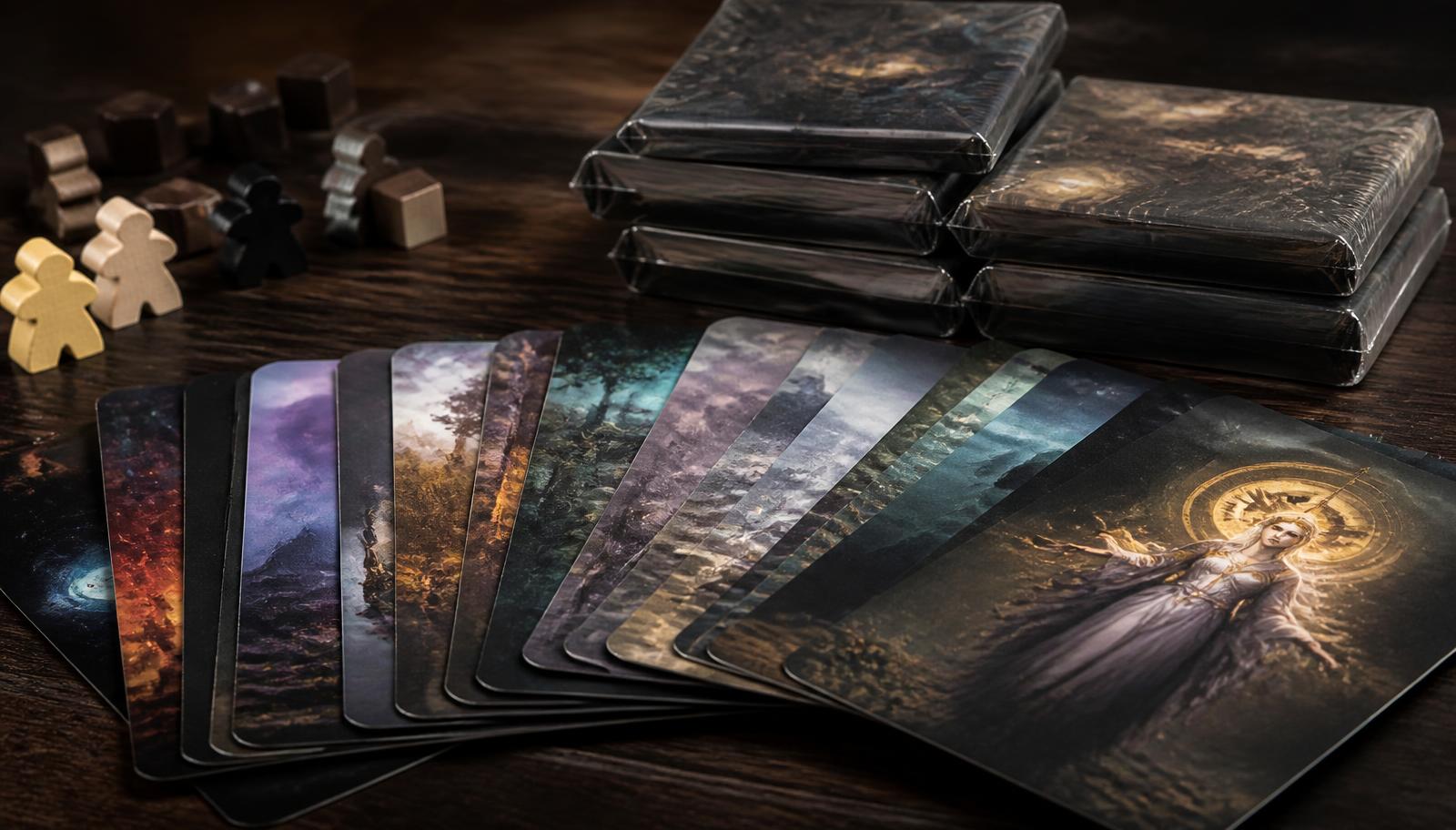
- Trading or game deck: driven by the ruleset, often 54 to 200 plus cards with multiple back designs.
- Flash, affirmation, or training set: typically 30 to 60 cards with a single back.
A deck with 120 cards on 310 gsm stock is roughly twice the stack height of a 54-card deck on the same stock. Two identical box dies will not fit both.
What is the difference between digital and offset printing for custom decks?
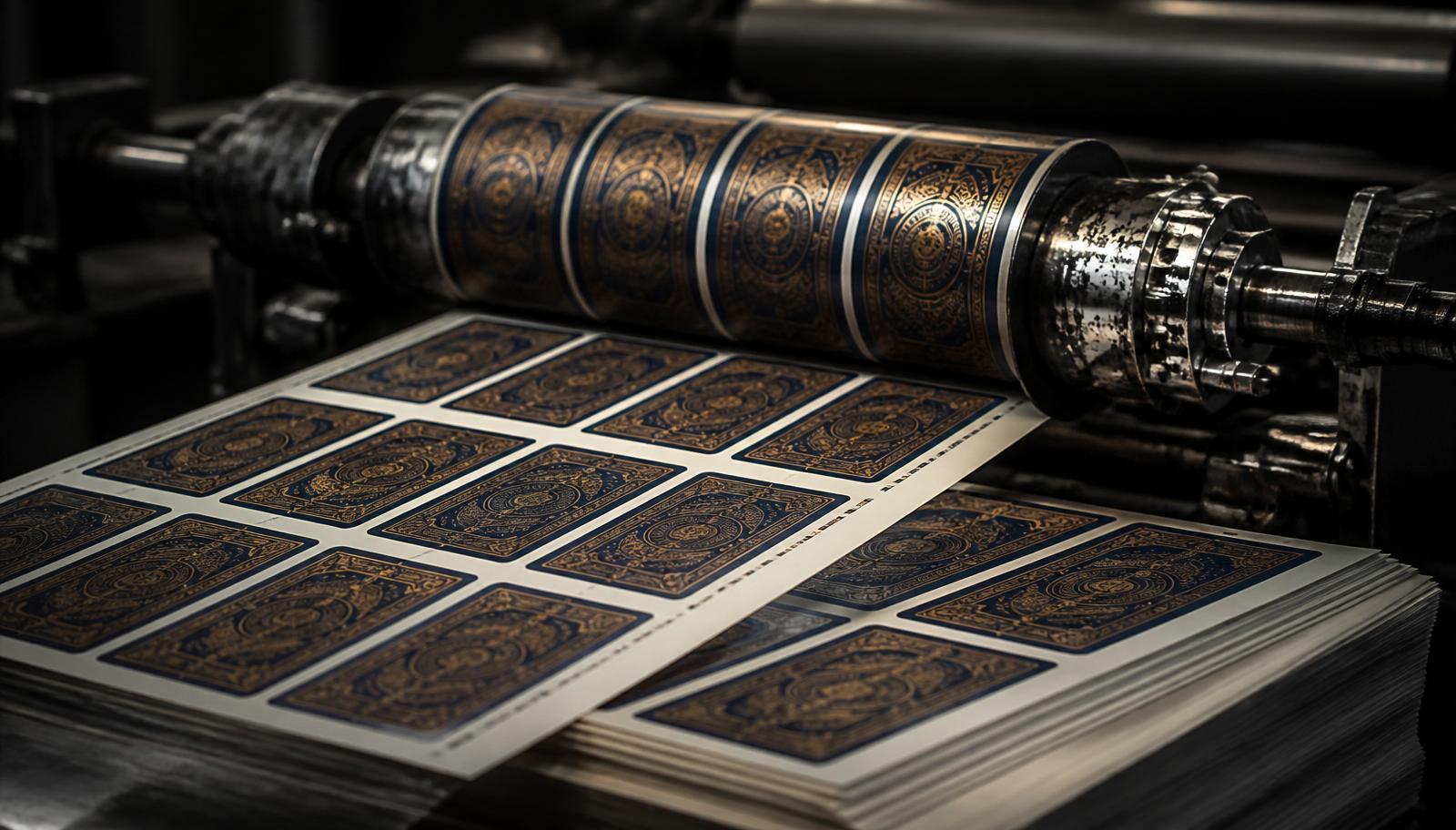
Digital printing images each sheet directly, so it has no plate setup and suits small runs and proofs. Offset printing transfers ink from plates to a blanket to the sheet, which costs more to set up but produces the most consistent color and the lowest unit cost at volume.
The practical decision rule:
- Prototyping, playtesting, sample approval, or a small gift batch: digital.
- A retail launch, a fulfilled crowdfunding campaign, or a corporate rollout: offset.
- Reprints of a proven design: offset, using the approved proof as the color reference.
Color can shift slightly between the two processes because they lay ink down differently. If you prototype digitally and produce offset, treat the offset proof as the new master reference.
What does the tuck box add to a custom card deck?
The box is the first thing a recipient touches and the only part of the deck that survives on a shelf. A printed tuck box in the same finish family as the cards makes the set read as one product rather than cards in a generic sleeve.
Options worth specifying up front:
- Full-color printing inside the box as well as outside.
- Foil stamping, spot gloss, or soft-touch coating on the exterior.
- A custom die for a non-standard card count or a two-deck set.
- Shrink wrap, a tear strip, or a seal sticker for retail readiness.
See the custom tuck box options for what we produce, and how to use a poker tuck box template before you start on box artwork.
What minimum order applies to custom card decks?
The minimum is a function of process rather than a single fixed number. Digital runs make small quantities viable for prototypes and short batches, while offset runs need enough volume to absorb plate setup, which is exactly why the per-deck price drops as quantity climbs.
Because quantity, card count, stock, and packaging all interact, published tiers are the reliable source. Current tiers and quantity breaks are on the custom playing card pricing page, and a specific configuration can be priced through the quote form. We do not quote fixed dollar figures in articles, because stock and packaging choices change them.
Which artwork specs should you supply?
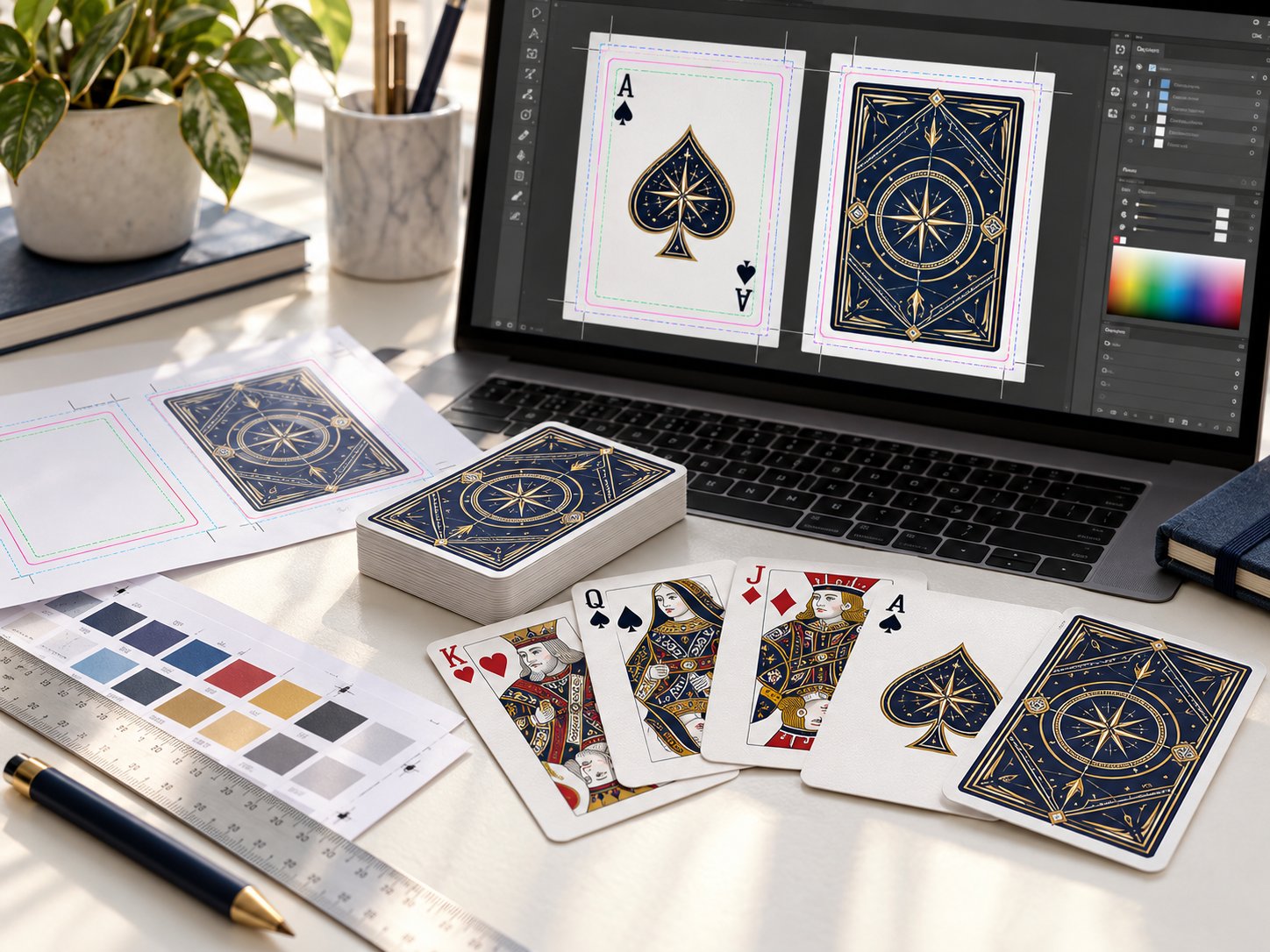
Supply print-ready files at 300 dpi or higher in CMYK, sized to trim plus 0.125 inch bleed on all four sides, with a 0.125 inch safe margin inside the trim. Embed or outline fonts, and flatten transparency effects that could reflow.
A short pre-flight list:
- Trim, bleed, and safe zones drawn on their own layers.
- Rich black rather than 100 percent K for large dark areas, and a single flat black for small text.
- Every card exported as its own page or file, named to match the card it represents.
- Back design supplied separately, and flagged if it is directional rather than symmetrical.
Centering a back design that is not perfectly symmetrical is the single most common source of proof rejections, because a small trim shift is visible immediately on a symmetrical-looking back.
Who orders custom card decks, and what do they specify?
Audience drives specification more than taste does. A promotional deck handed out at a trade show and a tournament deck for a casino floor are the same product category with different requirements.
| Buyer | Typical stock | Typical size | Priority |
|---|---|---|---|
| Corporate gifting | Coated black-core paper, linen or smooth | Poker | Box presentation and brand color accuracy |
| Game publisher | Coated black-core paper | Poker or bridge | Card count, multiple backs, durability |
| Casino or hotel | Linen finish or plastic | Poker or bridge | Opacity, wear resistance, consistency |
| Outdoor or travel brand | 100 percent PVC plastic | Poker | Waterproofing and lifespan |
| Wedding or event | Coated paper, smooth finish | Poker | Photo reproduction and box design |
If you are printing for a brand handout program, the corporate gifts and giveaways use case covers what tends to matter at volume. For traditional play decks, start at custom poker cards, and for rules-driven sets, start at custom game cards.
Next steps
Decide size, card count, stock, finish, and packaging in that order, then price the configuration. Compare stocks on the paper versus PVC comparison, confirm dimensions against the playing card sizes reference, review pricing tiers, and send the finished specification through the custom deck quote form.