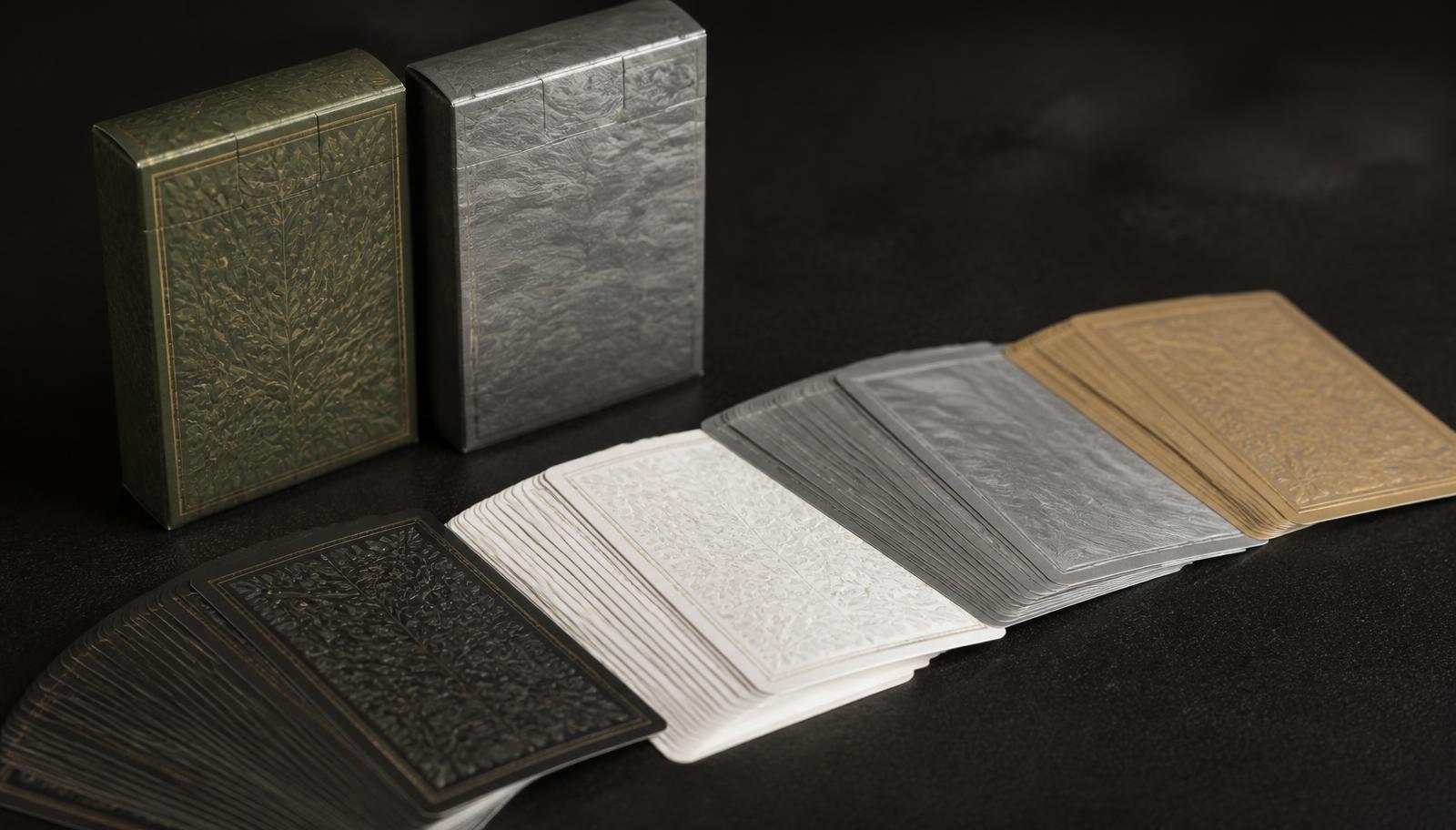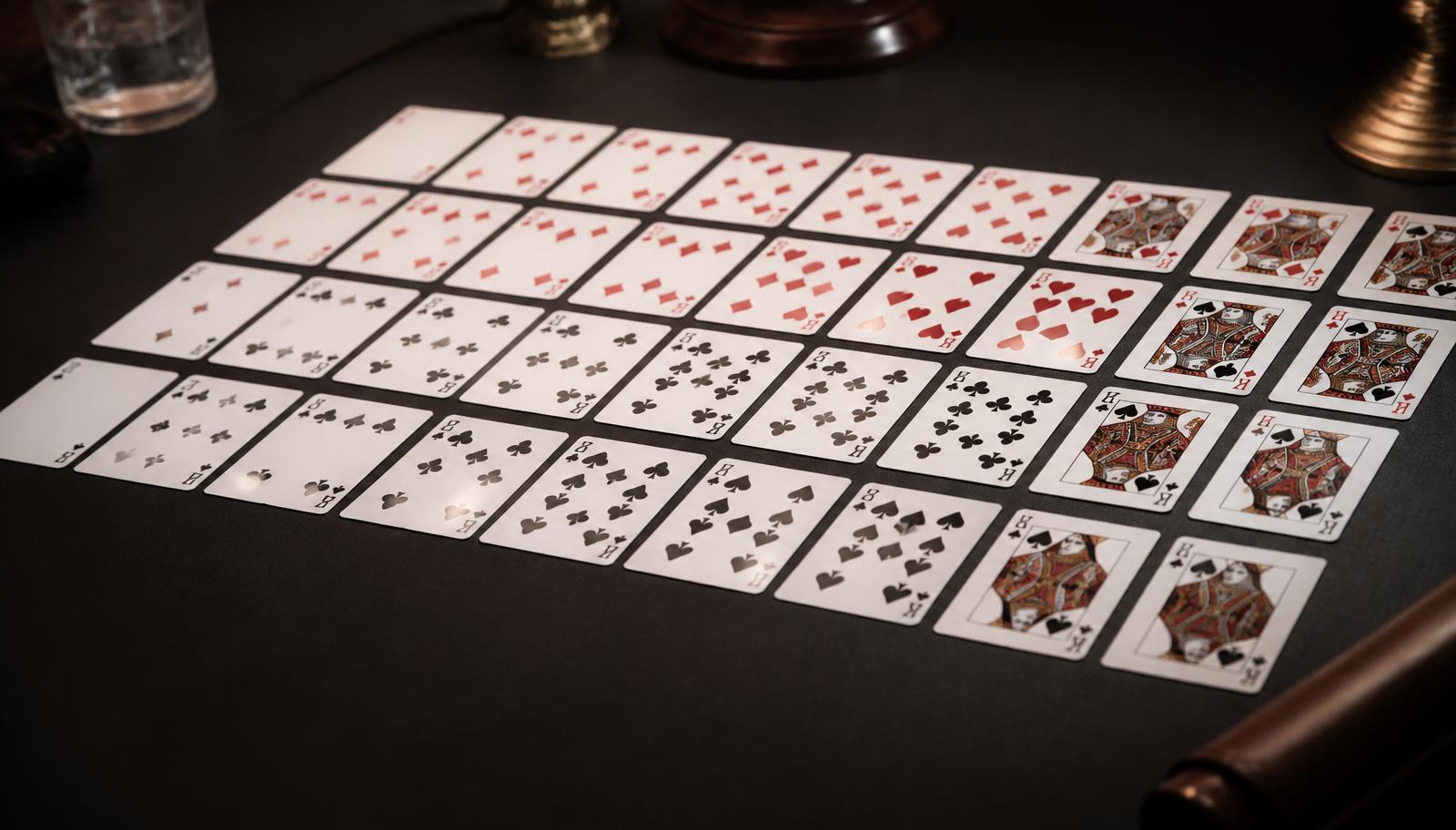
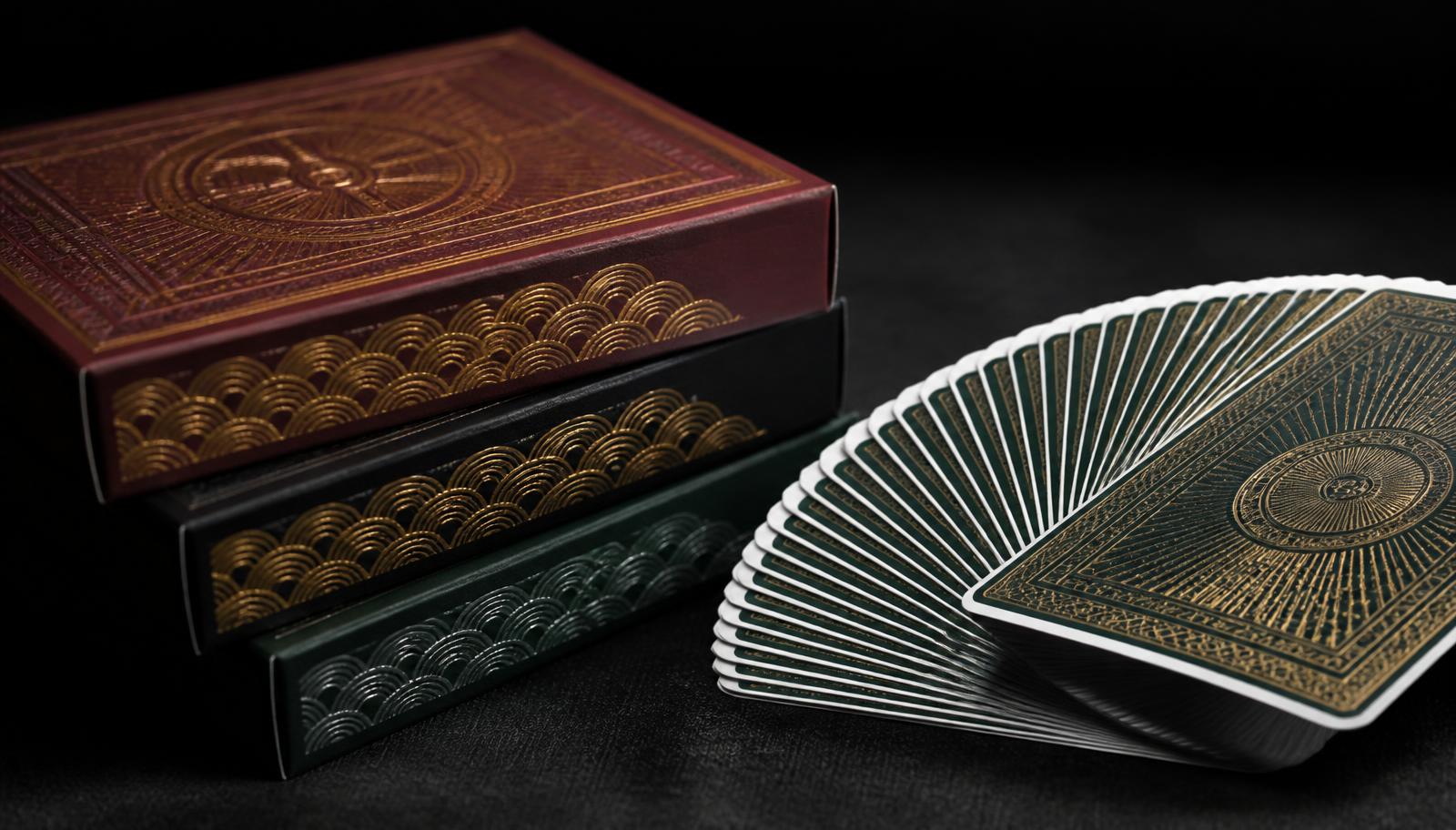
The tuck box is the first thing a buyer touches and the last thing most creators plan. This guide covers the practical spec: box dimensions, stock, finishes, dieline setup, and the file details that decide whether a box folds cleanly on press.
What is a tuck box for playing cards?
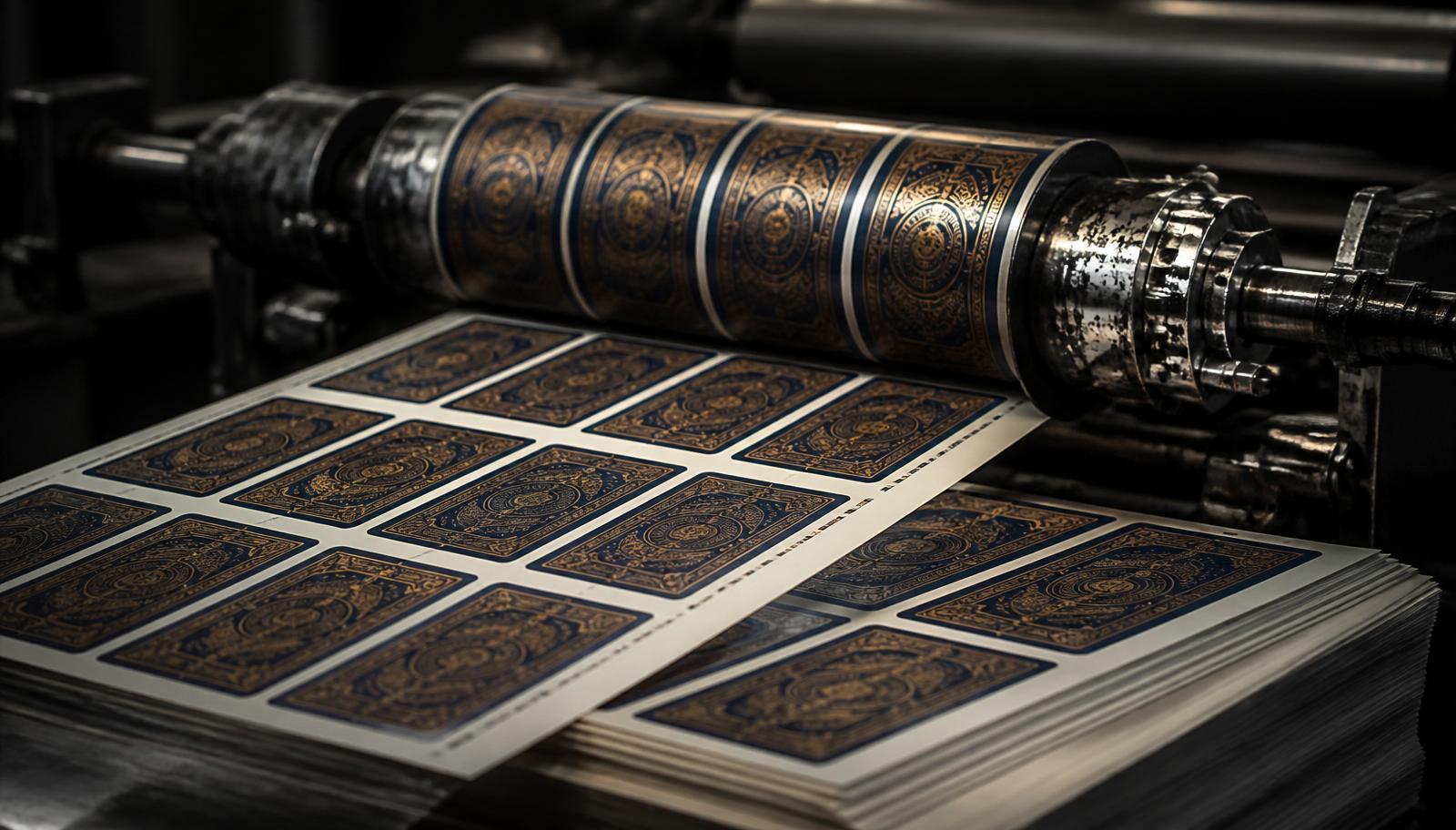
A tuck box is the folded paperboard sleeve that holds a deck. It prints flat from a dieline, then gets die-cut, creased, glued along one side seam, and folded, with tuck flaps at the top and bottom that close the box without adhesive on the closure edge. Every retail deck you have handled from a corner store used this format, because it is cheap to produce, quick to fold, and strong enough to survive shipping and shelf handling.
See our full tuck box product page for what we print, and the tuck box glossary entry for the short definition.
What size is a standard poker tuck box?
A tuck box is sized to the deck it holds, not to a universal spec. Start from the card size and card count:
| Deck | Card size | Typical box footprint | Depth driver |
|---|---|---|---|
| Poker, 52 cards + jokers | 2.5 x 3.5 in | about 2.6 x 3.6 in | ~0.75 in at 310 GSM |
| Bridge, 52 cards + jokers | 2.25 x 3.5 in | about 2.35 x 3.6 in | ~0.75 in at 310 GSM |
| Jumbo / oversized | varies by spec | matched to card trim | card count x caliper |
| Game decks, 60-200+ cards | 2.5 x 3.5 in | 2.6 x 3.6 in footprint | depth grows with count |
The footprint is close to fixed; depth is the variable. A 52-card poker deck on 310 GSM stock sits near 0.75 in, and a 200-card game deck on the same stock needs a much deeper box. Give the printer the final card count and stock choice before the dieline is cut, because a box built for 52 cards will not close over 90.
What card stock do tuck boxes print on?
Most custom playing card boxes print on 350 GSM C2S coated paperboard, sometimes labeled 16 point. C2S means coated two sides: ink holds detail on the outside, and the interior stays clean rather than absorbing color. Heavier board adds rigidity, which matters for two situations:
- Retail display. A box that must stand on a shelf without bowing benefits from the extra caliper.
- Deep decks. A 150-card game deck puts far more outward pressure on the side panels than a 52-card deck.
Note that box stock and card stock are separate decisions. Card stock is measured in GSM too, and 310 GSM black-core is the common premium gameplay choice, but that number describes the cards, not the packaging. Compare card options in our card stock guide.
Which tuck box finishes are worth the money?
Finishes are where a box stops looking like a print job and starts looking like a product. Ranked by how often buyers order them:
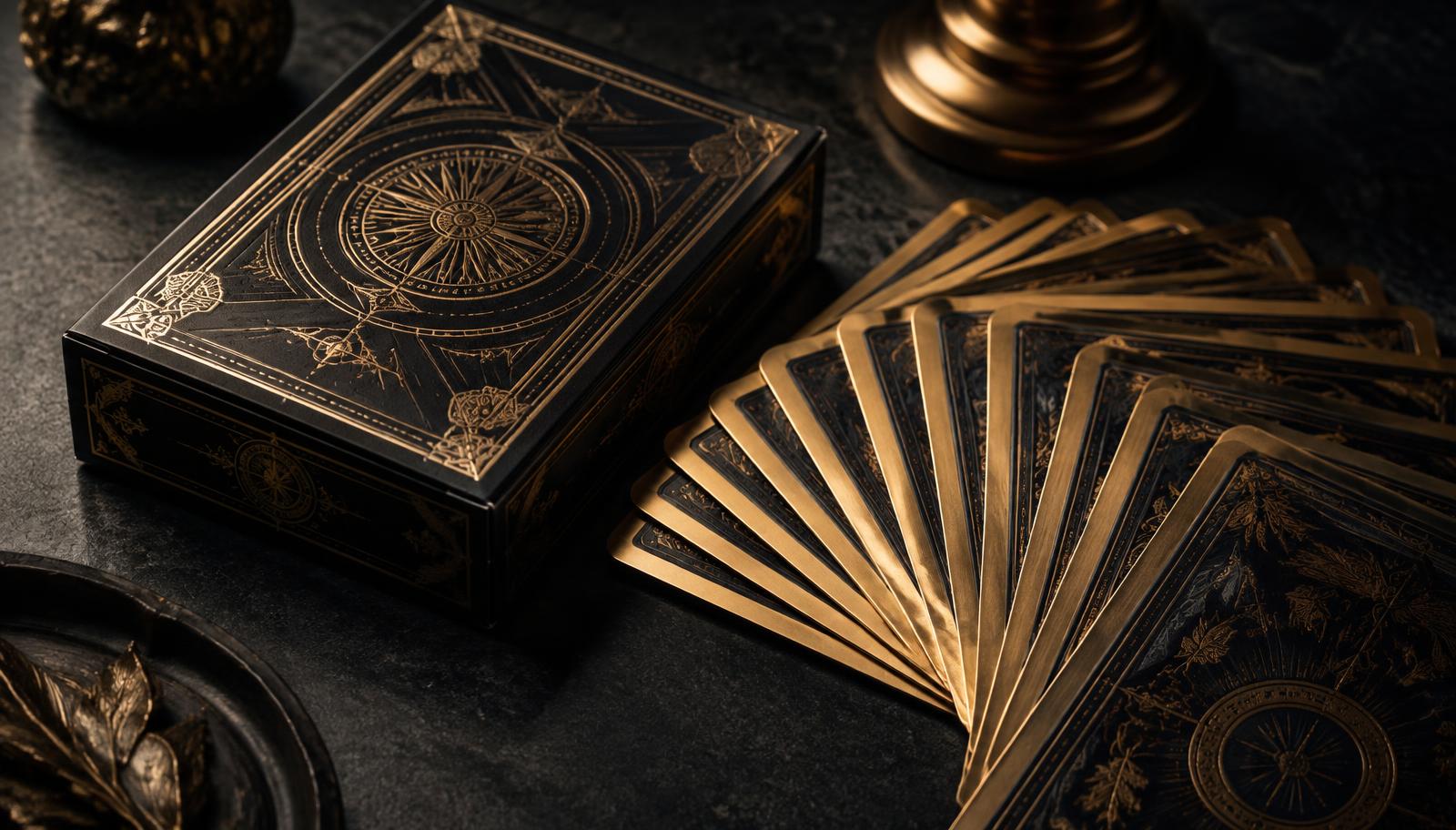
- Foil stamping. Real metallic foil in gold or silver, applied as a separate press pass with heat and a die. It catches light in a way printed metallic ink cannot.
- Soft-touch matte lamination. A velvety film that kills glare and reads as expensive under the hand. It also hides fingerprints on dark boxes.
- Spot gloss. Selective gloss over a matte base to lift a logo or crest without adding metal.
- Embossing or debossing. Raised or recessed relief on a mark or pattern, often combined with foil on the same element.
Foil and embossing both need their own artwork layer as 100% solid black vector shapes, with no gradients, no strokes converted at render time, and no soft edges. A gradient cannot be foiled; the die is either there or it is not.
How do you set up a tuck box dieline?
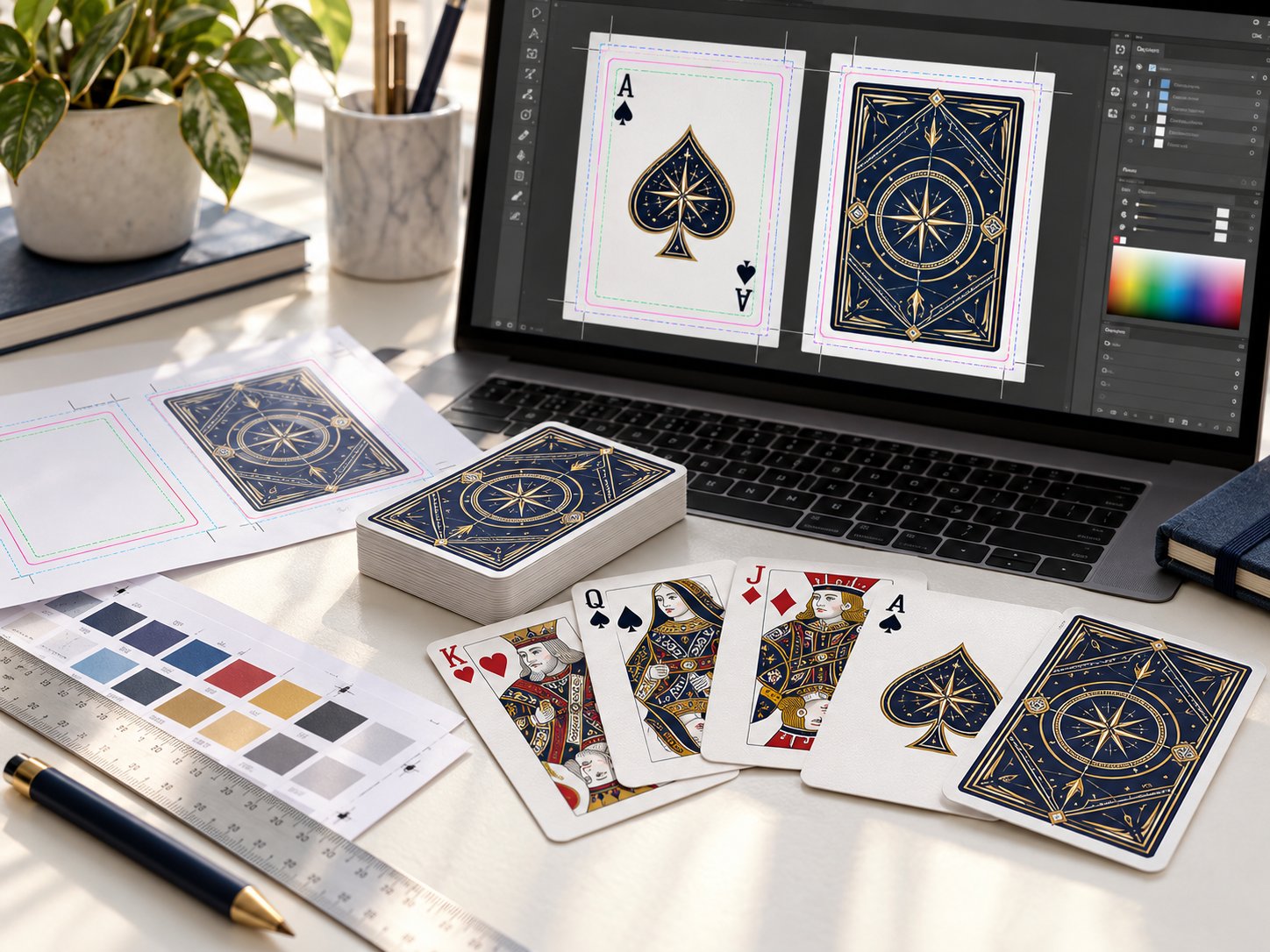
Work on the dieline, not next to it:
- Download the poker or bridge dieline from our free templates page.
- Place the dieline on its own locked top layer and build art beneath it.
- Extend art 0.125 in past every cut line for bleed.
- Keep text and logos 0.125 in inside the trim, within the safe zone.
- Respect the crease lines. Art that crosses a fold will show a hairline break in the ink at the crease; put critical detail inside a panel.
- Mind panel orientation. The back panel is often rotated 180 degrees relative to the front on a flat dieline, and art placed without checking rotation prints upside down on the finished box.
- Export as a print PDF with the dieline layer hidden, fonts outlined, and images at 300 DPI or higher.
What goes on each panel?
Six printable surfaces, each with a job:
- Front panel: the brand mark or the same pattern as the card backs.
- Back panel: the pattern again, or a short description and a QR code.
- Two side panels: brand name, deck name, card count.
- Top and bottom flaps: small marks, a seal graphic, or the card count.
Card count on the box is a genuinely useful detail for game decks and non-standard counts, because a buyer holding a 60-card affirmation deck or a 48-card pinochle deck cannot tell what is inside from the outside.
Do you need a proof before a full run?
For a first packaging design, yes. A press proof or a short-run sample shows two things a screen cannot: how the ink actually sits on coated board, and whether the box closes properly over your specific card count and stock. Fold problems and depth mistakes are cheap to fix on ten boxes and expensive on ten thousand. Many Kickstarter creators run a short run for the campaign video first, then scale on the same press.
Tuck box vs. two-piece box vs. plastic case
| Package | Best for | Trade-off |
|---|---|---|
| Tuck box | Retail decks, promos, most projects | Standard look unless finished |
| Two-piece setup box | Gift and collector editions | Higher unit cost, longer build |
| Plastic case | Casino and heavy-handling decks | Little branding surface |
For most orders the tuck box wins on cost and speed, and the finish choice does the premium work. Reserve a two-piece box for editions where unboxing is part of the product.
Common tuck box mistakes
- Designing the box before the card count is final, so the depth is wrong.
- Building art at the trim line with no bleed, producing a white edge after die-cut.
- Submitting foil as a gradient or a raster image instead of solid vector.
- Placing a logo across a crease line.
- Using RGB images that shift on a CMYK press.
- Forgetting the box back panel rotation on the flat dieline.
Where to start
Pull the dielines from the templates page, decide card count and card stock first, then choose one finish rather than three. When the spec is set, send it through the quote tool or check pricing for run-size breaks. If you also need to nail the cards themselves, read the tuck box template walkthrough and the playing card sizes guide.