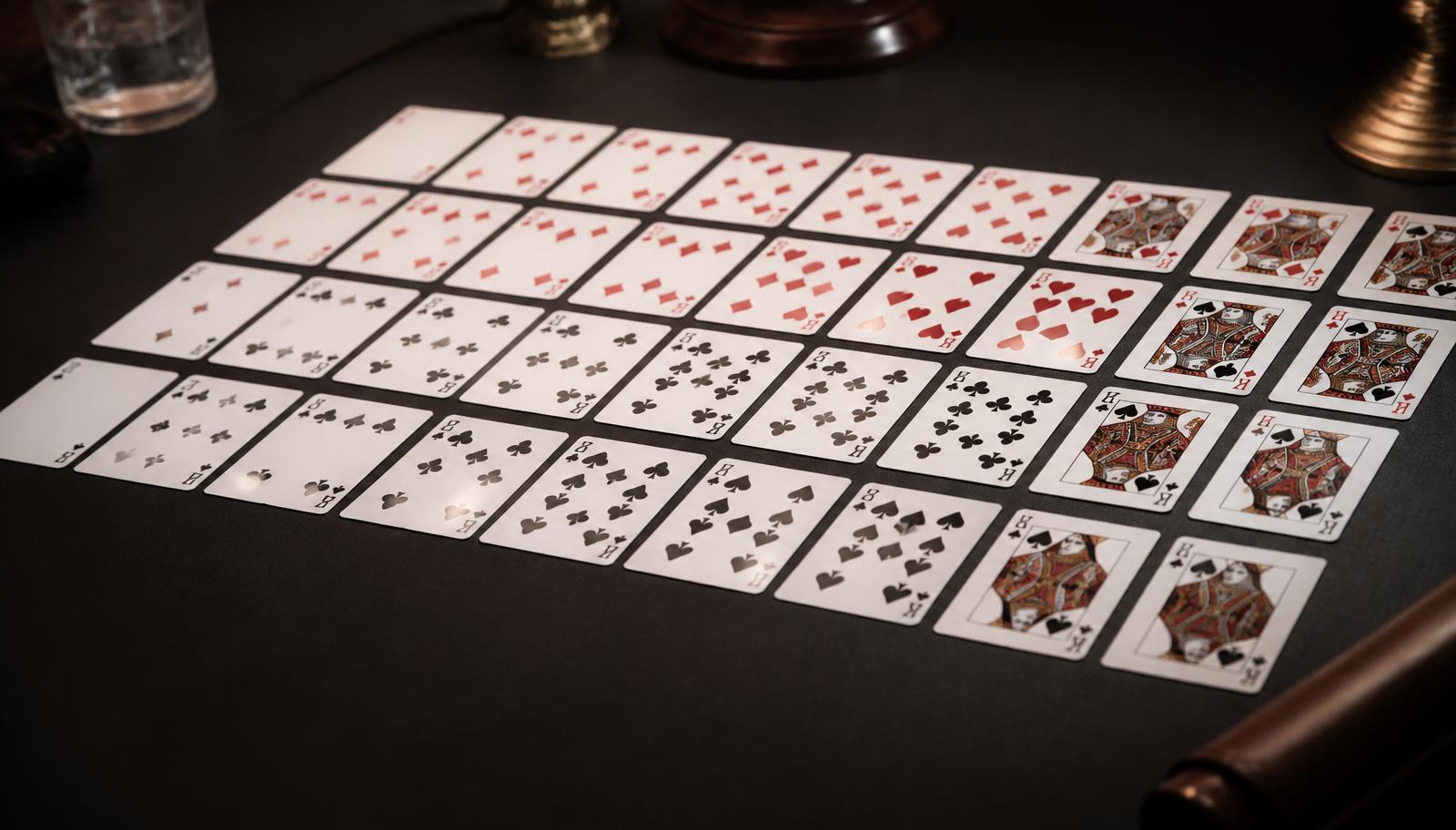
How to Print Custom Board Game Cards (2026 Guide)
How to print custom board game cards in 2026: sizes, card stock, file setup, minimum orders, packaging, and what a real print run costs.
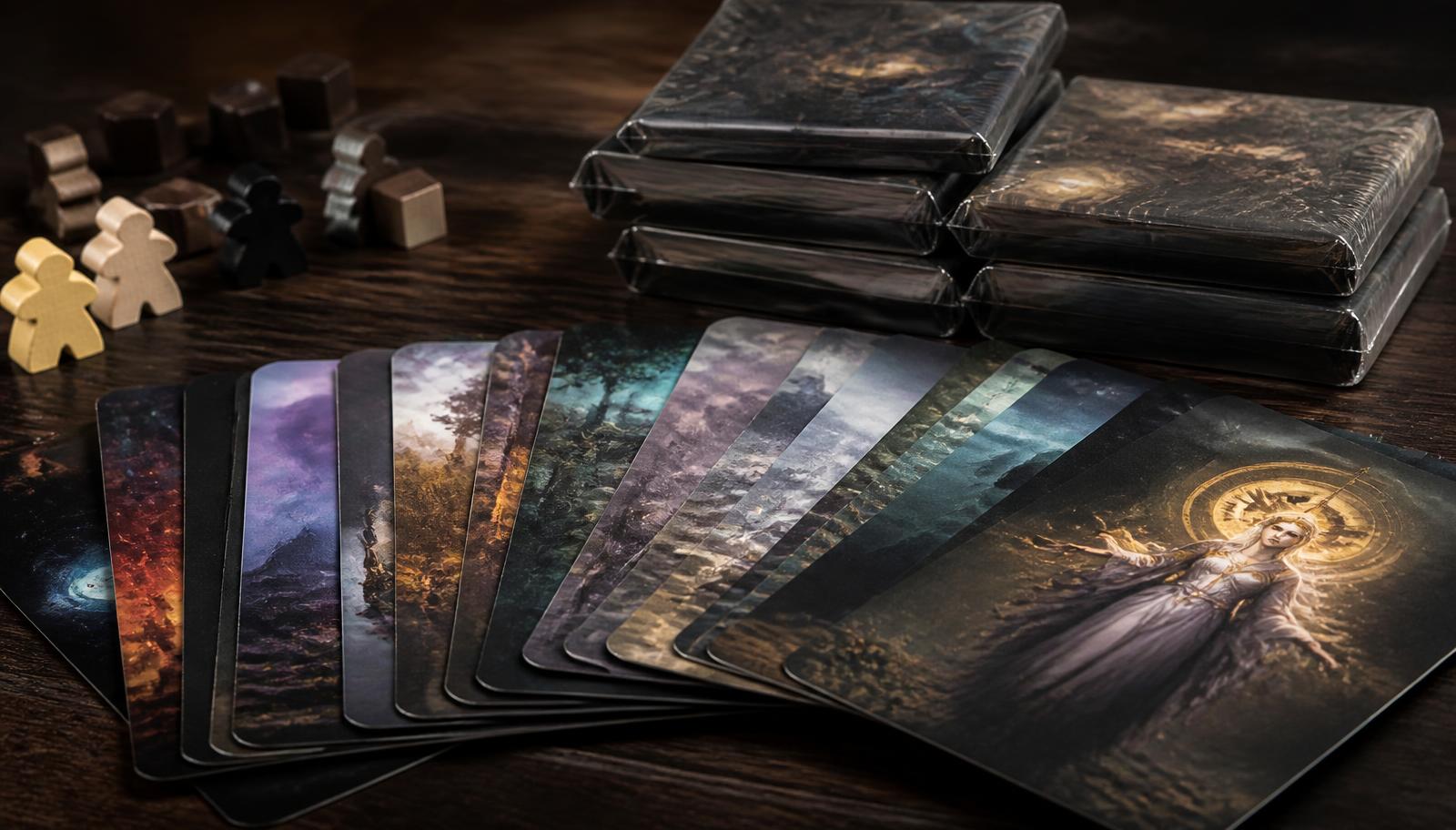
Board game cards are the highest-touch component in your box — players hold them, shuffle them, and judge your whole game by how they feel. This guide covers how to print custom board game cards in 2026: sizes, stocks, quantities, file setup, and what a real print run costs.
What are board game cards, and how are they different from playing cards?
Board game cards are decks printed for a specific tabletop game rather than for standard 52-card play. They differ in three ways: variable card counts (a game deck might be 18, 54, 110, or 300 unique faces), non-standard sizes (mini, poker, tarot-size), and mixed backs across multiple sub-decks inside one box. Everything else — the press, the stock, the coating — is the same equipment that prints custom poker cards.
What size should board game cards be?
Three sizes cover roughly 90% of published tabletop games:
| Size | Dimensions | Typical use |
|---|---|---|
| Mini (Euro) | 1.75 × 2.5 in | Resource, currency, small effect cards |
| Poker / standard | 2.5 × 3.5 in | Main action decks, most common |
| Bridge | 2.25 × 3.5 in | Hand-held decks, tight-fit boxes |
| Jumbo / large | 3.5 × 5 in | Character boards, event cards |
Poker size is the safe default: sleeves are universally available, players already know the feel, and it fits most off-the-shelf inserts. See the full playing card sizes guide before you lock artwork dimensions.
What card stock works best for board game cards?
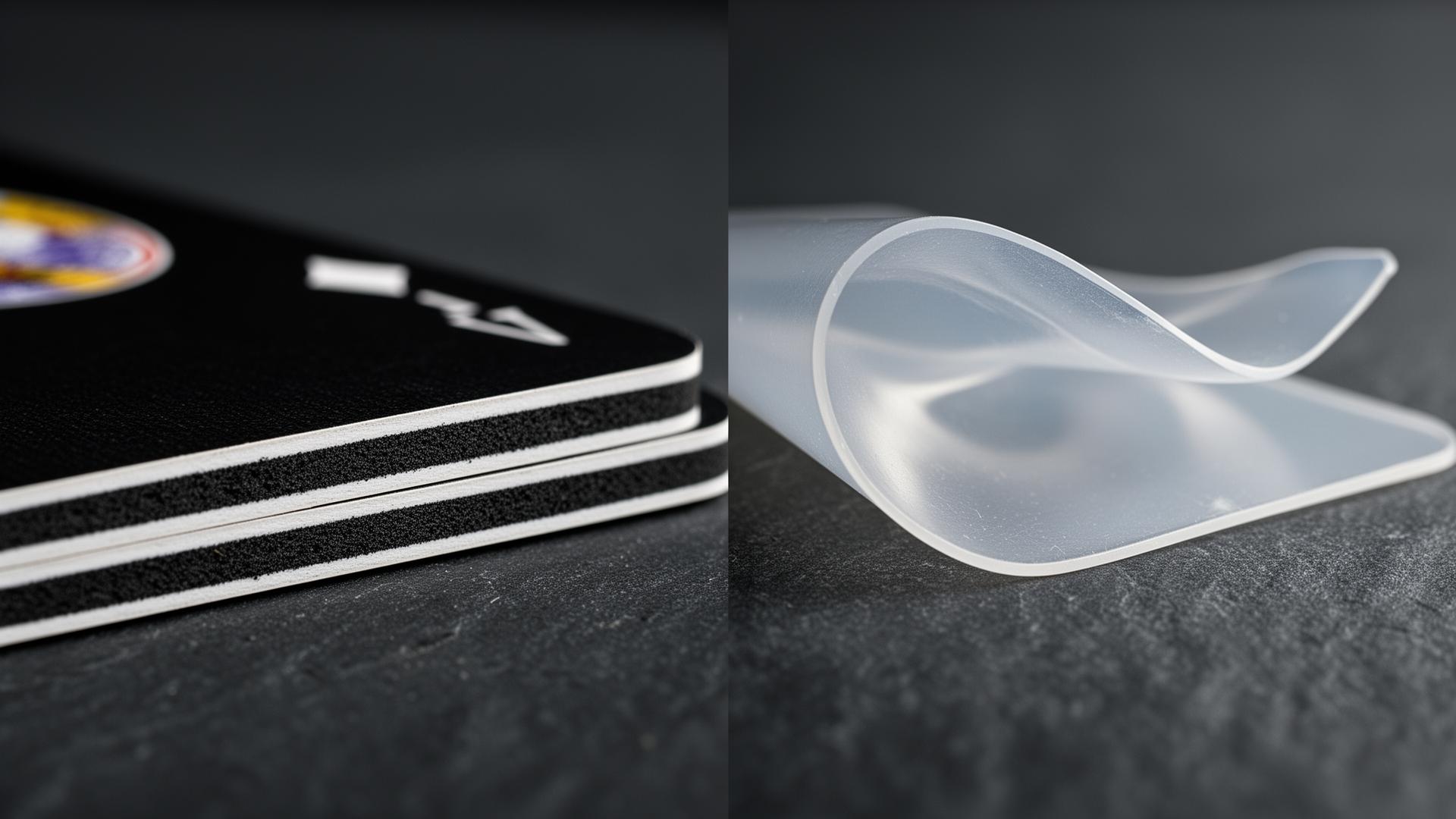
For games with heavy shuffling — deckbuilders, trick-takers, roguelikes — use 310 GSM deluxe black-core with an air-cushion linen finish. The black core blocks light so backs can't be read through the face, and linen embossing lets cards slide instead of stick. For draft-once, place-on-table cards, 300 GSM standard smooth is fine and cheaper. Waterproof 100% plastic is the choice for outdoor, bar, or kids' games. Compare all options in the card stock guide.
- 310 GSM black-core linen — best all-round durability and snap
- 300 GSM smooth — lowest cost, fine for low-shuffle cards
- 100% plastic — washable, tear-resistant, highest cost per deck
- Linen premium stock — the standard for retail-shelf games
How do you set up print files for board game cards?
Set every card at 300 DPI in CMYK, with 0.125 in (1/8 inch) of bleed on all four sides and a 0.15–0.2 in safe zone inside the trim line. Export as a single multi-page PDF with one card per page, named so face and back pairing is unambiguous (01_face.pdf, 01_back.pdf). Do not place icons or numbers within 0.2 in of a corner — cutting tolerance on a production press is ±0.02 in per card, and rounded corners eat the rest. Our template library has ready-made guides for every size above.
How many unique card faces can one deck have?
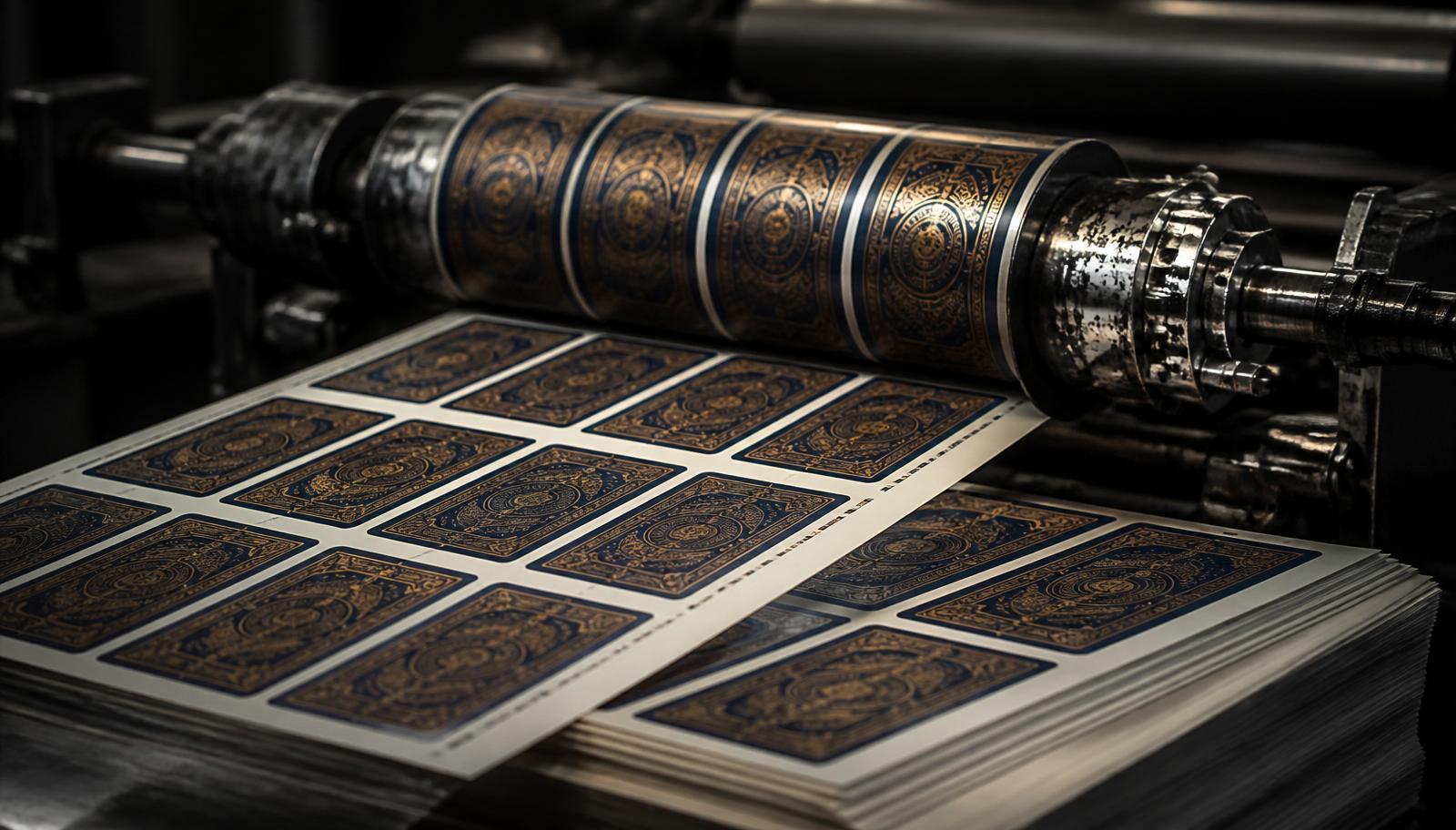
There is no practical limit — a 110-card game with 110 unique faces prints the same way a 52-card deck with 52 faces does. What changes is file prep time, not press cost. If your game has multiple sub-decks with different backs, treat each back as its own deck in the quote so the press sheets are laid out correctly. Board game publishers who ship 4–8 sub-decks per box should read the board game publishers use case.
How much does it cost to print custom board game cards?
Per-deck cost is driven almost entirely by quantity. Small runs of 50–250 decks carry the setup cost across few units; at 1,000+ decks the price per deck drops sharply, and at 5,000+ it flattens out. Card count matters second (a 110-card deck costs more than a 54-card deck), stock third. For live numbers on your exact spec, use the instant quote tool or read how much custom playing cards cost — we don't publish a static price grid because stock, count, and packaging move the number too much.
What's the minimum order for board game cards?
Short runs start low enough to prototype: you can print a playable set for blind playtesting without committing to a fulfillment run. See the minimum order guide for current thresholds and how short-run pricing compares to a production quantity.
Should you prototype before the full print run?
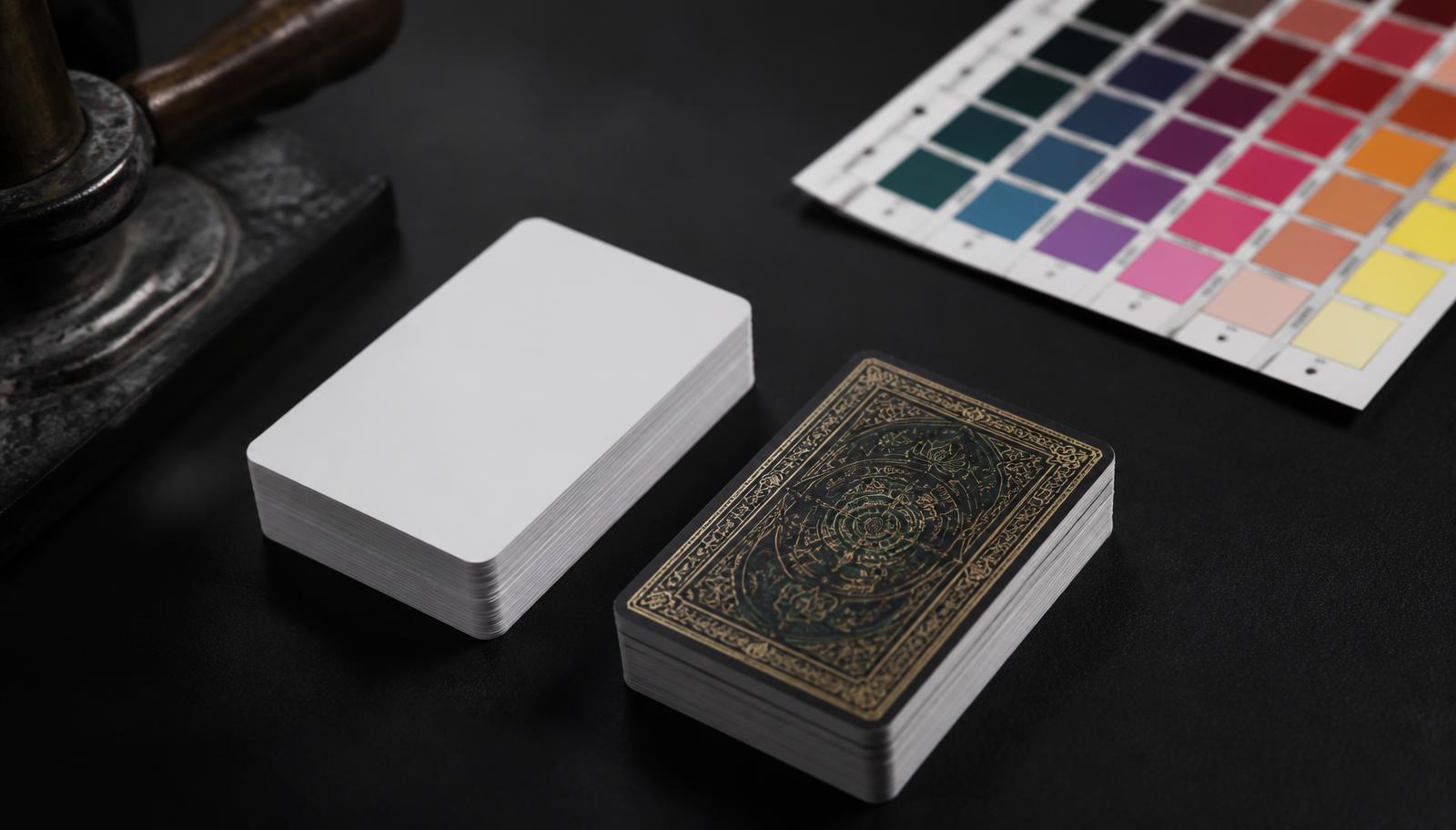
Yes — always. Order a short-run prototype of the exact stock and size you plan to ship, play it 10+ times, then commit. The most expensive mistake in tabletop publishing is discovering after 2,000 boxes that your icon set is unreadable at mini size or that a keyword collides across two sub-decks. A prototype run costs a fraction of a rework.
How should board game cards be packaged?
Three common options:
- Shrink-wrapped stacks — cheapest, standard for cards that live inside a game box
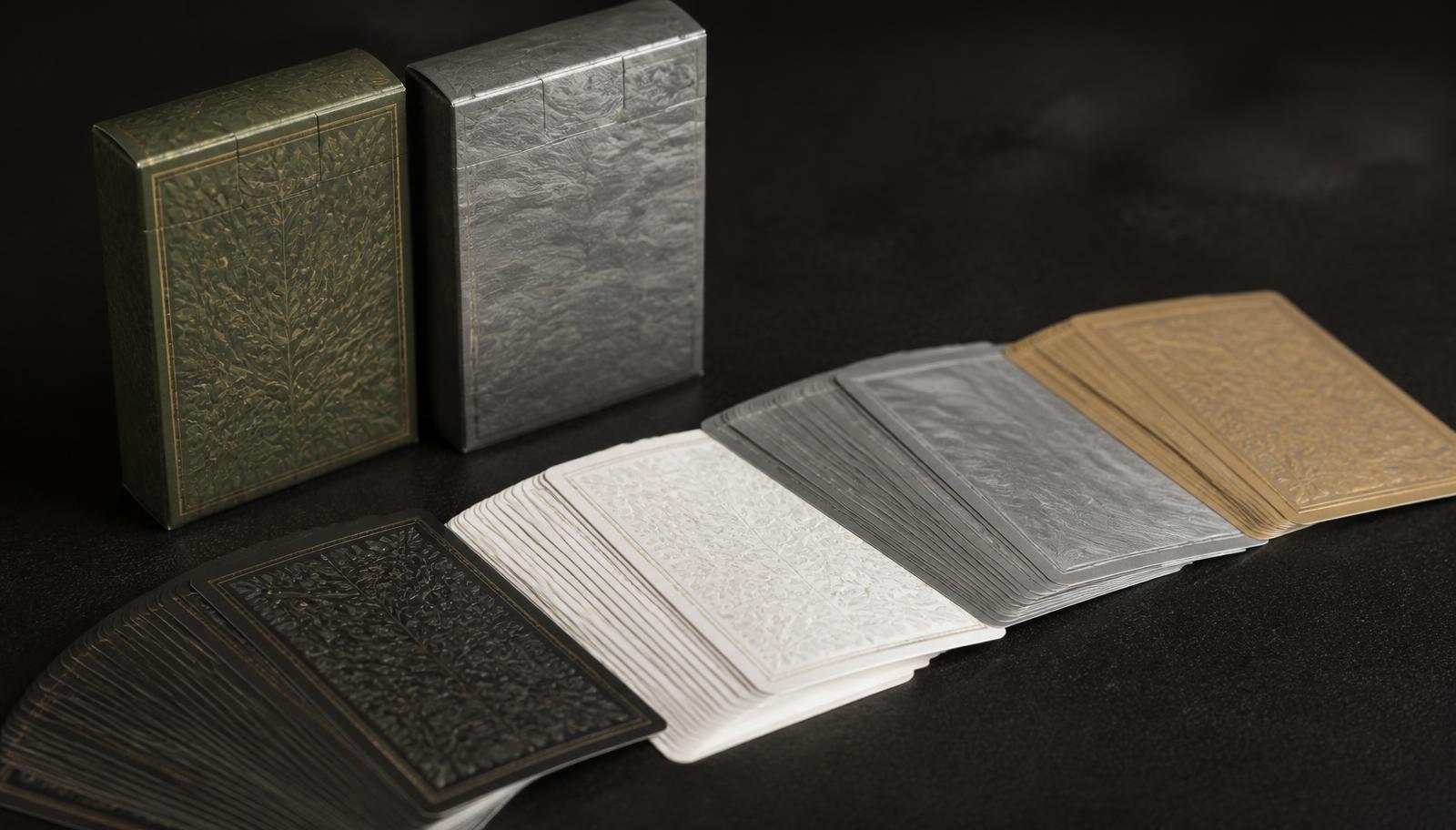
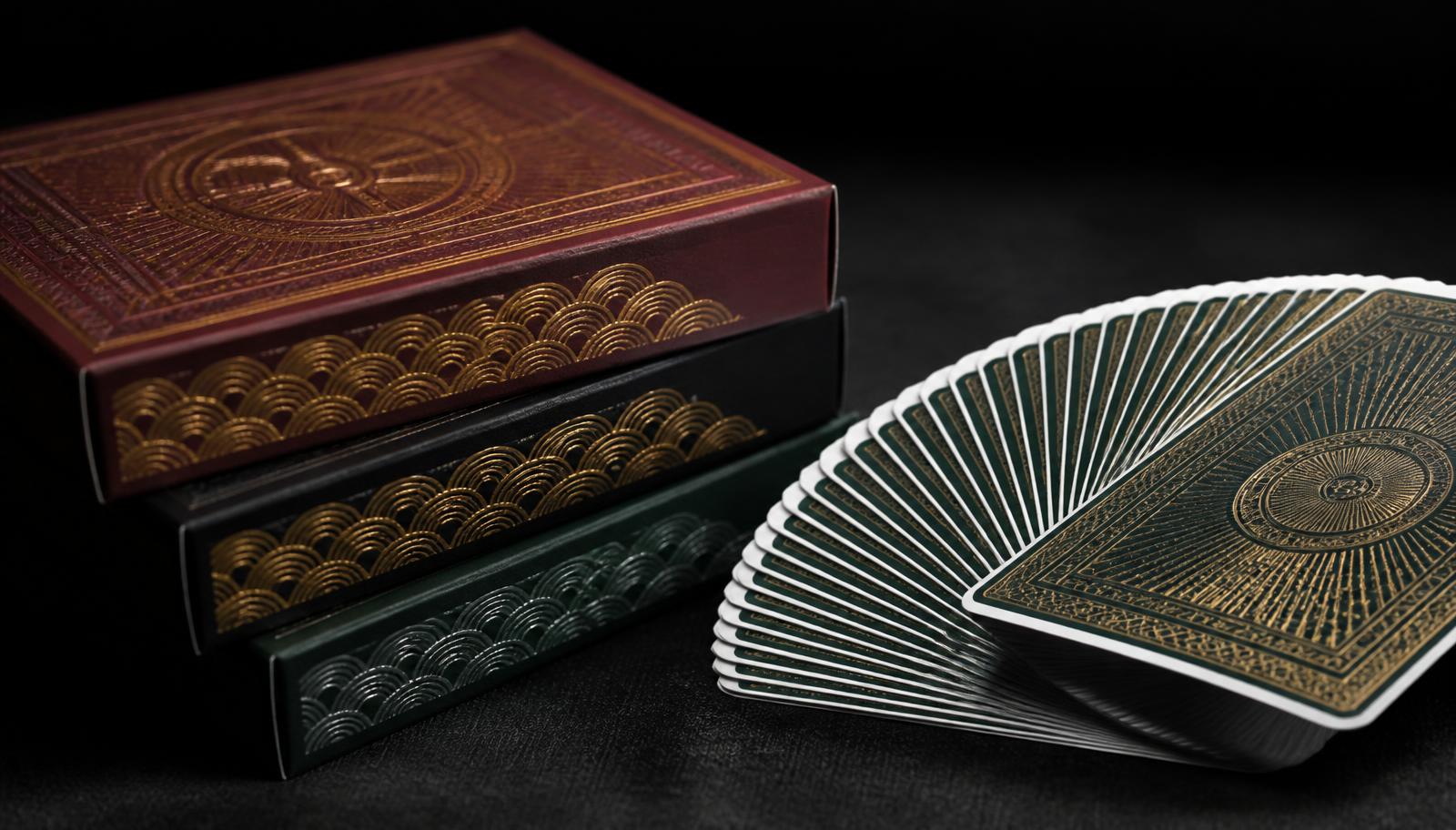
- Tuck boxes — for standalone sub-decks or retail sale, printed on 350 GSM C2S with optional foil stamping
- Rigid two-piece boxes — premium, used for card-only games sold on shelf
If your game is card-only (no board), the box is your entire retail presence — budget for it accordingly.
How long does printing take?
Turnaround depends on quantity and finishing. Simple shrink-wrapped decks move fastest; foil-stamped tucks and rigid boxes add finishing time. US production removes ocean freight from the timeline entirely, which is why USA printing has become the default for creators with US-heavy backer lists. Detailed timelines are in the print turnaround guide.
What if you're funding the game on Kickstarter?
Print a prototype for the campaign video, then quote the fulfillment run at your realistic funding tier before you set pledge prices. Underpricing a card-heavy game is the single most common way funded campaigns lose money. The Kickstarter creator guide walks through quoting, timing, and fulfillment sequencing.
What about trading card games instead of board games?
TCGs have different constraints — rarity distribution, collation, foil parallels, and booster packing. If you're building a collectible game rather than a boxed board game, start with TCG printing 101 instead of this guide.
Where to print custom board game cards
Look for a printer that handles variable card counts natively, offers black-core stock, prints tuck boxes in-house, and will run a true prototype on production equipment. Mr. Playing Card presses custom game card decks in Orlando, Florida, so proofs and reruns don't cross an ocean. Start with the quote tool with your card count, size, and quantity in hand.
Frequently asked questions
What size are most board game cards?
Poker size (2.5 × 3.5 in) is the most common, followed by mini/Euro (1.75 × 2.5 in) for resource and currency cards. Poker size has the widest sleeve availability, which matters to players who protect their collection.
Can I print cards with different backs in the same order?
Yes. Each distinct back is treated as its own sub-deck in the layout. Tell your printer the exact count of each sub-deck when quoting so press sheets are planned correctly.
What DPI and bleed do board game cards need?
300 DPI, CMYK, with 0.125 in (1/8 inch) bleed on all sides and a 0.15–0.2 in interior safe zone. Keep critical icons and numbers at least 0.2 in from any corner.
Is black-core stock necessary for board game cards?
For any deck where hidden information matters — hands, draw piles, bidding — yes. Black core stops backlight from revealing the face. For open-information cards laid on the table it's optional.
Should I prototype before the full run?
Always. A short-run prototype on the exact stock and size you plan to ship catches readability and collation problems while they're still cheap to fix.
Related guides
Frequently asked questions
What size are most board game cards?
Poker size (2.5 × 3.5 in) is the most common, followed by mini/Euro (1.75 × 2.5 in) for resource and currency cards. Poker size has the widest sleeve availability, which matters to players who protect their collection.
Can I print cards with different backs in the same order?
Yes. Each distinct back is treated as its own sub-deck in the layout. Tell your printer the exact count of each sub-deck when quoting so press sheets are planned correctly.
What DPI and bleed do board game cards need?
300 DPI, CMYK, with 0.125 in (1/8 inch) bleed on all sides and a 0.15–0.2 in interior safe zone. Keep critical icons and numbers at least 0.2 in from any corner.
Is black-core stock necessary for board game cards?
For any deck where hidden information matters — hands, draw piles, bidding — yes. Black core stops backlight from revealing the face. For open-information cards laid on the table it's optional.
Should I prototype before the full run?
Always. A short-run prototype on the exact stock and size you plan to ship catches readability and collation problems while they're still cheap to fix.