Custom Affirmation Cards: Sizes, Stock, and Costs (2026 Guide)
Custom affirmation cards are short-run card decks printed on premium linen, soft-touch, or black-core stock, trimmed to whatever size your deck design calls for, and packaged in a printed tuck box sized to your card count. They are the fastest-growing category on our press floor in 2026, largely because coaches, therapists, wellness brands, and authors have found that a 44-card deck sells better than another PDF. This guide covers sizing, stock, card counts, guidebooks, real per-deck costs, and the file specs our prepress team checks before your job goes on press. When you are ready, get a custom affirmation card quote in about a minute.
What are custom affirmation cards?
An affirmation deck is a printed set of cards where each card carries one short statement, prompt, or intention, usually paired with artwork on the face and a repeating pattern on the back. Structurally it is identical to any other printed deck: same presses, same stocks, same finishing line as our custom affirmation decks. The difference is editorial, not mechanical — the deck is read one card at a time rather than played as a game, so legibility, color accuracy, and the feel of the card in one hand matter more than shuffle-and-fan performance.
That distinction drives three practical choices you will make below: a larger trim than a poker card, a heavier or textured stock, and packaging that survives being opened every morning for a year.
What size should affirmation cards be?
There is no single standard, which is why we quote affirmation decks at a custom trim. The three sizes below cover the overwhelming majority of decks we print.
| Trim size | Feel in hand | Best for |
|---|---|---|
| 2.75 x 4.75 in | Slim, elegant, one-handed | Text-forward daily affirmation decks |
| 3.5 x 5.75 in | Substantial, display-ready | Illustration-heavy decks, retail shelf presence |
| 2.5 x 3.5 in | Compact, pocketable | Add-on decks, event giveaways, sample sets |
Whatever trim you pick, the file rules stay the same: 0.125 in bleed on all four sides, a 0.125 in safe zone inside the trim, 300 DPI minimum, CMYK, and a cut tolerance of roughly ±0.02 in. Because that tolerance is real on every press in the world, never place a thin border closer than 0.1875 in to the trim edge — a border that drifts even 0.02 in looks like a defect on a card someone holds inches from their face. The playing card sizes guide shows every trim we run side by side if you want to compare beyond the three above.
How many cards should an affirmation deck have?
Card count is a pricing input and a merchandising decision at the same time. Common counts:
- 30-33 cards. Entry-priced decks, workshop handouts, and add-ons sold alongside a book or course.
- 44-54 cards. The sweet spot. Enough variety for daily use, still cheap enough to hit a $24-$34 retail price with healthy margin.
- 60-78 cards. Larger decks, often with a guidebook. Heavier box, higher perceived value, higher unit cost.
Two rules from the floor. First, keep the count fixed before you design the tuck box — the box depth is cut to the exact stack height, so adding six cards after box approval means a new die and a new proof. Second, plan the count around your finish: a 78-card deck on heavy deluxe black-core stock produces a noticeably thick brick, which is great for retail presence and awkward for a bedside table.
Which card stock works best for affirmation cards?
Stock is the single biggest driver of how a deck feels, and feel is what reviews talk about.
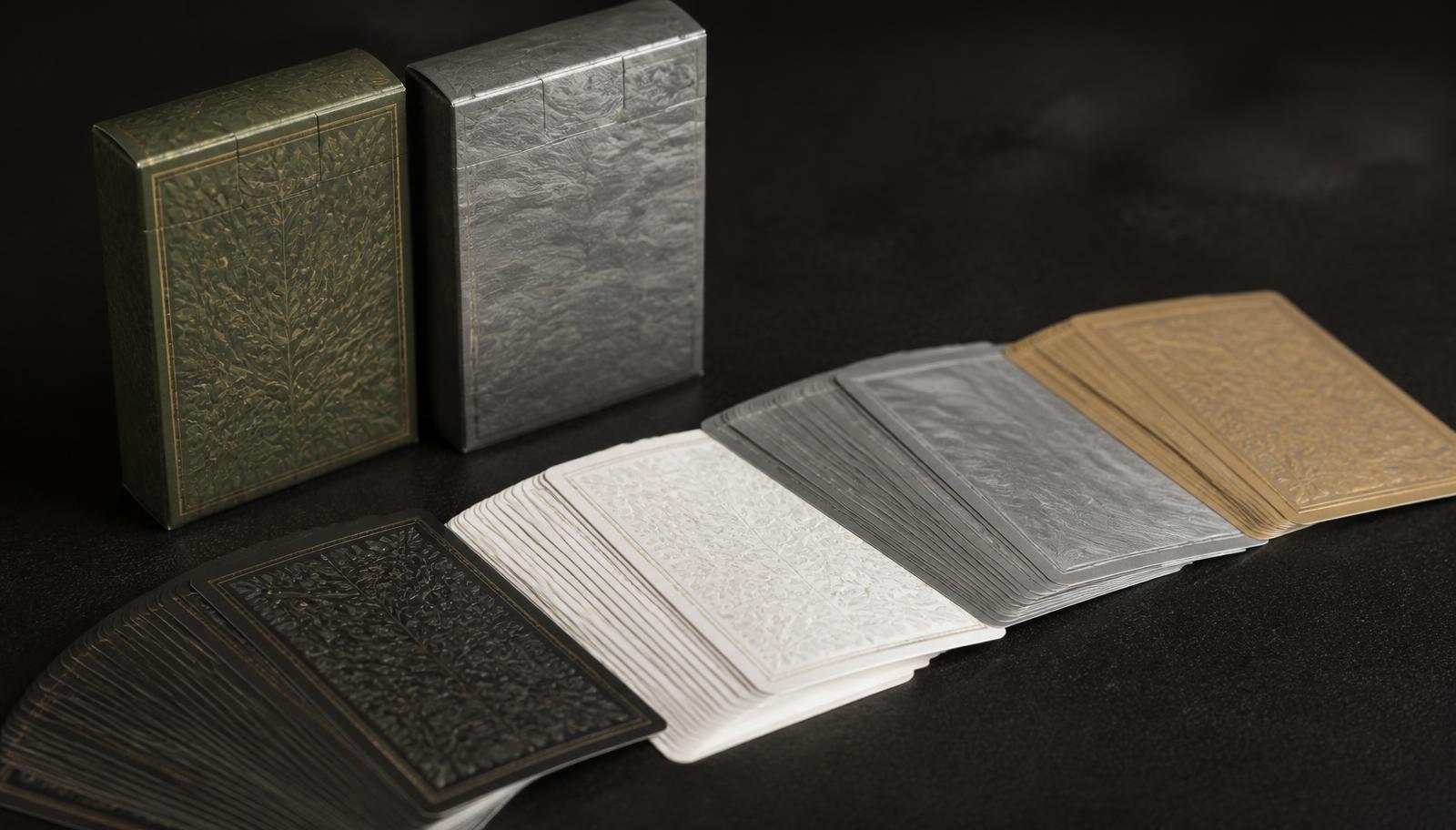
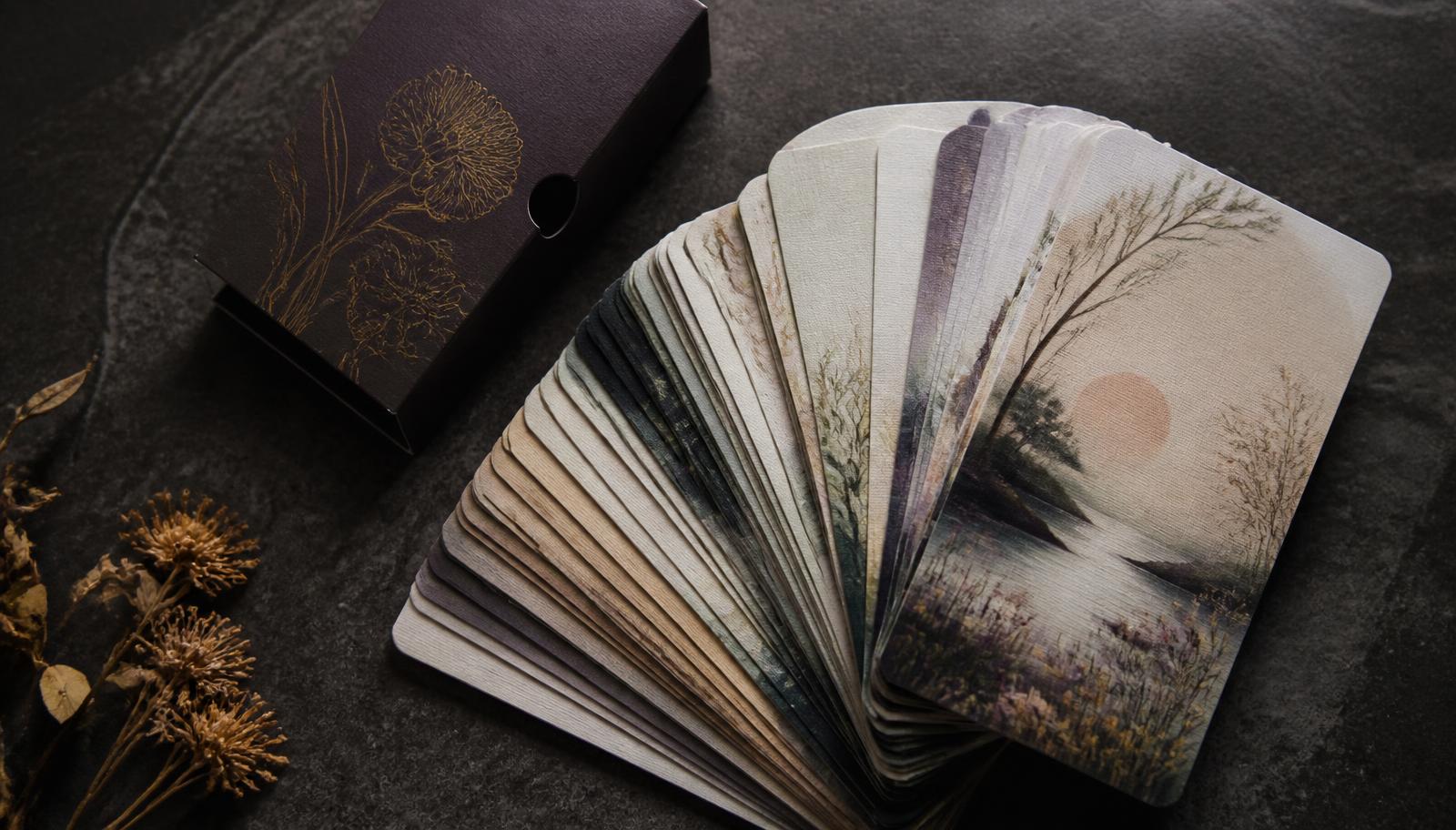
- Premium linen. Air-cushion embossed texture, slight tooth, matte-leaning surface. Our most-requested affirmation stock because it photographs beautifully for social and never looks glossy or cheap under warm indoor light.
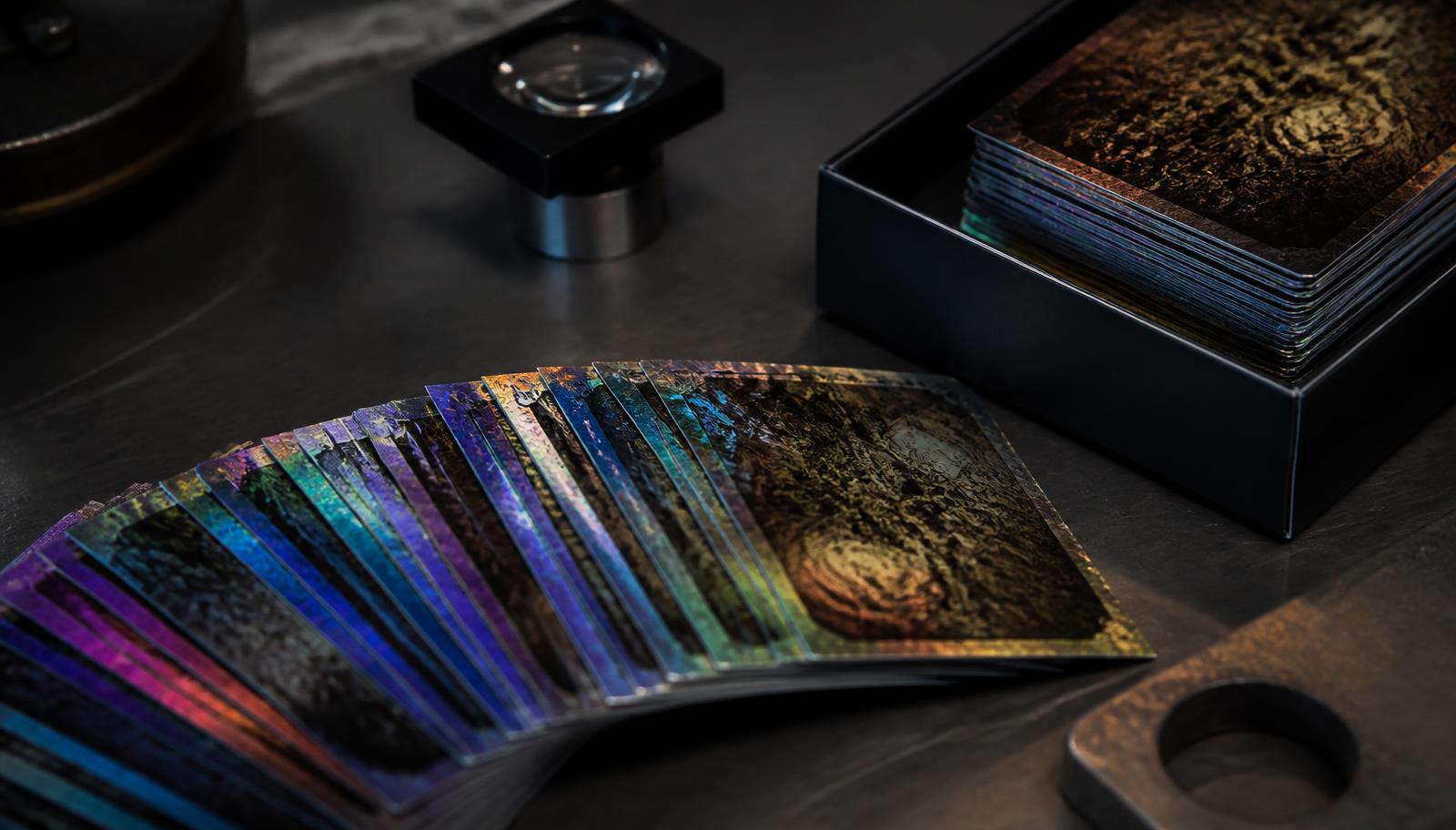
- Soft-touch coating. A velvet, almost suede hand-feel over a smooth sheet. Premium and tactile, and the most likely to draw an unprompted comment when someone first opens the box. It shows finger oils more than linen does over years of handling.
- Deluxe black-core. Heaviest and stiffest, with maximum opacity so a dark card back can never ghost through a light card face. The right pick for retail SKUs and limited editions.
- 310gsm black-core with a smooth coating. The value option. Vivid color, snappy, and the lowest cost per deck at every quantity.
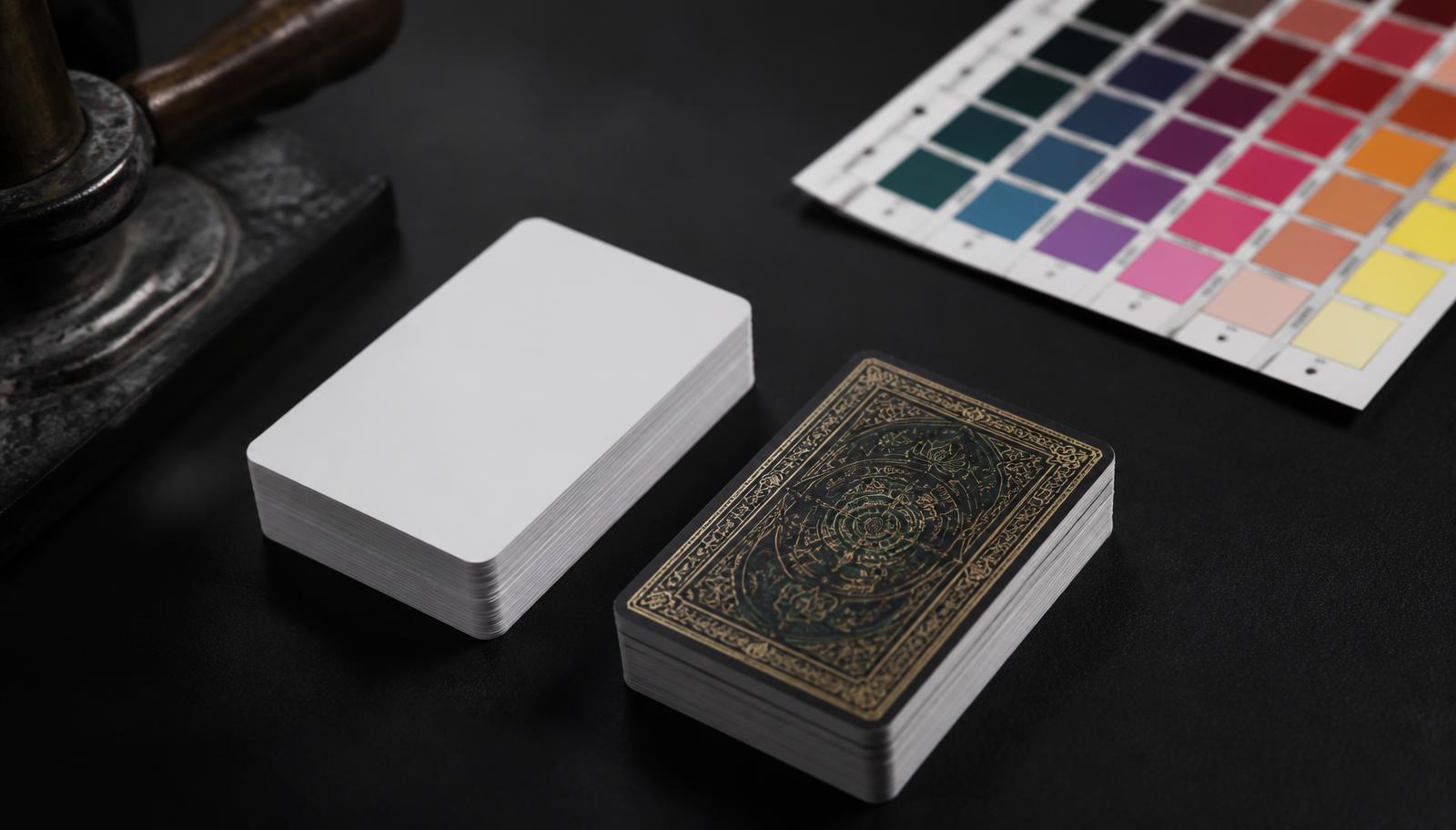
If your artwork depends on deep blacks or high-saturation gradients, ask for a printed proof rather than trusting a monitor. Linen texture scatters light and reads roughly 3-5% lighter than the same file on a smooth sheet, which matters when a designer has spent weeks matching a brand palette.
How much do custom affirmation cards cost?
Pricing follows quantity, stock tier, and packaging. Per-deck pricing on our standard tiers as of August 2026:
| Quantity | Classic | Standard | Deluxe |
|---|---|---|---|
| 25 | $13.49 | $14.48 | $15.49 |
| 50 | $8.99 | $9.76 | $10.49 |
| 100 | $6.55 | $7.69 | $7.99 |
| 250 | $5.09 | $5.29 | $5.59 |
| 500 | $3.69 | $3.89 | $4.19 |
| 1,000 | $2.59 | $2.79 | $2.99 |
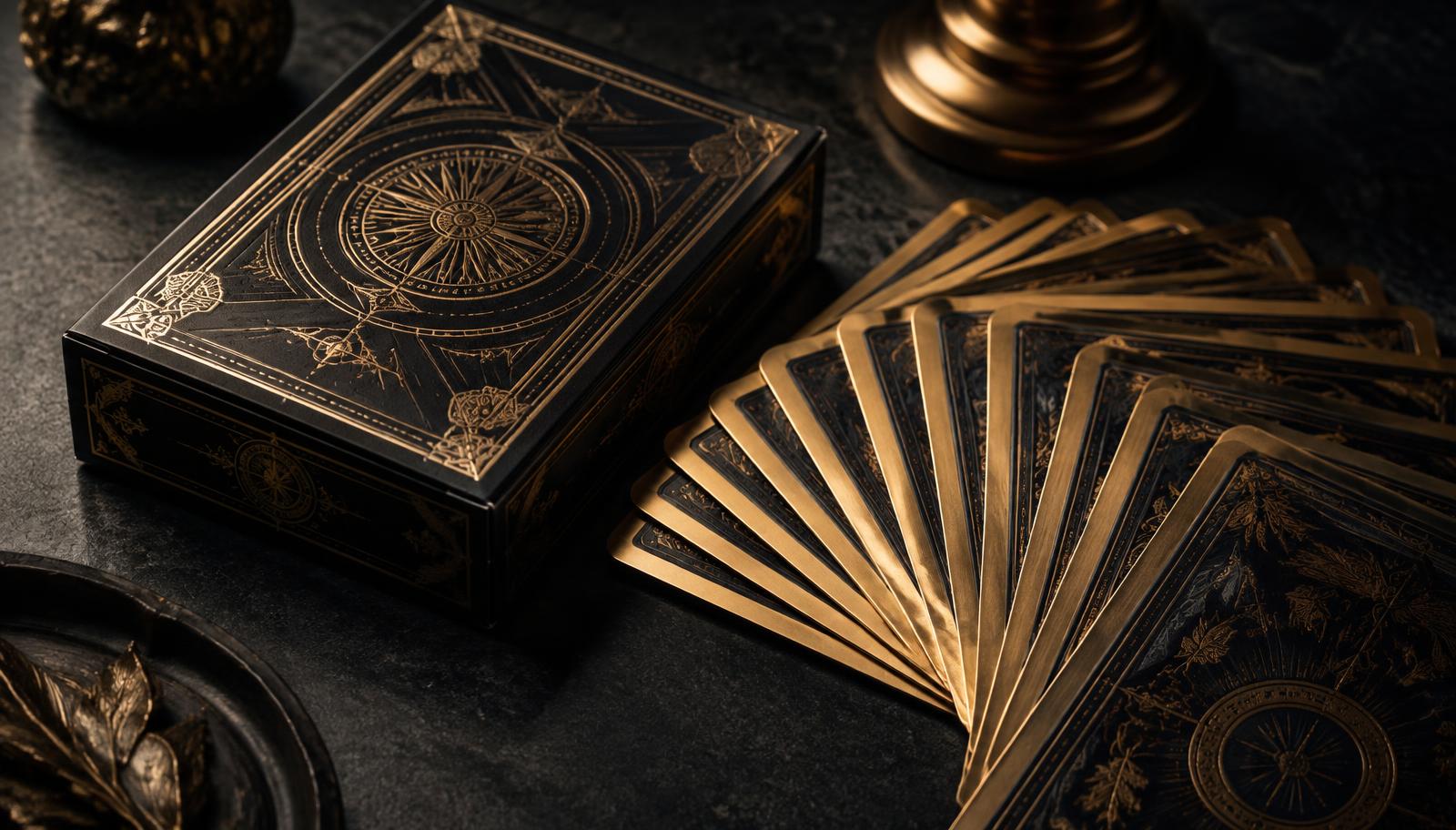
Packaging is quoted per deck on top of that. A printed custom tuck box runs about $1.19 per deck at 1,000, foil stamping on the box about $1.32 per deck at 1,000 with a 100-deck minimum, and embossing about the same. Full current numbers, including every add-on, live on the pricing page, and the cost breakdown guide walks through how quantity, stock, and finishing interact.
For a working retail model: 500 decks on Standard stock with a printed tuck box lands near $5.08 per unit all in. At a $29 retail price that supports wholesale at $14.50 and still leaves room for shipping and payment fees.
What is the minimum order for custom affirmation cards?
Our floor is 15 decks, which exists so you can hold a physical proof before committing capital. Most first production runs land at 100-250 decks, and the per-deck curve flattens hard after 1,000. The practical sequence that works for nearly every launch:
- Order 15-25 decks as a proof run. Read every card in print. Typos survive six rounds of on-screen proofreading and die instantly on paper.
- Test-sell that batch to your list, workshop, or retreat audience. Note which cards people photograph.
- Reprint at 250-500 with any copy fixes, and add foil or embossing on the box once you know the deck sells.
The minimum order guide covers how small runs are priced and why the 15-deck tier costs what it does.
Can you print a guidebook with the deck?
Yes, and roughly half of affirmation decks we print include one. Two formats dominate:
- Folded insert. A single sheet folded to card width, 4-8 panels. Cheapest, fits inside a standard tuck box with no depth change.
- Saddle-stitched booklet. 16-64 pages, trimmed slightly smaller than the cards. Needs a deeper box or a two-piece rigid box, and it turns the product into a boxed set rather than a deck.
Booklets are priced separately by page count and trim, so include the page count in your quote request. If the booklet exists mainly to explain each card, consider putting the long text on the card back instead — fewer parts, lower cost, and nothing to lose.
What finishes and packaging upgrades are worth it?
Ranked by the reaction they earn per dollar spent on an affirmation deck:
| Upgrade | What it does | Notes |
|---|---|---|
| Printed custom tuck box | Full-color box on 350 GSM 16pt C2S | Essentially mandatory for retail |
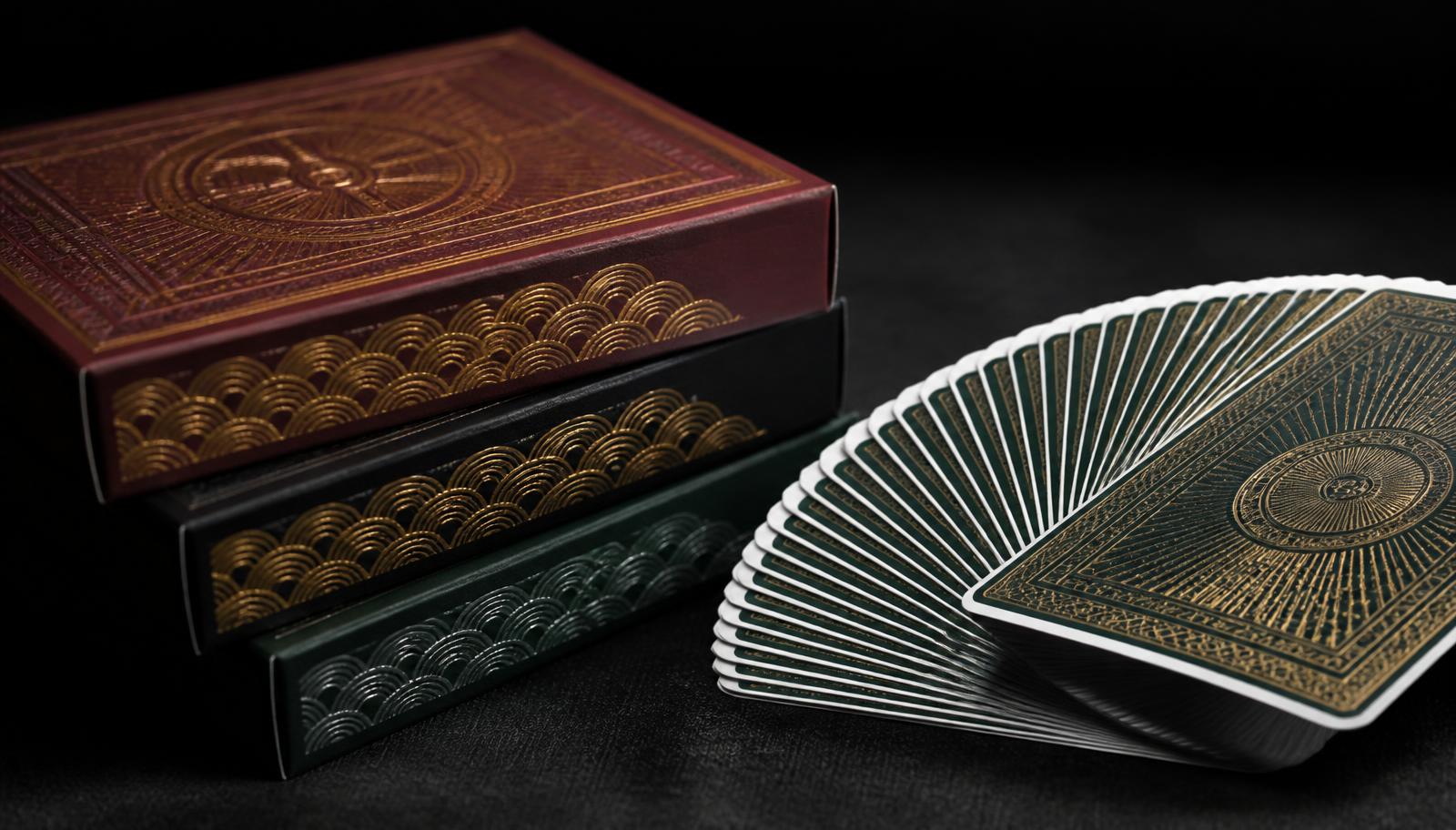
| Foil stamping | Metallic gold, silver, or copper on the box | 100-deck minimum, strongest shelf lift |
| Embossing | Raised logo or motif on the box | 100-deck minimum, pairs well with foil |
| Print inside of tuck box | Interior pattern or message | Cheap delight, noticed on unboxing |
| Plastic jewel case | Rigid protective case | Durable, less premium than a printed box |
Skip glossy UV coating on affirmation decks. It fights the calm, matte aesthetic most wellness brands are after and it glares badly in phone photos, which is where your customers will do your marketing for you.
How long does it take to print an affirmation card deck?
From approved artwork to boxed decks, standard production runs about 10-15 business days for typical quantities, plus transit. Foil, embossing, and custom box dies add a few days because they require tooling and a separate pass. Rush handling is available on most jobs — ask in your quote request rather than after your files are approved. The production timeline guide breaks each stage down.
Design and prepress time is usually the real bottleneck, not the press. Decks that arrive as a correctly built, single multi-page PDF with bleed move to press in a day; decks that arrive as 54 individual JPEGs at 150 DPI spend a week in back-and-forth.
What files does the printer actually need?
Hand your designer this list before they start, not after:
- One multi-page PDF for card faces, in deck order, plus a separate single page for the shared card back.
- Every page at trim size plus 0.125 in bleed on all sides.
- All text converted to outlines, or all fonts embedded.
- CMYK color, 300 DPI minimum on all placed images, no RGB or spot swatches left in the file.
- A separate flattened PDF for the tuck box, built on the die line we provide for your trim and card count.
- Text no smaller than 8 pt, and no key text within 0.1875 in of the trim.
Free templates for our standard trims are on the templates page, and the template walkthrough shows how to lay out faces and backs correctly.
Who prints affirmation decks in the United States?
We print in Orlando, Florida, which matters for two reasons specific to this category. Domestic production means a 10-15 business day schedule instead of an 8-12 week overseas cycle plus customs, and it means you can approve a physical proof, change three cards, and reprint inside the same month. For wellness brands, nonprofits, and fundraiser decks tied to a launch date, retreat, or campaign, that schedule certainty is usually worth more than a few cents per deck.
Frequently asked questions
How much do custom affirmation cards cost?
Per-deck pricing ranges from about $13.49 at 25 decks to $2.59 at 1,000 decks on Classic stock, with Standard and Deluxe tiers slightly higher. A printed custom tuck box adds roughly $1.19 per deck at 1,000. See the pricing page for the full table.
What is the best size for affirmation cards?
2.75 x 4.75 in is the most popular trim for text-forward daily decks, while 3.5 x 5.75 in suits illustration-heavy decks that need retail shelf presence. Both are printed as custom trims with 0.125 in bleed.
How many cards should be in an affirmation deck?
44 to 54 cards is the sweet spot: enough variety for daily use while keeping the unit cost low enough to retail at $24-$34. Entry decks run 30-33 cards, and larger decks run 60-78.
What is the minimum order for a custom affirmation deck?
15 decks. Most brands order 15-25 as a physical proof run, then reprint at 250-500 once the copy is final.
Can I include a guidebook with my affirmation cards?
Yes. A folded insert fits inside a standard tuck box, and a saddle-stitched booklet of 16-64 pages requires a deeper box. Booklets are quoted separately by page count and trim.
How long does production take?
About 10-15 business days from approved artwork for typical quantities, plus transit. Foil stamping, embossing, and custom box dies add a few days for tooling.
Related guides
Frequently asked questions
How much do custom affirmation cards cost?
Per-deck pricing ranges from about $13.49 at 25 decks to $2.59 at 1,000 decks on Classic stock, with Standard and Deluxe tiers slightly higher. A printed custom tuck box adds roughly $1.19 per deck at 1,000.
What is the best size for affirmation cards?
2.75 x 4.75 in is the most popular trim for text-forward daily decks, while 3.5 x 5.75 in suits illustration-heavy decks that need retail shelf presence. Both are printed as custom trims with 0.125 in bleed.
How many cards should be in an affirmation deck?
44 to 54 cards is the sweet spot: enough variety for daily use while keeping unit cost low enough to retail at $24-$34. Entry decks run 30-33 cards and larger decks run 60-78.
What is the minimum order for a custom affirmation deck?
15 decks. Most brands order 15-25 as a physical proof run, then reprint at 250-500 once the copy is final.
Can I include a guidebook with my affirmation cards?
Yes. A folded insert fits inside a standard tuck box, and a saddle-stitched booklet of 16-64 pages requires a deeper box. Booklets are quoted separately by page count and trim.
How long does production take?
About 10-15 business days from approved artwork for typical quantities, plus transit. Foil stamping, embossing, and custom box dies add a few days for tooling.