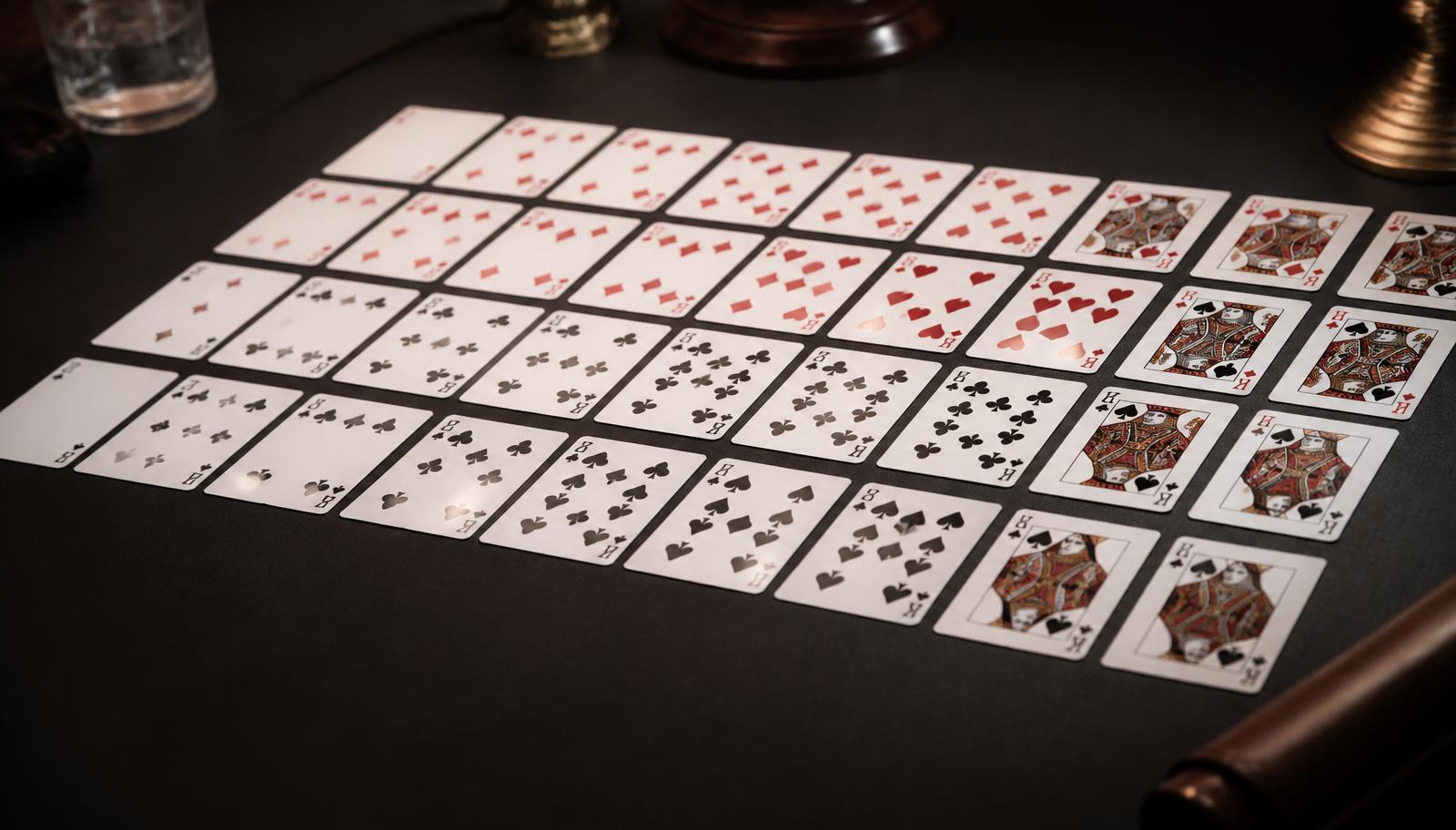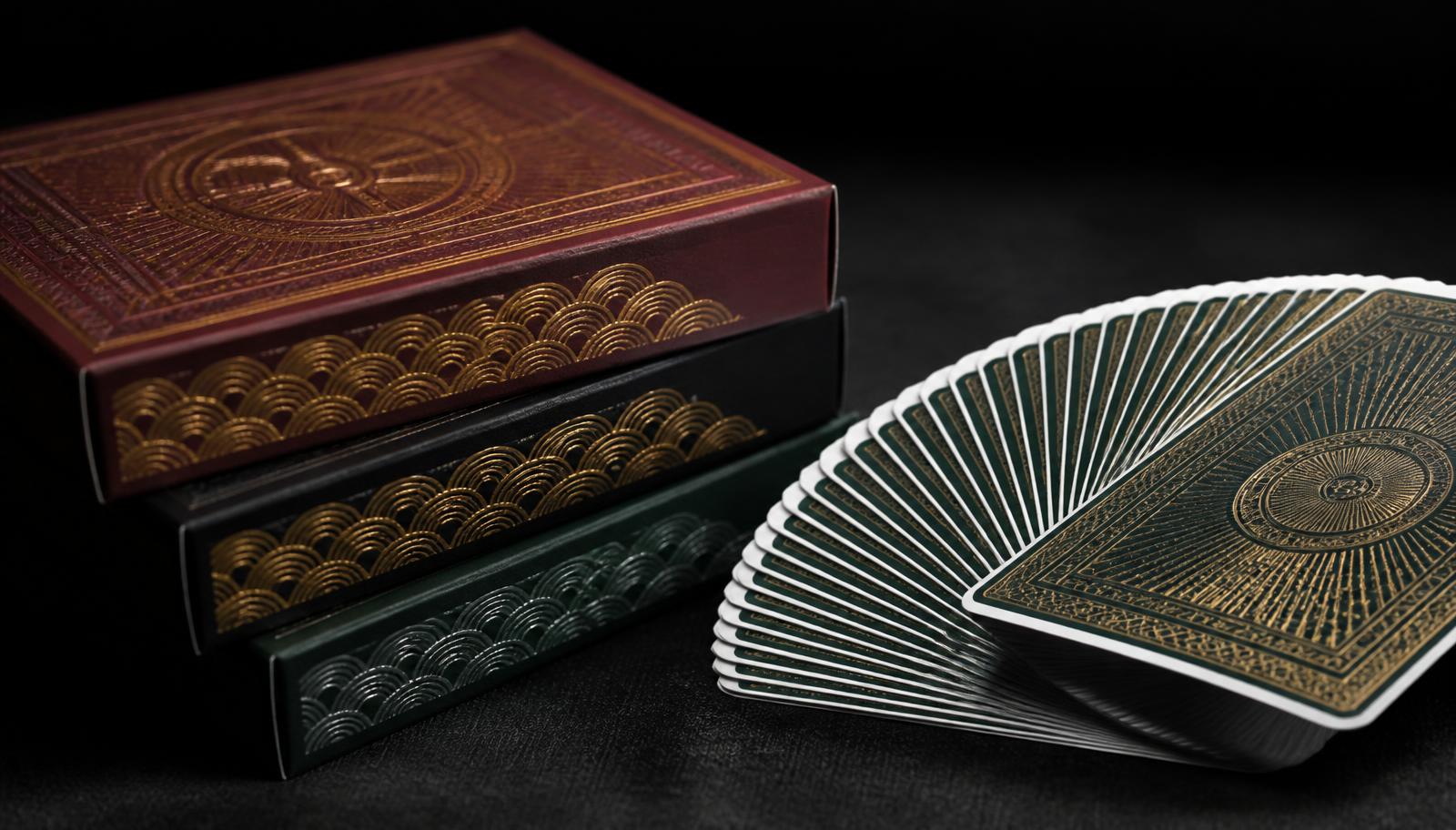
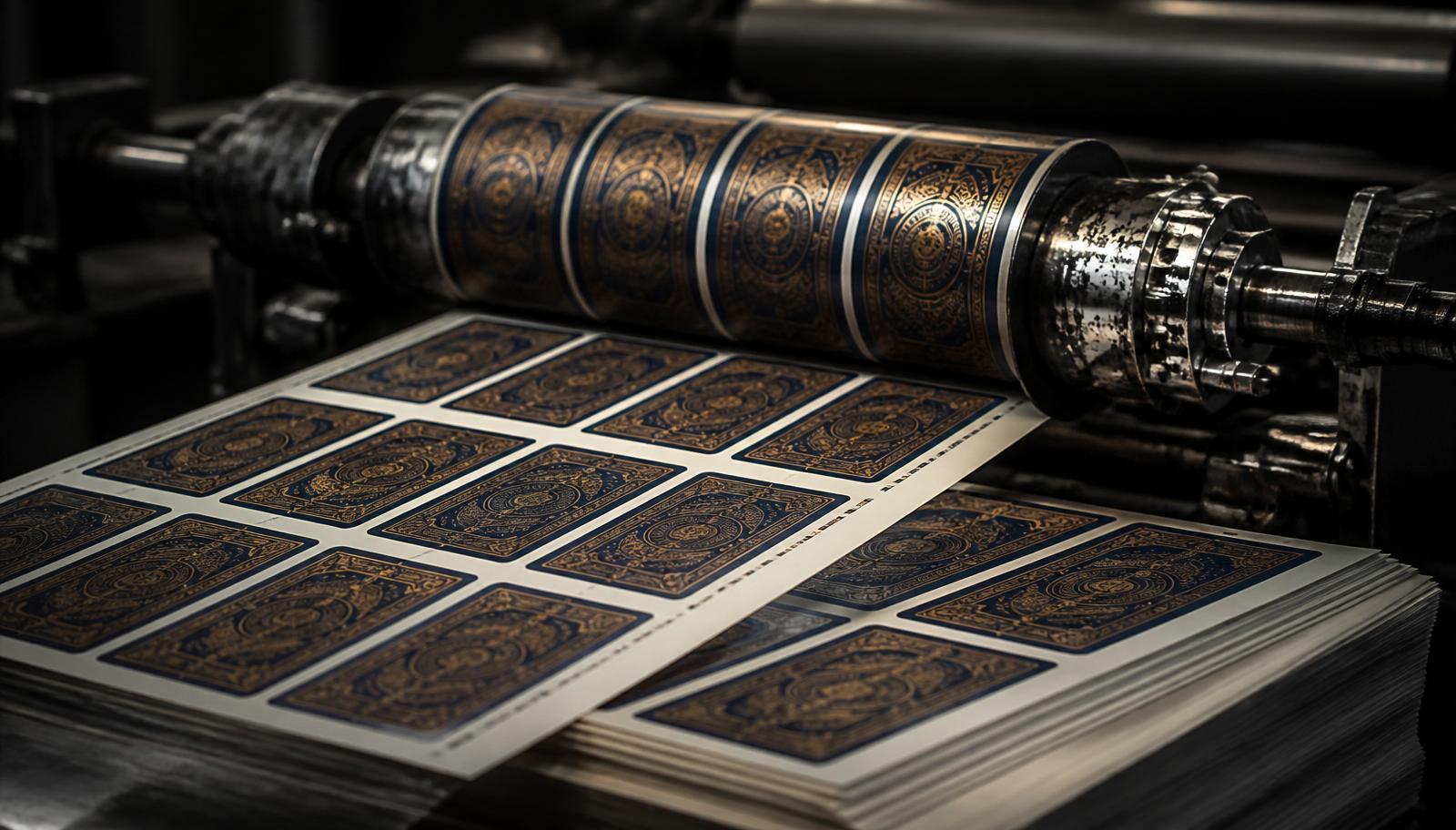
Choosing to print your own playing cards in 2026 means picking between two very different paths: a hands-on DIY run out of a home printer, or a short-run order from a professional manufacturer. Each path has a real place — but the quality gap, cost per deck, and time investment are dramatically different, and most first-time card designers pick the wrong one.
Quick answer: You can print your own playing cards at home with a good inkjet, 200 gsm cardstock, and a rotary trimmer for around $10–$14 per deck of 54 cards, but the result will bow, warp, and fan poorly compared to a factory deck. From around 250 decks up, professional printing costs less per deck than a home run as well, and for any deck you intend to sell, give as a wedding favor, or use for a serious game the quality gap matters at every quantity when professionally printed on 310 gsm black-core paper at a US manufacturer like Mr. Playing Card, starting at 15 decks. See current 2026 pricing at /pricing, then compare the professional playing card printing process before choosing a production path.
Can you really print your own playing cards at home?
You can, but the ceiling is low. A modern six-color inkjet on 200 gsm smooth cardstock produces a card that looks acceptable at arm's length and awful in hand. The paper is too thin to hide light behind it, the ink dots are visible under any lamp, and the second (duplex) pass warps the fibers so the deck bows in a curved smile within a week. Home laser printers do slightly better on durability but crack the toner along any fold, which ruins a printed tuck box.
A DIY run makes sense for: a one-off gag deck of 5–10 cards, a class project, a proof-of-concept for a game mechanic you'll later mass-produce, or a family memory deck of 10 pictures you don't mind reprinting yearly. For anything else, use a real playing-card manufacturer.
What does 'professional' printing actually mean in 2026?
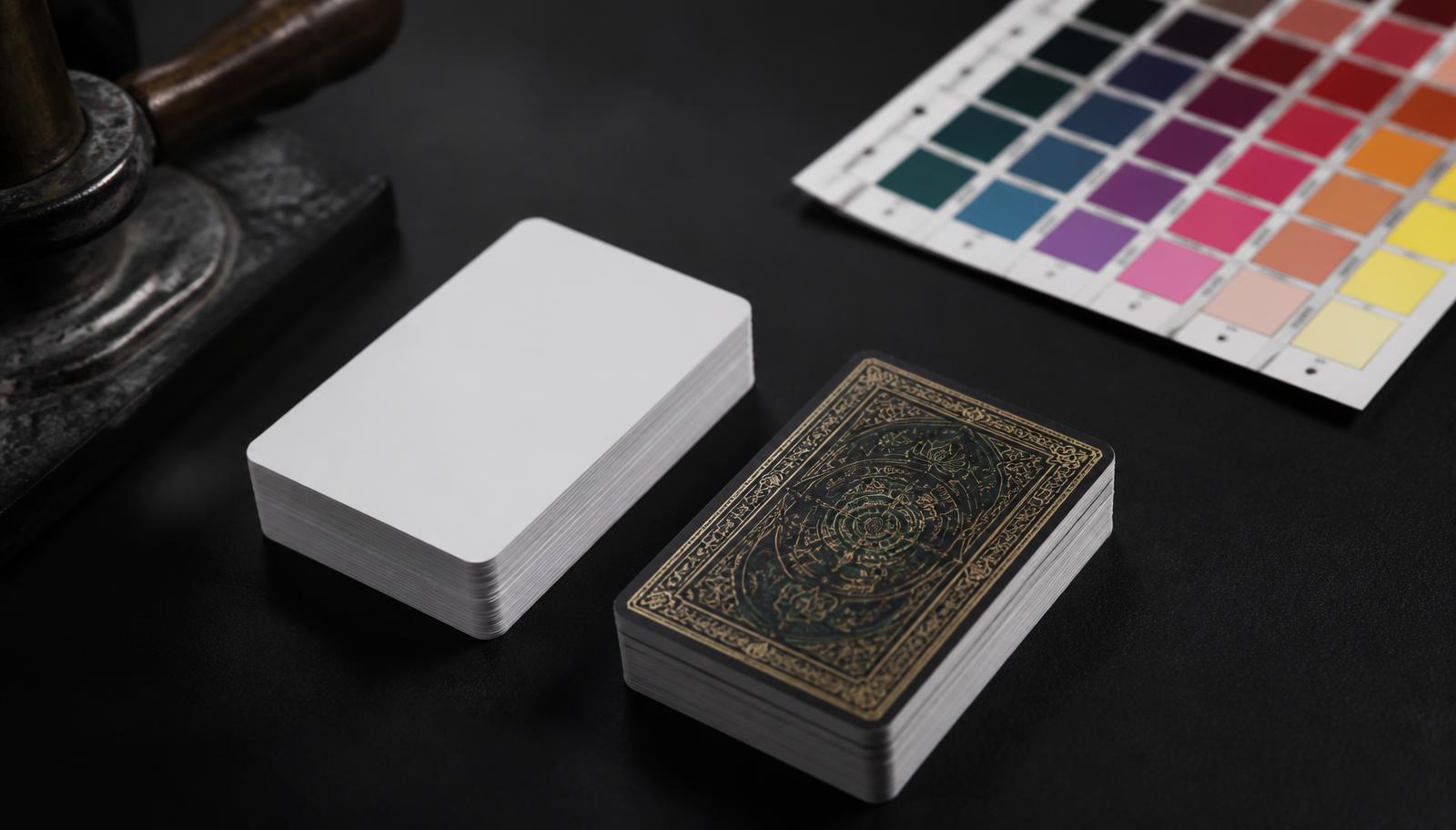
Professional playing-card printing means offset lithography or high-end digital HP Indigo presses running 300–330 gsm black-core paper with an embossed linen finish, cut on a hydraulic die, corner-rounded to a 3 mm radius, cello-wrapped, and boxed in a printed tuck. That combination — press, paper, finish, die — is what gives factory decks their signature snap and glide, and it's impossible to replicate at home.
US-based manufacturers like Mr. Playing Card in Orlando, FL run this exact stack, which is why our casino-quality linen decks shuffle and fan identically to USPCC's Bicycle line.
Print your own playing cards: home vs professional comparison
| Factor | Home printer | Professional manufacturer |
|---|---|---|
| Card stock | 200 gsm smooth cardstock | 310 gsm black-core paper |
| Finish | None (raw paper) | Embossed linen coating |
| Snap and glide | Poor, bows after 1 week | Excellent, casino-grade |
| Corner rounding | Manual with a punch | Hydraulic die, uniform 3 mm |
| Tuck box | Fold-your-own template | Full-color printed, scored, glued |
| Minimum quantity | 1 deck | 15 decks (Mr. Playing Card) |
| Cost per deck at 25 | $10–$14 | ~$25 |
| Cost per deck at 500 | $8–$12 | ~$6 |
| Turnaround | Same day | 10–15 business days |
| Best for | Prototypes, gags | Weddings, promos, games, sales |
What files do you need before you print?
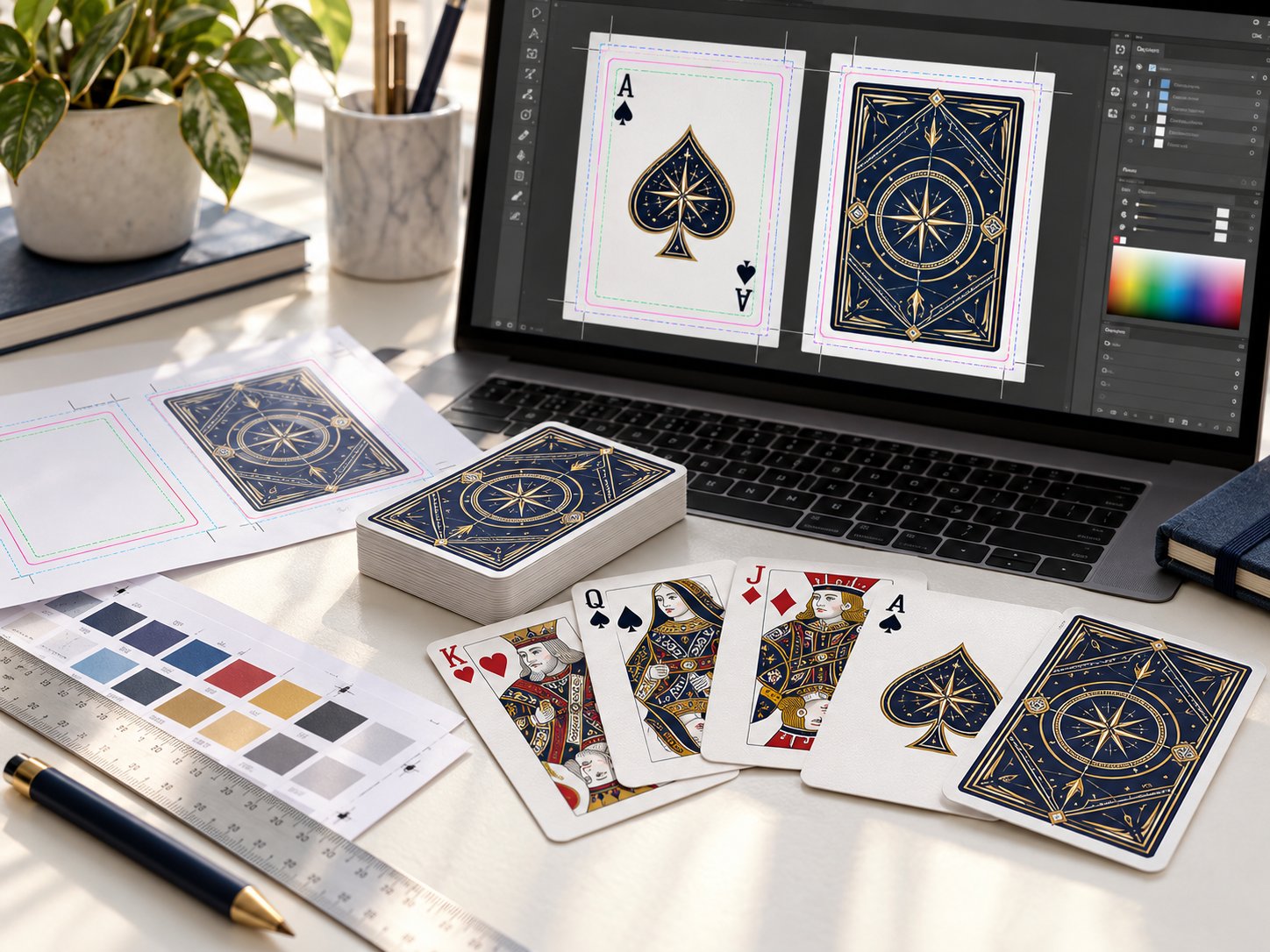
Before you print your own playing cards — DIY or professional — you need three files: a card back, up to 54 unique card faces, and a tuck box. Each file must be built to trim size plus 3 mm bleed at 300 DPI CMYK.
Standard trim sizes as of 2026:
- Poker size: 63.5 × 88 mm (2.5 × 3.5 in)
- Bridge size: 57 × 89 mm (2.25 × 3.5 in)
- Affirmation size: 70 × 120 mm (2.75 × 4.75 in)
- Mini size: 44 × 63 mm (1.75 × 2.5 in)
A deep dive on every size, including ISO 216-adjacent standards and the ANSI card specification, lives at /blog/playing-card-sizes-complete-guide. Grab our pre-built templates for each size at /templates — every template already has bleed, safe zone, and trim guides on named layers.
How to print your own playing cards at home in six steps
- Design at 300 DPI CMYK with 3 mm bleed and a 3 mm inner safe zone.
- Impose 9 cards per US letter sheet front-to-back with registration marks so both sides align.
- Test print one sheet and inspect for bleed clipping, color drift, and duplex offset.
- Print the full deck on 200 gsm smooth cardstock, letting each sheet dry 60 seconds before the back pass.
- Trim on a rotary paper cutter using the printed crop marks, then round corners with a 3 mm corner punch.
- Slot into a hand-folded tuck built from the free poker template.
Budget 4–6 hours end-to-end for a first deck. Reprints are faster once your file is dialed in.
What does it cost to print your own playing cards professionally in 2026?
Professional pricing scales aggressively with quantity. Mr. Playing Card's 2026 price ladder (US-printed, 310 gsm black-core, linen finish, printed tuck, cello-wrapped) currently looks like this at /pricing:
- 25 decks: ~$25.46 per deck all-in
- 100 decks: ~$11.00 per deck
- 250 decks: ~$8.09 per deck
- 500 decks: ~$6.12 per deck
- 1,000 decks: ~$4.35 per deck
A DIY deck of 54 cards costs about $10–$14 in paper, ink, and packaging even after you amortize the printer. On cost alone the crossover sits between 100 and 250 decks. On quality it arrives at the first deck, which is why most buyers who plan to sell or gift their decks switch well before the cost lines cross. If you need to compare vendors, see /blog/how-to-choose-the-best-playing-card-manufacturer-for-your-brand and /blog/where-to-print-custom-playing-cards-in-the-usa.
What card stock should you print on?
Stock choice determines snap, glide, opacity, and lifespan. The three that matter for 2026 buyers:
- 310 gsm black-core paper — industry default. Black inner layer blocks all light so cards are opaque even under a lamp. Snappy return, medium glide. Used for poker and bridge decks.
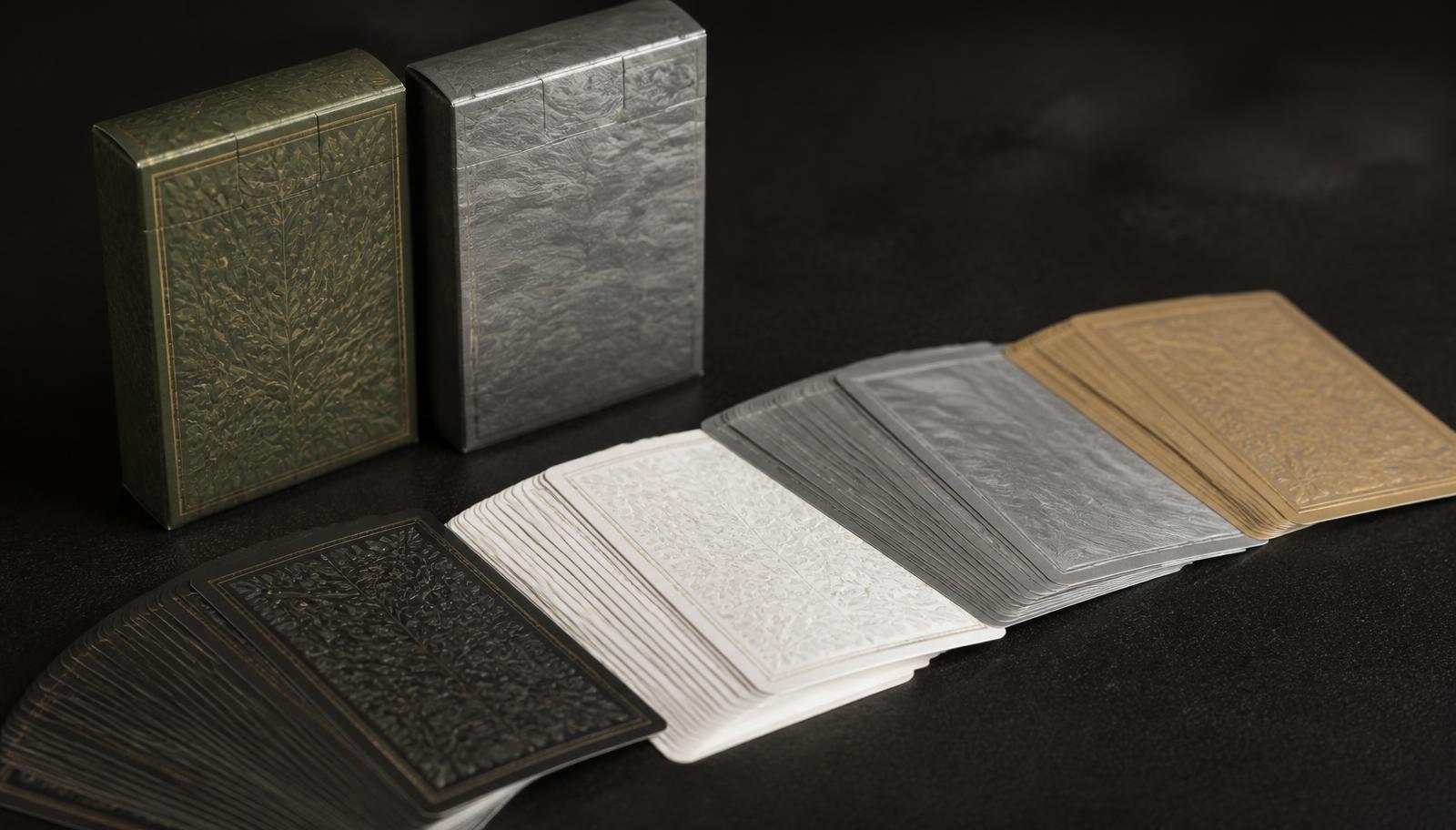
- 330 gsm smooth linen — premium. Slight texture gives the slippery glide magicians prefer.
- 100% PVC plastic — waterproof, tear-resistant, rinseable. Ideal for pools, boats, and outdoor use. Full comparison at /materials/pvc-plastic and /blog/custom-waterproof-playing-cards-guide.
Our full paper-vs-plastic breakdown is at /blog/best-card-stock-custom-playing-cards-paper-vs-pvc.
What is the difference between DIY, print-on-demand, and factory printing?
DIY means you own every step — printer, paper, cutter, glue. Highest control, lowest quality, per-deck cost only makes sense under 10 decks.
Print-on-demand (services like DriveThruCards) prints one deck at a time on digital presses using shared paper stock. No MOQ, but the paper is thinner (270 gsm coated), no linen finish, and per-deck cost stays around $8–$12 no matter how many you order.
Factory printing (Mr. Playing Card and USPCC-tier manufacturers) requires a small minimum — 15 decks at MPC — but drops per-deck cost by 60–75% and matches the tactile quality of retail decks sold at Target and Walmart. This is the only route for Kickstarter creators, wedding favor buyers, and TCG publishers.
Common mistakes when you print your own playing cards
- Skipping bleed. Trim always shifts 0.5–2 mm; without 3 mm of bleed you'll see white slivers on 20% of your cards.
- Using RGB. Every home and commercial printer works in CMYK. RGB files come back muddier and darker.
- Choosing 250 gsm 'card' stock. It's too thin to hide light, too thick to feed cleanly duplex, and it warps within a week.
- Forgetting the tuck box. A loose deck of 54 cards without packaging looks like a school project.
- Ordering overseas without a proof. Sea freight adds 4–6 weeks and $80–$180 in shipping; a bad print run is unfixable. US manufacturers ship physical proofs in 2–5 days.
When should you skip DIY entirely and use a manufacturer?
Skip DIY and order professionally if any of these apply:
- You're printing more than 50 decks.
- Someone else is paying for or receiving the deck (wedding, promo, gift).
- The deck will be sold — the perceived quality of a factory deck is 3–5× a home deck.
- The design uses solid dark backs (home printers show banding on any solid over 60% coverage).
- You need waterproof, foil, holographic, or metallic finishes — home printers cannot produce these.
Start with a free instant quote at /quote, or read the full manufacturer selection guide at /blog/what-to-look-for-in-professional-card-manufacturers-a-complete-guide.
Keep exploring
- Playing card sizes: complete 2026 guide
- Best card stock: paper vs PVC
- How much do custom playing cards cost
- MPC vs DIY: which is right for you
- Get a free quote
For the professional route end to end, see printing playing cards and our full custom playing cards lineup.