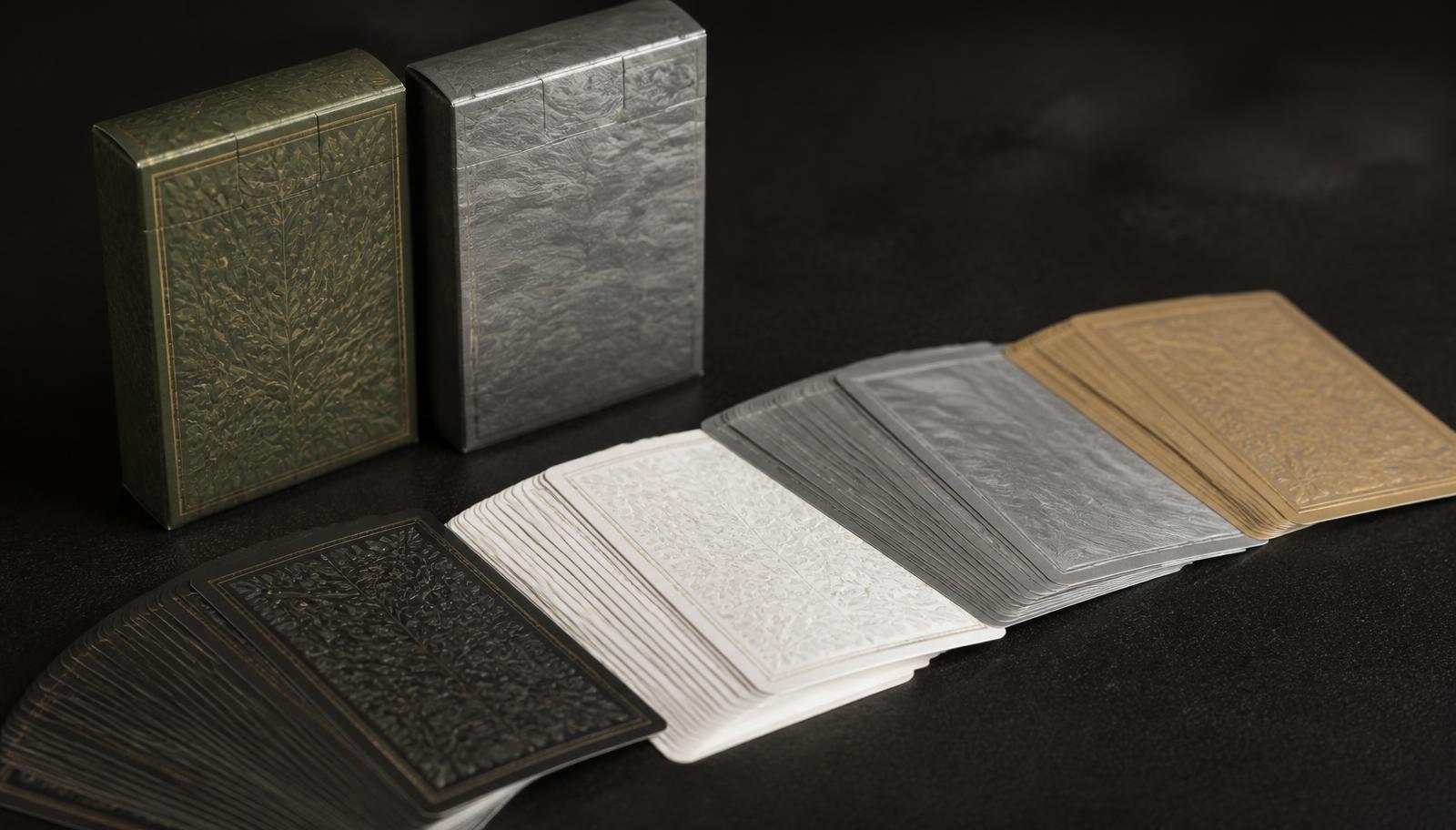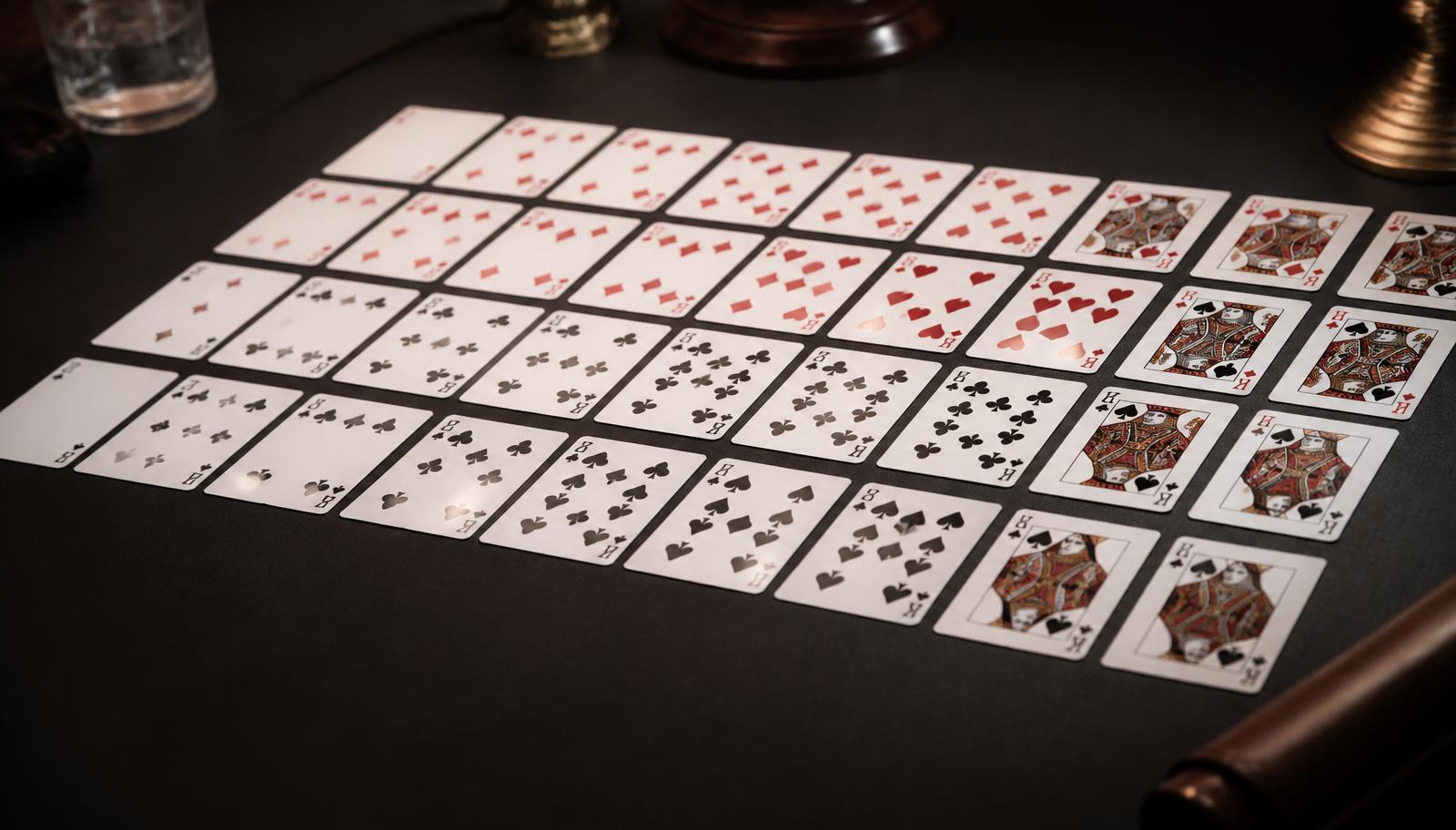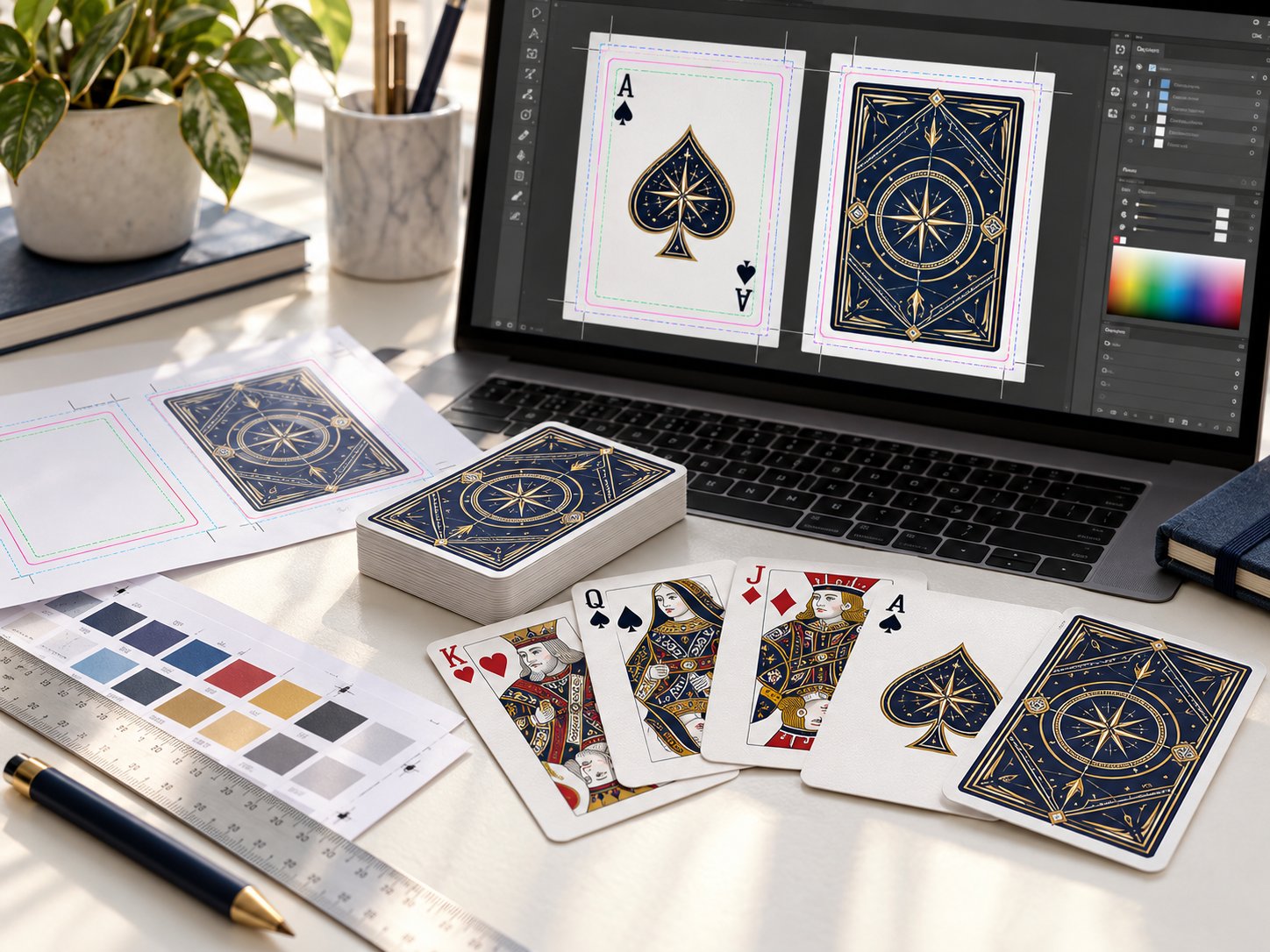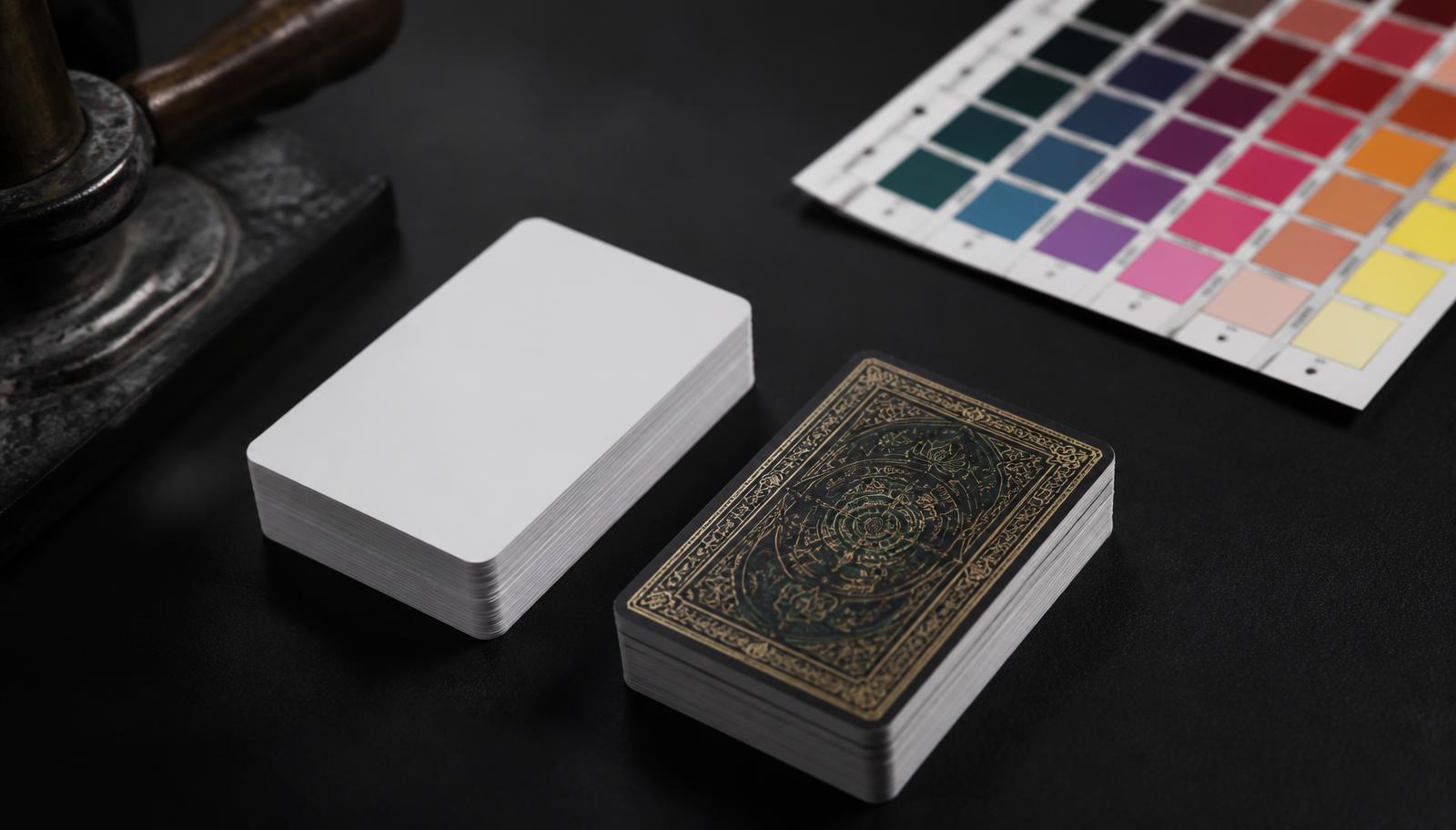
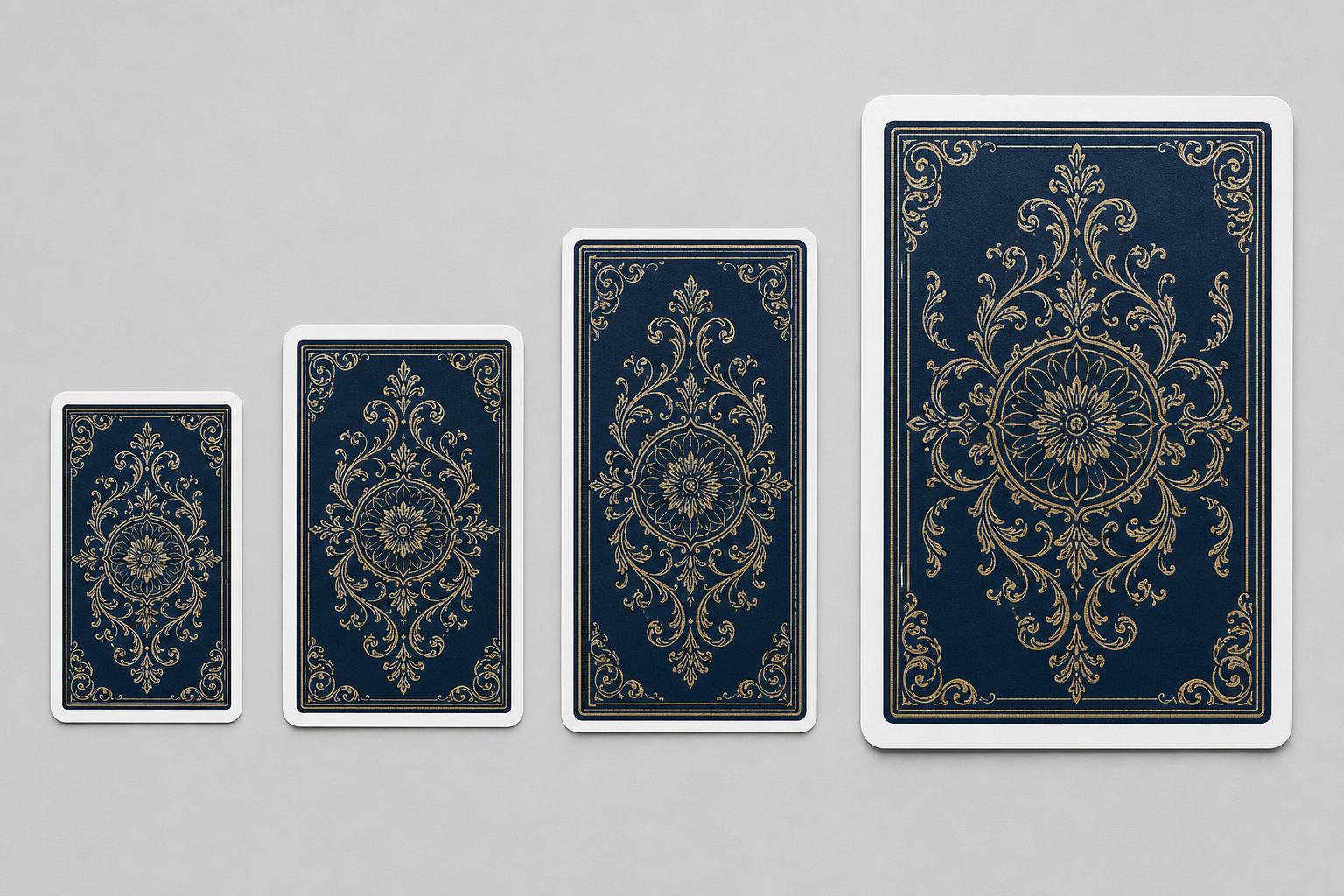
The standard playing card size is 2.5 x 3.5 inches, called poker size. Bridge size is 2.25 x 3.5 inches: the same height, a quarter inch narrower. Larger decks such as jumbo cards (2.75 x 4.75 inches) and flash or teaching cards (3 x 5 or 3.875 x 6 inches) are used when the card face has to carry more art or text.
Quick answer: A standard playing card is 2.5 x 3.5 inches (poker size). Bridge cards are 2.25 x 3.5 inches. Mr. Playing Card prints both from a 15-deck minimum, plus 2.75 x 4.75, 3 x 5 and 3.875 x 6 inch decks from 25 decks. Every size needs 0.125 inch of bleed on each edge, so a poker card file is 2.75 x 3.75 inches. Free templates for all five sizes are on the templates page.
What size are playing cards?
Most playing cards are poker size, 2.5 x 3.5 inches. That is the size of a typical store-bought deck and the default for home games, magic and most custom decks. Bridge size, 2.25 x 3.5 inches, is the other standard.
| Size name | Trim size (inches) | File size with bleed (inches) | Common uses |
|---|---|---|---|
| Bridge | 2.25 x 3.5 | 2.5 x 3.75 | Bridge, pinochle, euchre, casino poker, games with big hands |
| Poker (standard) | 2.5 x 3.5 | 2.75 x 3.75 | Poker, magic, photo decks, promo decks, most card games |
| Jumbo | 2.75 x 4.75 | 3 x 5 | Group play, trade show demos, low-vision decks, affirmation decks |
| 3 x 5 | 3 x 5 | 3.25 x 5.25 | Flash cards, coaching and training decks |
| 3.875 x 6 | 3.875 x 6 | 4.125 x 6.25 | Teaching cards, display cards, oversized gift sets |
Trim size is the final size of the card after cutting. Bleed is extra artwork that runs past the trim line so no white edge shows if the cut shifts slightly.
Poker size vs bridge size: which should you pick?
Pick poker size unless your players hold a lot of cards at once. Both sizes are 3.5 inches tall; bridge cards are 0.25 inch narrower, which makes a large hand easier to fan and hold (source).
- Poker size (2.5 x 3.5 in): more room for art and photos, and the feel most people expect from a deck. See custom poker cards.
- Bridge size (2.25 x 3.5 in): better for trick-taking games like bridge, pinochle and spades, and for smaller hands. See custom bridge cards.
Mr. Playing Card prices poker and bridge decks on the same table, so the narrower card does not save money. On 300 GSM black core stock, a 54-card deck is $2.90 at 1,000 decks, shrink-wrapped; a printed tuck box is a per-deck add-on.
How big are jumbo playing cards?
At Mr. Playing Card, jumbo cards are 2.75 x 4.75 inches, printed on 350 GSM stock. That is about 50 percent more face area than a poker card, which helps for big indexes, long text and decks read across a table. See jumbo cards.
Do not confuse a jumbo card with a jumbo index deck. A jumbo index deck is a normal 2.5 x 3.5 inch card with oversized corner numbers and suits; the card itself is not bigger (source).
Which larger card sizes can you print?
Beyond jumbo, the two common large formats are 3 x 5 inches and 3.875 x 6 inches. Mr. Playing Card prints both on 350 GSM stock with a 25-deck minimum.
- 3 x 5 in: the classic index-card shape. Good for custom flash cards, vocabulary decks and coaching prompts.
- 3.875 x 6 in: the largest stock size. Good for educational cards, activity decks and display cards.
Card game makers can also cut game cards to custom sizes. Ask a print specialist before you design to a size not listed above.
How does card size change the price?
Larger cards cost more per deck because fewer fit on each press sheet. Here is what Mr. Playing Card charges per deck at 1,000 decks, shrink-wrapped, with tuck boxes extra:
| Size | Stock | Per deck at 1,000 decks |
|---|---|---|
| Poker or bridge (2.5 x 3.5 / 2.25 x 3.5 in) | 300 GSM black core | $2.90 |
| Jumbo (2.75 x 4.75 in) | 350 GSM | $5.18 |
| 3 x 5 in | 350 GSM | $5.71 |
| 3.875 x 6 in | 350 GSM | $6.23 |
Prices at other quantities are on the pricing page, and the quote tool prices any size and stock in real time.
How do you set up a print file for any card size?
Set the document to the trim size, then add 0.125 inch of bleed on every side. Keep text and logos at least 0.125 inch inside the trim line, which is called the safe zone.
- Download the matching template from the free templates page. It has poker, bridge, jumbo, 3 x 5 and 3.875 x 6 inch files, plus an All Card Templates file with every size.
- Extend background art to the outer bleed line.
- Keep important text inside the safe zone.
- Export at 300 DPI. At 300 DPI, a poker card with bleed is 825 x 1125 pixels and a jumbo card with bleed is 900 x 1500 pixels.
For a full walkthrough, see how to use a playing card template. Every order gets a free human file review and a digital proof, usually within one business day, so size and bleed mistakes get caught before press.
Does card size change the tuck box?
Yes. A tuck box is cut to fit the deck, so each card size needs its own tuck box dieline. Poker and bridge tuck box templates are on the templates page, and custom tuck boxes are a per-deck add-on. Standard packaging is shrink wrap.
Next steps
If you know your size, get a quote and upload your file for a free review. Not sure yet? Ask for samples of previous decks to feel the size in hand, or order a $229 prototype deck of your own design before your full run.